

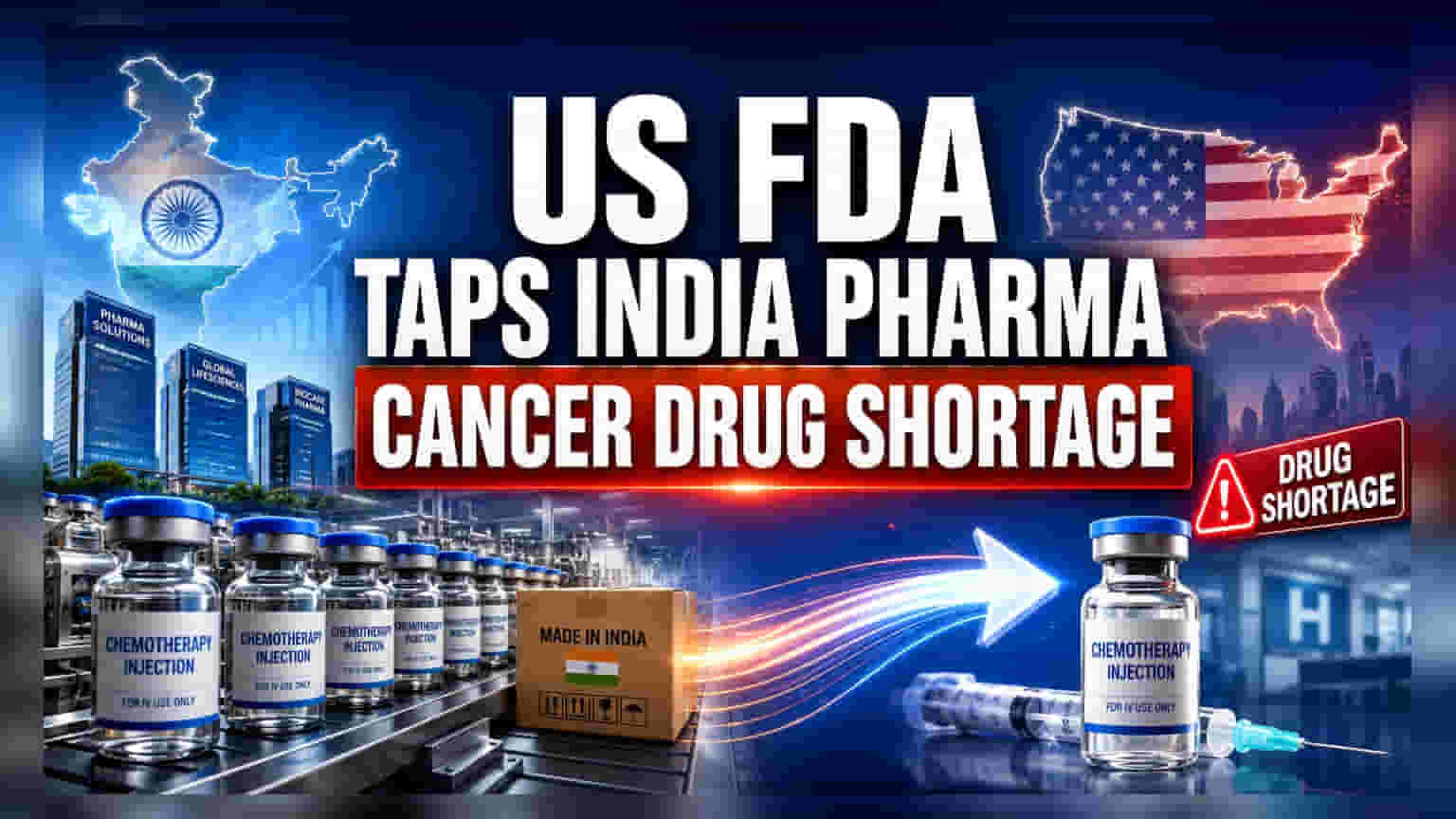
The US FDA has requested assistance from Indian drugmakers to address a shortage of the chemotherapy drug ifosfamide. Major companies including Zydus, Cipla, Alkem, and Aurobindo are being considered as potential suppliers. For investors, this event underscores the reliance of global markets on Indian manufacturing, though supply depends on stringent US quality compliance.
What Happened
The United States Food and Drug Administration (FDA) has reached out to Indian pharmaceutical companies to help resolve an urgent supply shortage of ifosfamide, a chemotherapy medication. The request, communicated to the Indian Drug Manufacturers' Association (IDMA) on June 18, 2026, focuses on securing supplies in 1g and 3g strengths. Several large Indian manufacturers, specifically Zydus, Cipla, Alkem, and Aurobindo Pharma, are currently being evaluated as potential partners for this supply.
Why This Matters For Investors
In the competitive US generic drug market, companies often face pricing pressure. However, when a drug enters a 'shortage' status, the supply-demand balance shifts, allowing manufacturers who can step in with approved quality products to potentially capture better pricing and build market share. This development highlights that Indian firms with existing US footprints are often the first port of call for the FDA during supply disruptions. While the immediate revenue impact of a single drug supply might be modest for large-cap pharma firms, the ability to act as a reliable partner to the FDA is a positive indicator of manufacturing reliability.
The Compliance And Quality Hurdles
While the FDA has expressed openness to sourcing from facilities that may not currently hold active US registration, the core requirement for quality remains non-negotiable. Indian pharmaceutical companies have historically faced scrutiny regarding their manufacturing practices. In the past, companies in the sector have received regulatory observations, known as 'Form 483s,' or more serious 'Warning Letters,' which can delay product approvals or lead to import alerts. Any manufacturer hoping to supply the US market must ensure their production lines strictly follow the FDA's Current Good Manufacturing Practice (cGMP) regulations. Investors should note that the risk of regulatory rejection or the cost of upgrading facilities to meet urgent US standards can offset the potential revenue gains.
The Business Reality Check
The US generics sector is characterized by high competition. While participating in a shortage drug program can boost top-line revenue, the long-term profitability depends on whether the company can maintain supply stability without facing increased raw material costs or logistics issues. Furthermore, the Indian pharmaceutical industry ranks as a top global supplier by volume, but maintaining this position requires constant investment in quality control and regulatory compliance. The IDMA is acting as a facilitator in this process, connecting the FDA with capable members, which simplifies the initial engagement but does not guarantee final contracts for all participants.
What Investors Should Track
Investors monitoring these companies should watch for official company disclosures regarding any supply contracts or regulatory approvals related to ifosfamide. Key monitorables include:
- Whether the companies receive official FDA approval to supply this specific drug.
- Any mention of capital expenditure or facility upgrades needed to meet the supply requirements.
- Updates in subsequent quarterly earnings on the impact of shortage-related revenue.
- Any changes in the FDA's compliance status for the involved manufacturing plants, as regulatory actions can swiftly halt production exports.