

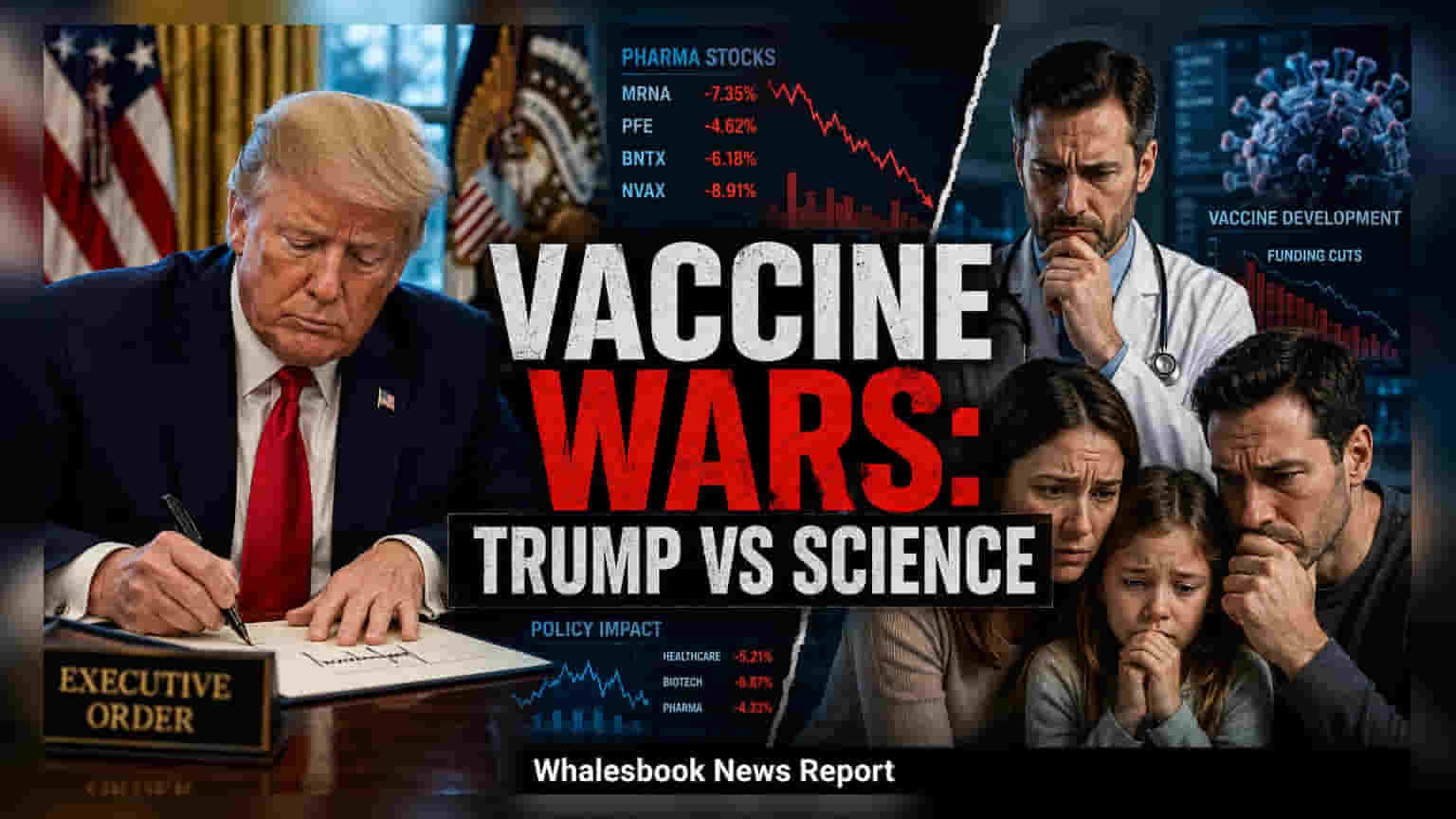
President Donald Trump has issued an executive order to reduce the recommended childhood vaccine schedule and promote single-dose MMR shots. While the administration frames this as a policy for parental choice, the move has drawn sharp criticism from health experts. Investors are now evaluating the potential impact on pharmaceutical manufacturers, who face significant regulatory uncertainty regarding existing product lines and supply chain requirements.
President Donald Trump issued an executive order on August 10, 2026, aimed at changing childhood vaccination guidelines. The directive, titled "Delivering Gold Standard Childhood Vaccine Recommendations for Americans," seeks to limit the recommended immunization schedule to 11 diseases and encourages moving toward single-dose versions of the measles, mumps, and rubella (MMR) vaccine. The order also advocates for spreading out these vaccinations across separate appointments rather than the current combined schedule.
From a market perspective, this policy creates a complex environment for the pharmaceutical sector. Major manufacturers of vaccines, such as Merck & Co., currently provide the MMR vaccine as a combination shot, which is the standard of care in the United States. Transitioning to single-disease vaccines would require substantial changes to manufacturing, licensing, and distribution processes. Currently, single-disease vaccines for measles, mumps, or rubella are not manufactured or licensed for use in the U.S. market. Investors may track how companies manage the potential for shifting demand or regulatory requirements that conflict with long-standing scientific recommendations.
The public health response has been immediate and critical. Groups like the American Academy of Pediatrics have warned that spacing out vaccines could disrupt established immunization coverage, potentially increasing the risk of children missing doses and becoming vulnerable to preventable diseases. Experts argue that existing combination vaccines are backed by years of safety data and broad scientific consensus, which could make any shift toward alternative schedules a point of friction between the administration and the healthcare community.
Regulatory and legal risks remain a significant monitorable for investors. The executive order is largely an advisory policy directive. Previous attempts to implement similar changes to vaccine schedules were blocked by federal courts, which highlighted limits on federal authority compared to state-level control over school entry requirements. Because the order encourages states to align with federal recommendations but does not mandate them, the operational outcome for healthcare providers and vaccine producers remains unclear.
Moving forward, the primary focus for the market will be on how vaccine manufacturers, pharmacy chains, and healthcare providers respond to the potential friction between new administration guidance and established clinical practice. Investors may watch for future filings from major pharmaceutical companies regarding any changes in production strategy or product licensing, as well as any further clarification from federal health agencies on how this policy will be implemented in practice.