 Whalesbook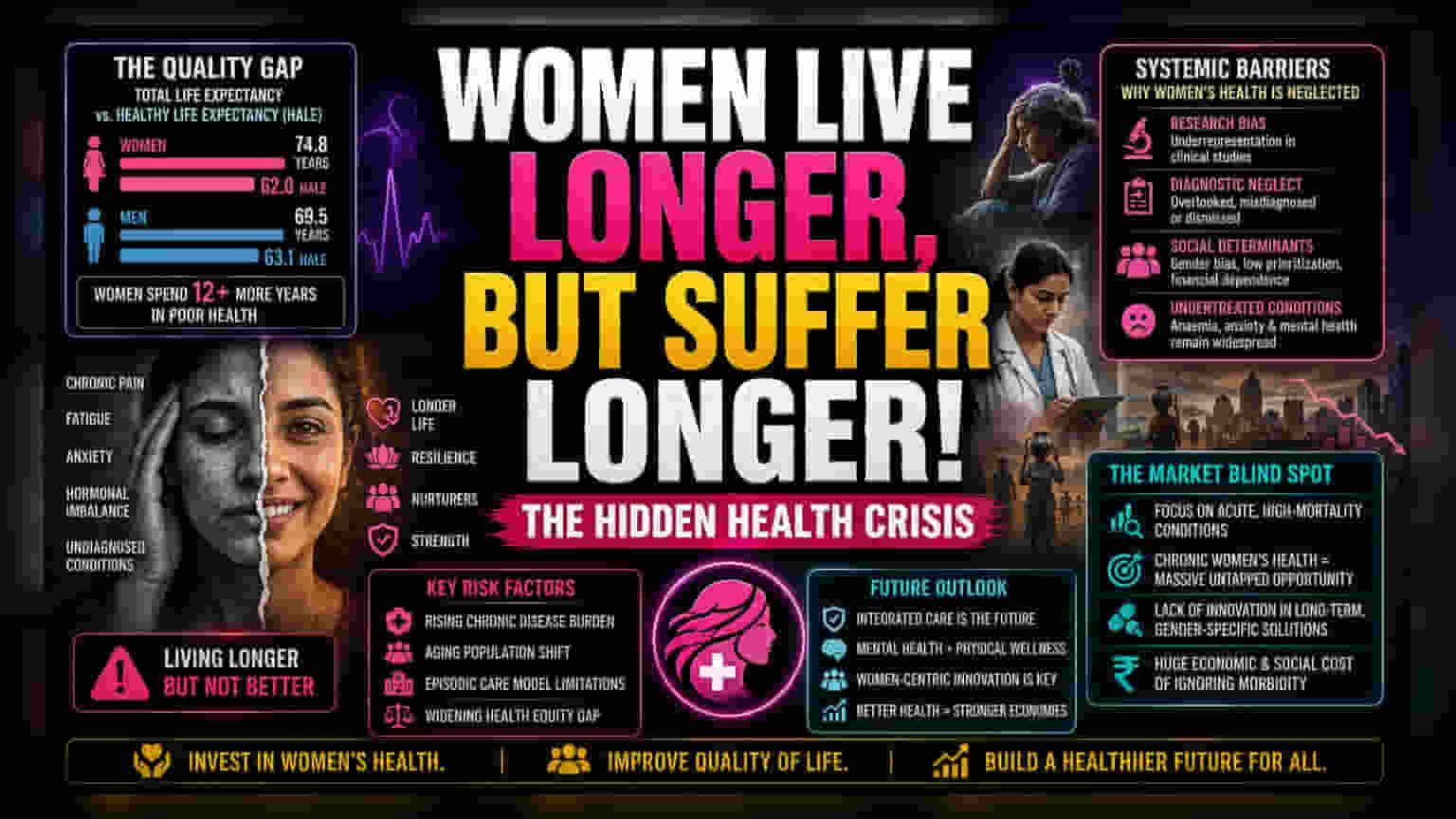


The Quality Gap in Longevity
Modern medicine has excelled at extending the raw duration of life, yet it has failed to close the gap between total years lived and years lived in good health. The Healthy Life Expectancy (HALE) metric highlights a stagnation that persists despite two decades of medical innovation. While male mortality is often defined by sudden onset issues—cardiovascular failure, accidents, and violent trauma—the female health experience is increasingly characterized by a long tail of chronic, non-lethal, yet debilitating conditions.
Systemic Barriers and Diagnostic Neglect
The medical industry has historically optimized for mortality reduction rather than morbidity management in women. Clinical research often overlooks the synergistic impact of gynaecological ailments, chronic pain syndromes, and mental health struggles. In emerging markets like India, this crisis is compounded by social determinants. Data indicates that anaemia and anxiety disorders remain significantly undertreated, exacerbated by household hierarchies that deprioritize women’s healthcare needs until a crisis point is reached. The economic instability following the loss of a male breadwinner further limits access to care, creating a feedback loop of physical decline.
The Forensic View: Why Markets Miss the Burden
From an institutional perspective, the healthcare sector exhibits a structural blind spot regarding the 'burden of illness' for women. Pharmaceutical and diagnostic focus remains heavily weighted toward acute, high-mortality conditions, which offer clearer regulatory pathways and faster market penetration. However, the lack of innovation in addressing long-term, gender-specific chronic health needs represents a massive, untapped market failure. Companies failing to pivot toward integrated, longitudinal care models for women are ignoring a significant demographic shift.
Risk Factors and Future Outlook
The financial implications for healthcare providers are stark. As populations age, the shift from acute care to chronic disease management is inevitable. Healthcare systems heavily reliant on traditional, episodic care models face mounting pressure as the female population demands solutions for persistent, lower-acuity ailments. The inability of current clinical frameworks to address these complex origins poses a long-term operational risk. Moving forward, the most resilient healthcare entities will be those that integrate mental health support with physical wellness, directly addressing the social determinants that have long hindered parity in healthy life years.