

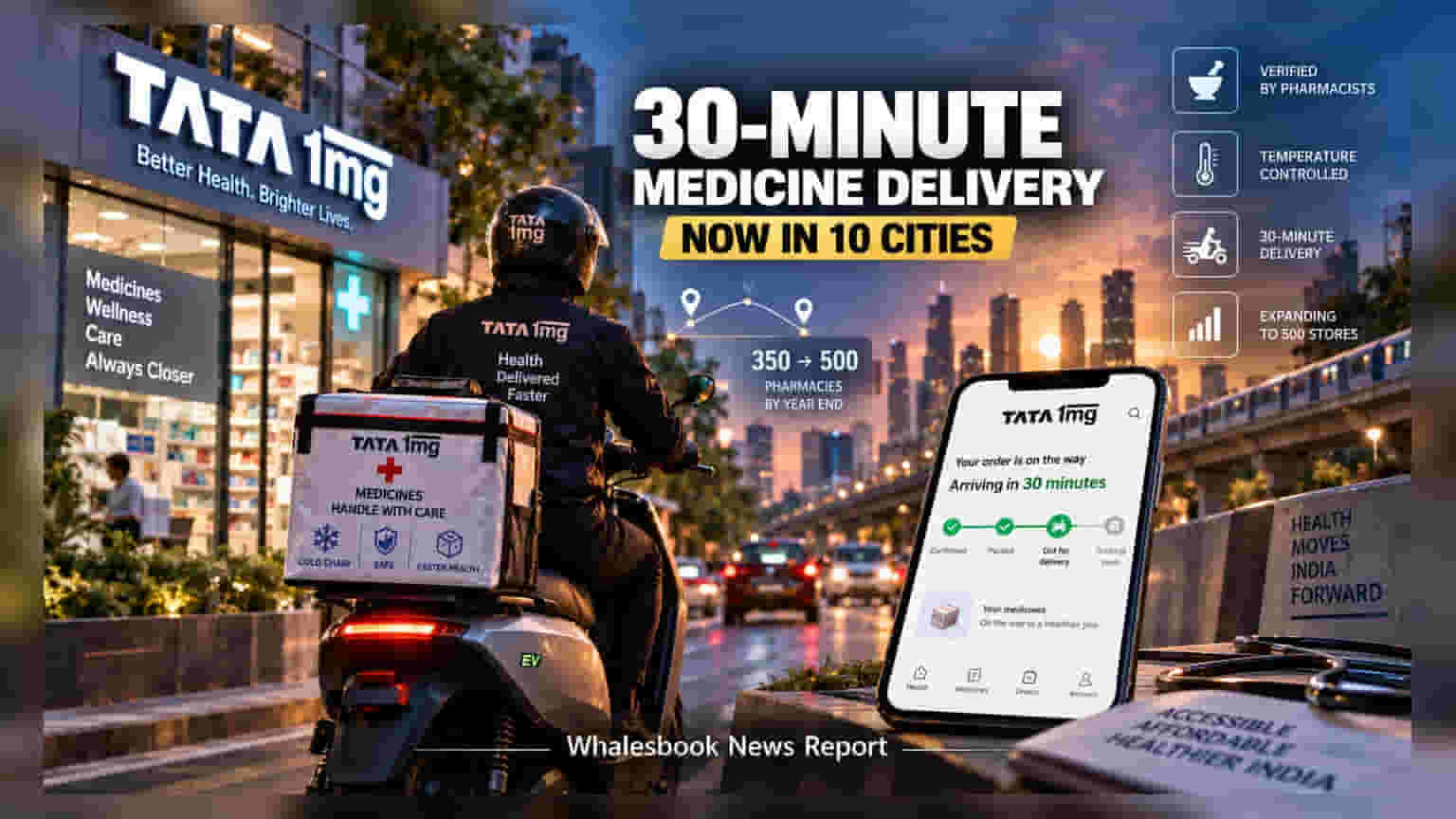
Tata 1mg is scaling its 30-minute medicine delivery service across 10 major cities, targeting an increase from 350 to 500 retail stores by year-end. This move into instant delivery focuses on acute and symptomatic healthcare needs. For investors, the long-term success of this model depends on managing high operational costs, complex regulatory compliance, and increasing competition from broader quick-commerce platforms.
Tata 1mg is aggressively rolling out its 30-minute medicine delivery service across 10 major Indian cities. The company currently manages approximately 350 retail pharmacies and plans to expand this network to 500 stores by the end of the year. This strategy marks a pivot in the e-pharmacy model, moving from standard same-day delivery toward the rapid-fulfillment cycle typical of quick-commerce, specifically targeting acute and symptomatic care needs like pain relief or fever medication.
Operational and Regulatory Challenges
Unlike traditional e-commerce, the pharmacy sector operates under stringent regulations. Every order requires validation by a licensed pharmacist, which adds layers of operational complexity that grocery-focused quick-commerce players do not face. Tata 1mg is attempting to manage this by integrating its digital platform with a physical retail network. By owning the value chain—from prescription validation to local delivery—the company aims to reduce fulfillment friction. However, this model requires significant capital investment. Maintaining cold-chain integrity for temperature-sensitive medications across a high-speed delivery network is a costly requirement that separates pharmaceutical logistics from general consumer goods delivery.
Inventory and Demand Management
To ensure 30-minute delivery is feasible, the company uses historical sales data to manage inventory at a hyper-local level. The goal is to predict demand for common acute-care medications in specific neighbourhoods, reducing the distance between the stock and the customer. As the physical retail footprint grows to 500 stores, the company expects to gather more granular data, which may help improve inventory turns and stock availability. Efficient inventory management is critical here, as stocking too much slow-moving medicine can tie up working capital, while missing out on high-demand items leads to lost revenue.
Competitive Landscape and Investor Monitorables
The pharmaceutical delivery space in India is becoming increasingly crowded. Dedicated e-pharmacies are now competing against well-funded quick-commerce players that have started adding pharmacy categories to their existing delivery infrastructure. For Tata 1mg, the primary advantage remains its integrated presence in the sector, but the financial burden of managing this infrastructure is high.
Investors may monitor the company's ability to maintain healthy profit margins while absorbing the high costs of rapid logistics. Regulatory updates, particularly those related to the ongoing scrutiny of e-pharmacy operations and prescription mandates, remain a key factor. The expansion of the store network to 500 locations will also serve as a gauge for how effectively the company can scale its physical operations without compromising its compliance standards or unit economics.