

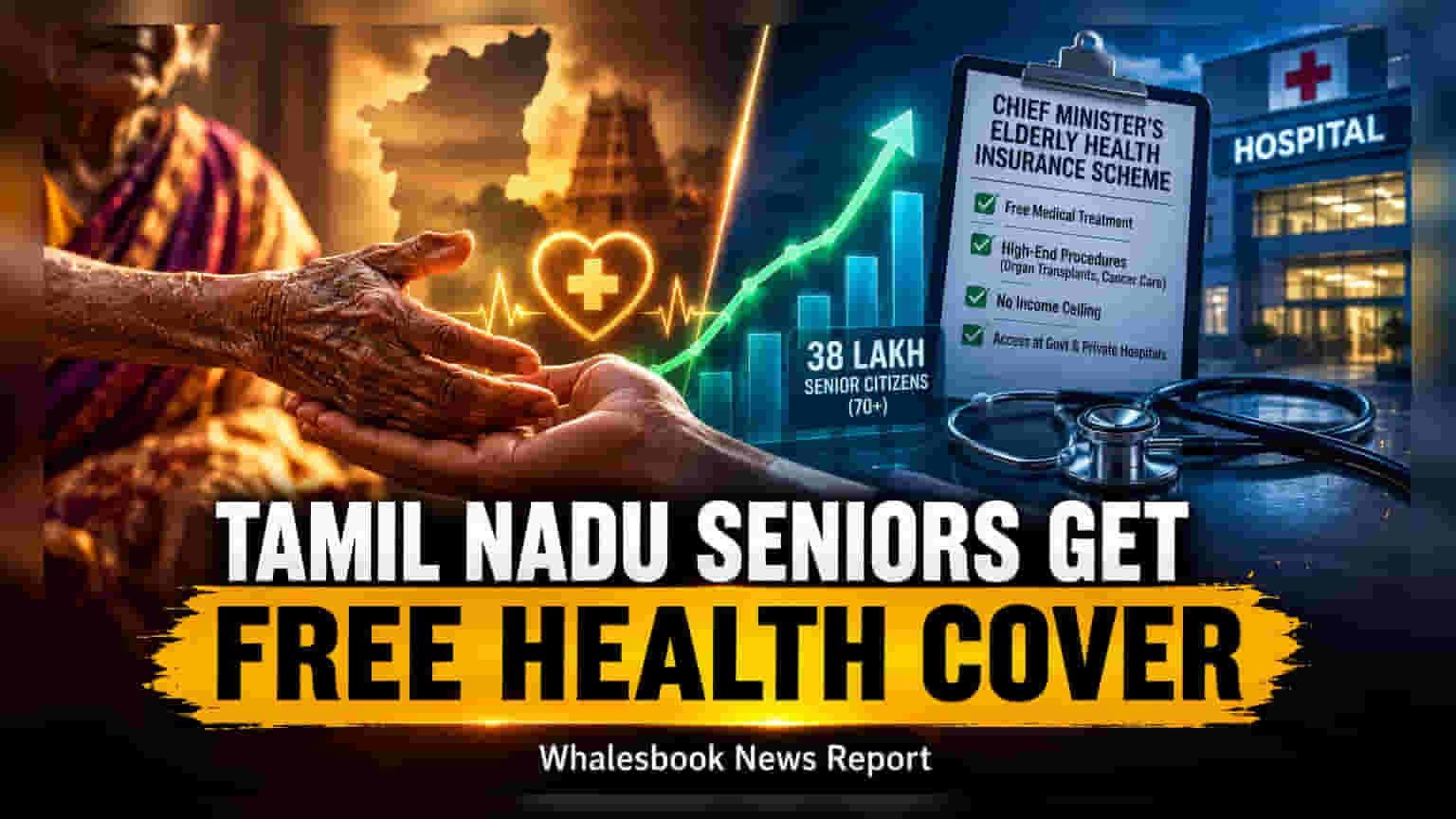
The Tamil Nadu government has announced a free health insurance scheme for citizens aged 70 and above, covering approximately 38 lakh people. The policy removes income limits for accessing medical treatment, marking a major shift in the state's healthcare planning.
The Tamil Nadu government has introduced the 'Chief Minister's Elderly Health Insurance Scheme,' an initiative designed to provide medical financial protection to approximately 38 lakh senior citizens aged 70 and above. Announced by State Health Minister K.G. Arunraj on August 17, 2026, the policy allows eligible seniors to access free medical treatment, including high-end procedures like organ transplants and cancer care.
A key feature of this new scheme is the absence of an income ceiling for eligibility. This change aims to provide support to seniors who may not have qualified for existing government subsidies but still face heavy medical expenses. The insurance will be accessible at both government medical institutions and private hospitals empanelled with the state health insurance network. This announcement is part of a larger, broader reform package comprising 115 healthcare initiatives for the 2026-2027 period.
Alongside the insurance scheme, the state has planned legislative updates to replace the 1939 Tamil Nadu Public Health Act. Other initiatives include the launch of a 'Positive Health Policy' and the 'Nalam 360' mobile application, which will facilitate free annual health check-ups for residents aged 30 and above. To support these programs, the state has allocated funding for new infrastructure, including the establishment of the TN MediCity to promote medical tourism and integrated healthcare services, as well as the recruitment of thousands of nurses and medical staff to manage the increased workload.
While the scheme aims to reduce out-of-pocket medical costs for elderly residents, there are potential challenges to consider. The lack of an income ceiling could create a significant fiscal burden on the state government budget over the long term. Additionally, there are operational risks, including the need for seamless coordination between private hospitals and the state's insurance system to ensure that claims are processed without delays. Execution will also depend on the state's ability to scale infrastructure and medical staff to handle the projected rise in demand for specialized treatments.
For residents and observers, it is important to note that this is a government policy initiative, not a corporate financial event, and therefore does not have a direct impact on any specific company's share price. Crucial details, such as the total sum assured per person, the full list of covered treatments, specific exclusions, and how pre-existing health conditions will be handled, are yet to be finalized. Interested citizens should wait for the official government notification and detailed policy terms to understand how to apply and which facilities will be included in the network.