

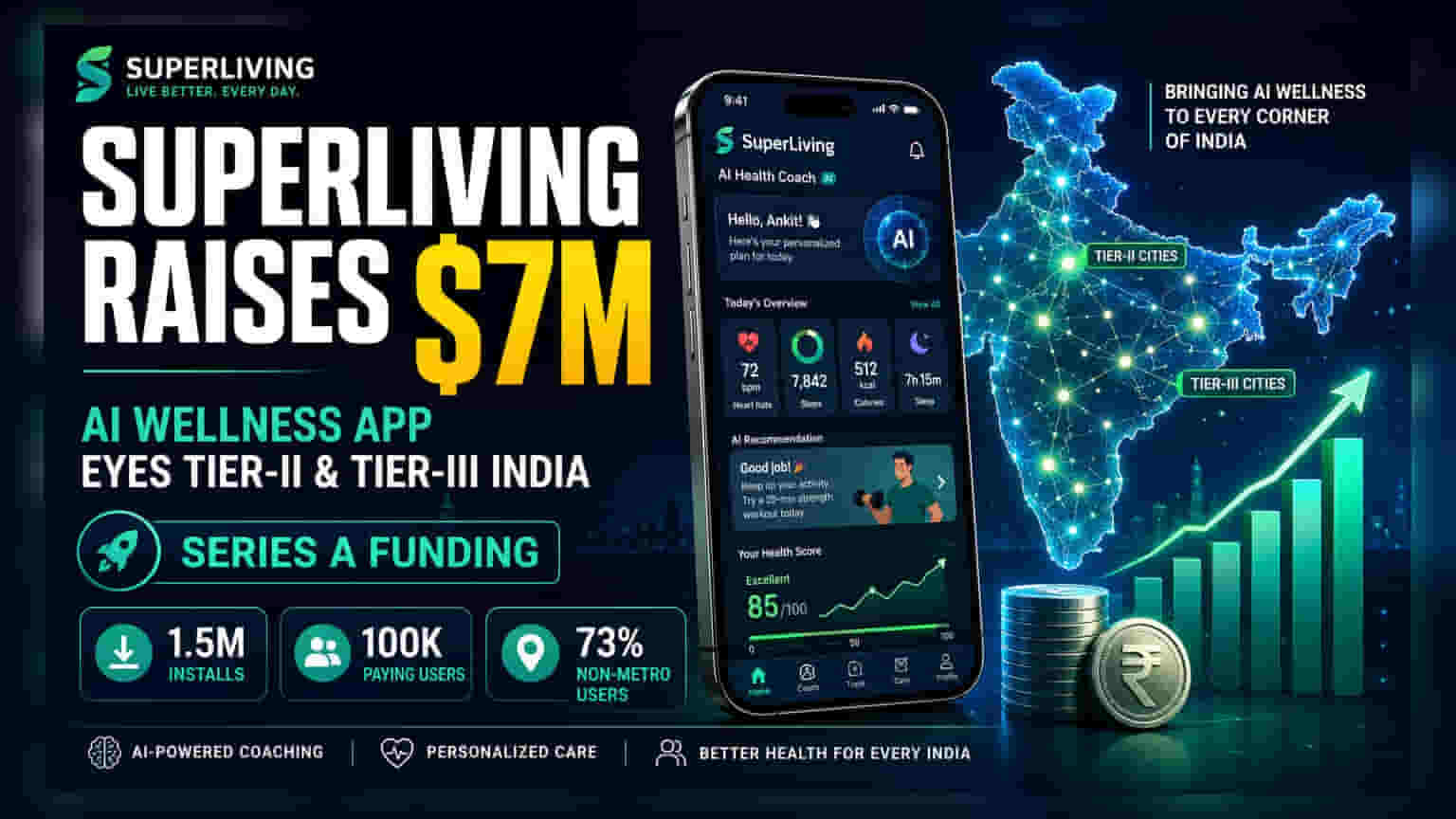
Health-tech startup SuperLiving has secured $7 million in Series A funding led by Lightspeed Venture Partners. The company plans to use the funds to scale its AI-driven preventive healthcare platform, targeting users in Tier-II and Tier-III cities.
What Happened
Health-tech startup SuperLiving has successfully raised $7 million in a Series A funding round led by Lightspeed Venture Partners. Other investors including Kae Capital and All-in Capital also participated in the round. Founded by former executives from Meesho and Pocket FM, Manavdeep Singh Grover and Gurjot Kaur, the company focuses on providing personalized wellness and preventive healthcare through artificial intelligence.
The startup plans to use this capital to enhance its AI technology, develop more vernacular (regional language) content, and accelerate user acquisition, particularly in Tier-II and Tier-III cities across India. SuperLiving reports over 1.5 million installs and 100,000 paying users, with 73% of its user base residing in non-metropolitan areas.
Why The Tier-II Focus Matters
The Indian health-tech sector has traditionally concentrated on large metros where digital health adoption was higher. SuperLiving’s strategy highlights a shift toward the "rest of India." By focusing on regional language content and culturally relevant health solutions, the company aims to tap into a wider demographic that may have previously been underserved by English-centric health apps.
For the broader industry, this reflects a growing belief that the next wave of health-tech growth lies in making wellness accessible and affordable for users in smaller towns. Investors are closely watching companies that can prove sustainable unit economics in these regions, where price sensitivity is often higher than in metropolitan hubs.
Business Model And Market Context
SuperLiving provides personalized wellness journeys and AI-assisted coaching. The company plans to move into adjacent health categories, such as diagnostics and health commerce. This aligns with the broader trend of health-tech startups attempting to create "super-apps" or integrated ecosystems that offer everything from content to e-commerce and consultation in one place.
While the company reports strong early traction, the ability to transition from a content-heavy model to a commerce-led model is a significant shift that requires operational expertise in logistics and supply chain management if they move into physical diagnostics or product sales.
Sector Risks And Challenges
The health-tech sector in India faces persistent challenges, including high customer acquisition costs (CAC) and the struggle to maintain long-term user retention. While AI and personalized content can drive initial interest, turning free users into paying subscribers is a hurdle for many startups in this space.
Competition is also intensifying, with both well-funded health-tech platforms and large consumer conglomerates entering the digital wellness and preventive health space. Additionally, navigating the regulatory environment for health data and diagnostics requires significant compliance investment, which can pressure profit margins in the early stages.
What To Watch Next
The key monitorable for investors and stakeholders in the Indian health-tech ecosystem will be the company’s ability to scale its paying user base while keeping acquisition costs under control. Watching how effectively SuperLiving integrates commerce and diagnostics into its current content-driven model will be important, as this determines whether the company can build a profitable and sustainable long-term business.