

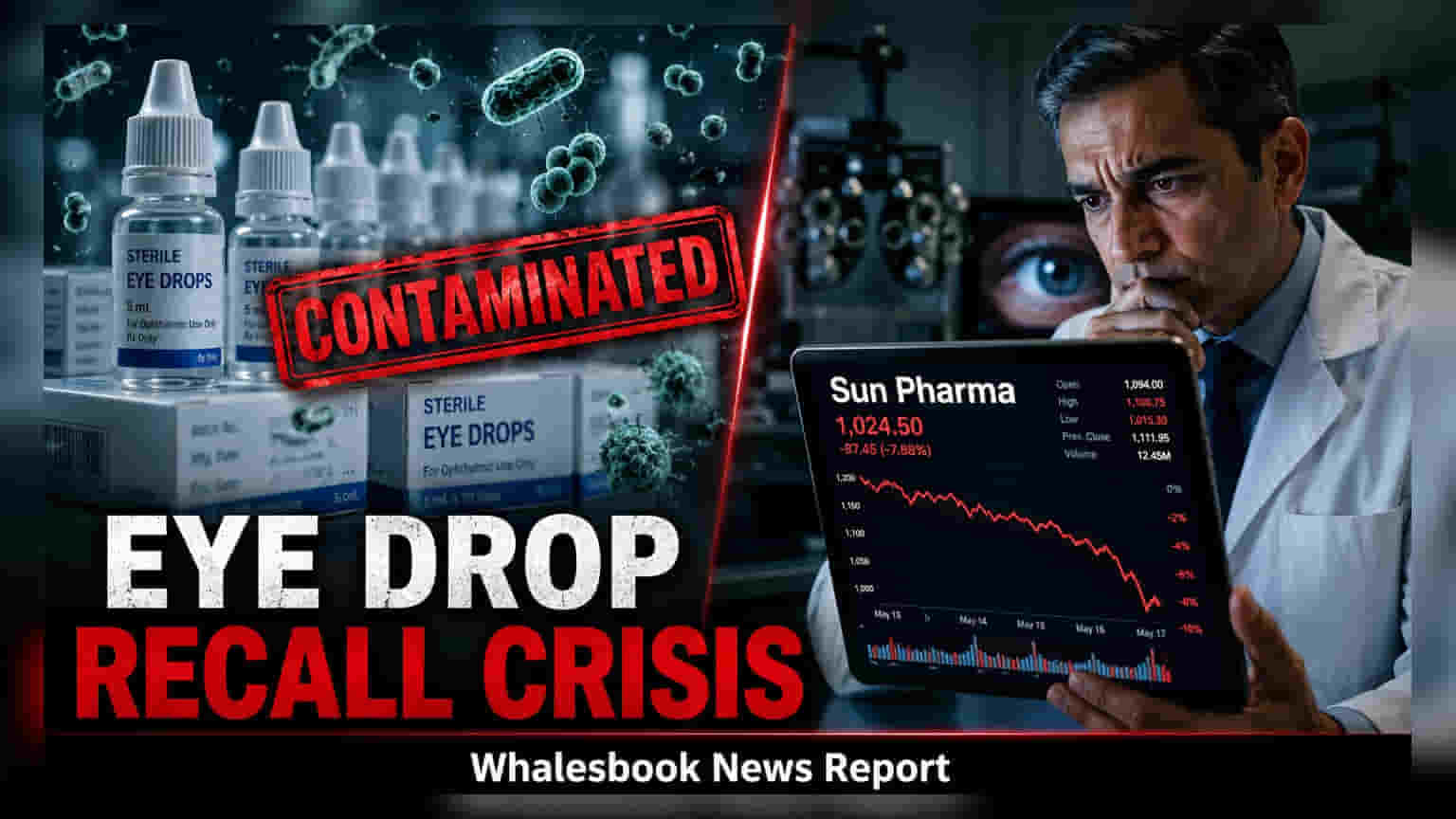
Sun Pharmaceutical Industries has voluntarily recalled several eye drop products following a precautionary safety review in July 2026. While the recall affects specific brands, the company recently reported strong Q1 FY27 results, with profit rising over 27%. Investors may track how this situation impacts product supply and regulatory compliance in the coming weeks.
Sun Pharmaceutical Industries initiated a voluntary recall of several of its eye drop products in July 2026 as a precautionary measure. This action followed a safety review in the ophthalmology segment, which led to a confidential communication with distributors instructing them to stop billing and return the existing stock of specific products. The affected range includes several known brands such as Depopred, Brinolar, Brinzotim, various Lotepred formulations, Nepalact, and Toba-F.
While the company officially describes the move as precautionary and has not publicly confirmed specific contamination as the primary cause, the recall represents an operational challenge that the firm is managing. In response to the situation, the company has emphasized that many of its other eye care products are manufactured at different, qualified facilities, helping to isolate the impact and maintain overall product availability.
In contrast to the news of the product recall, the company’s financial performance remains steady. In its Q1 FY27 results announced in early August 2026, Sun Pharma reported a 10.46% year-on-year growth in consolidated revenue, reaching ₹15,299.88 crore. The company also saw its net profit rise significantly by 27.04% to ₹2,894.79 crore compared to the same period last year. As of August 10, 2026, the stock price has remained relatively stable, trading near the ₹1,950 level, suggesting that the market has largely absorbed the news of the recall given the company’s broader operational scale.
For investors, the key area of focus involves understanding whether this recall leads to wider regulatory scrutiny or increased compliance costs. Pharmaceutical companies often operate with stringent quality control standards, and any disruption, even if voluntary, requires management to demonstrate robust process controls to avoid long-term reputation risks. The company continues to navigate a complex environment, including generic price pressure in the United States, which remains a primary factor for its financial health alongside its domestic operations.
Looking ahead, investors may monitor company statements or regulatory filings for any updates on the resumption of supply for the impacted brands. Additionally, market participants will likely keep a close watch on whether this event leads to any changes in manufacturing processes or quality assurance protocols, as maintaining supply chain reliability and brand trust is essential for long-term growth in the competitive healthcare sector.