

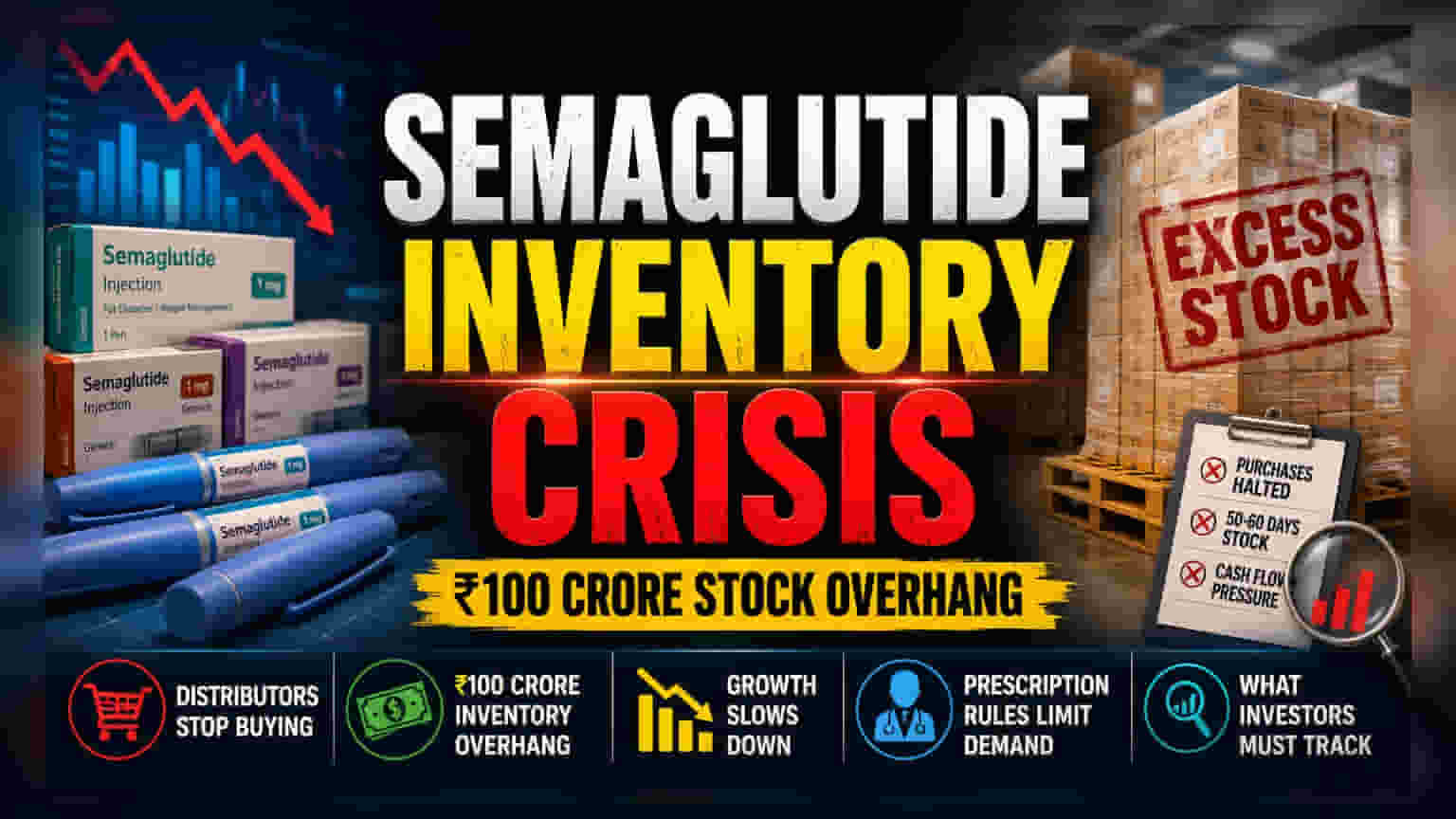
Excess stock worth ₹100 crore is piling up in the Indian semaglutide market as retailers pause new buying. After a massive surge of generic launches following the March patent expiry, sales growth plummeted in May. This supply-demand mismatch, combined with stricter prescription guidelines, signals a cooling period for manufacturers in the competitive weight-loss segment.
What Happened
The Indian market for semaglutide, a popular GLP-1 receptor agonist used for diabetes and weight management, is currently facing a significant inventory bottleneck. Industry data indicates that excess stock in the trade channel has reached an estimated value of ₹100 crore.
Stockists and wholesalers, who typically hold 30 to 45 days of inventory, are now sitting on 50 to 60 days of stock. Consequently, these distributors have halted fresh procurement from manufacturers to clear the existing supply. This development comes after a massive supply push in April, following the drug's patent expiry in late March.
The Inventory and Cash Flow Pressure
For investors, the accumulation of unsold stock at the distributor level is a key monitorable. When stockists stop purchasing, pharmaceutical companies—including major players like Torrent Pharmaceuticals, Sun Pharma, and Dr Reddy's, who launched generic versions after the patent expiry—see an immediate pause in secondary sales growth.
While primary sales (sales from companies to distributors) might have been strong in previous months, this inventory pile-up could lead to lower realizations in the coming quarters. If the excess stock remains for too long, manufacturers may eventually face pressure to offer trade schemes or discounts to move the inventory, which can impact operating margins.
The Patent Rush Backlash
The market experienced a frenzied environment in April, with value growth hitting 50% and unit growth surging by 88% as multiple generic brands flooded the market. However, this growth proved unsustainable. By May, month-on-month value growth for the therapy segment slowed to just 6%, while unit growth fell to 12%.
This trend suggests that the aggressive entry of numerous players caused a supply-demand mismatch. The rapid multiplication of brands often leads to aggressive channel stuffing, where companies push products into the market to capture shelf space before real patient demand is fully established.
Why Regulatory Rules Matter
The slowdown is not solely due to supply issues. Industry reports indicate that recent government advisories regarding GLP-1 therapies may also be influencing sales. These guidelines emphasize that such medications should only be prescribed by qualified specialists, rather than general practitioners.
This prescription mandate acts as a friction point for mass-market adoption. While these drugs are often in high demand, the requirement for specialist intervention limits the speed and breadth of prescriptions, curbing the explosive growth many expected following the generic launches.
Divergent Performance: Semaglutide vs. Mounjaro
It is important to note that the slowdown is concentrated in the semaglutide category. Eli Lilly’s tirzepatide drug, marketed as Mounjaro, reported a 12% sales increase to ₹136 crore in May, remaining the largest-selling therapy in the segment. This indicates that while the overall appetite for GLP-1 therapies remains, the crowded and newly genericized semaglutide market is facing its own unique competitive and inventory challenges.
What Investors Should Track
Investors should monitor the clearing speed of the current inventory overhang. Key points to track include:
- The timeline for distributors to resume normal purchasing cycles.
- Whether companies resort to price cuts or aggressive trade incentives to clear stock.
- Any revisions to earnings guidance for companies heavily invested in the domestic GLP-1 therapy segment.
- Whether the government maintains or tightens prescription mandates, which could impact the long-term volume potential for the mass market.