

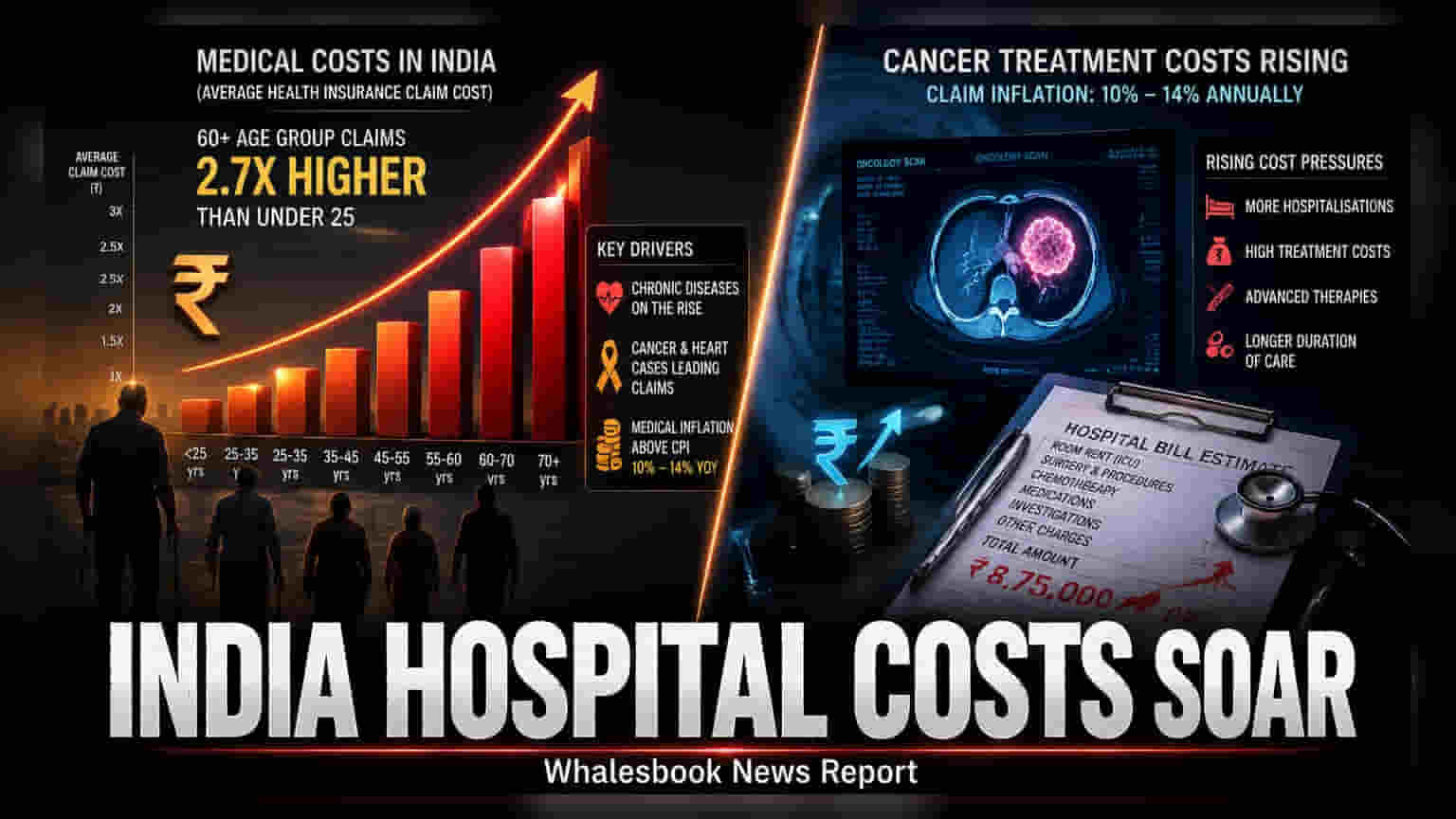
Medical inflation in India is outpacing general economic inflation, with cancer treatment costs rising by up to 14% annually. Data shows insurance claims for individuals over 60 are 2.7 times higher than for younger patients. For investors, this presents a complex scenario: while structural demand supports hospital growth, rising costs increase the risk of regulatory price caps and potential affordability hurdles for patients.
Hospitalisation expenses in India are rising rapidly, driven by an aging population and the increasing prevalence of chronic illnesses. Recent data indicates that health insurance claims for individuals aged 60 and above are now 2.7 times higher than those for individuals under 25. This cost gap highlights the financial burden associated with aging, as the elderly demographic requires more frequent care for complex conditions such as cardiac issues, kidney disorders, and cancer.
Chronic diseases have become a central driver of rising medical bills. Cancer and heart-related conditions account for a large portion of claim volumes and values. Specifically, the annual inflation rate for critical care has been significant, with cancer treatment claims increasing by 10% to 14% annually over the last few years. As medical inflation consistently stays above general consumer price inflation, the cost of advanced treatments is forcing a shift in how individuals and families plan for their healthcare spending.
From an investor perspective, this trend reflects a dual reality for the Indian hospital sector. On the one hand, rising medical demand and increased health insurance penetration provide a stable foundation for growth. Major hospital chains recently reported a strong start to the fiscal year, with revenue and profit growth exceeding 20% in the first quarter of FY27. To meet this ongoing demand, industry leaders are actively expanding their capacity, with plans to add approximately 14,500 to 18,000 new beds across the country over the next three to five years.
However, the rapid increase in treatment costs introduces several risks that shareholders should monitor. One primary concern is regulatory intervention. As hospital bills rise, there is an increased possibility of government authorities implementing policies to cap room charges or procedure costs to protect patient affordability. Any such regulatory action could directly impact the profit margins of private hospital chains. Furthermore, if medical inflation continues to outpace income growth for the average patient, there is a long-term risk of demand saturation or a shift toward lower-cost healthcare providers.
Investors may look to track how hospital chains manage their expansion costs, particularly whether they can maintain their profitability while facing potential regulatory or pricing pressures. Additionally, the ability of the insurance industry to adjust premium levels without losing policyholders will be an important factor in maintaining steady demand for private healthcare services.