 Whalesbook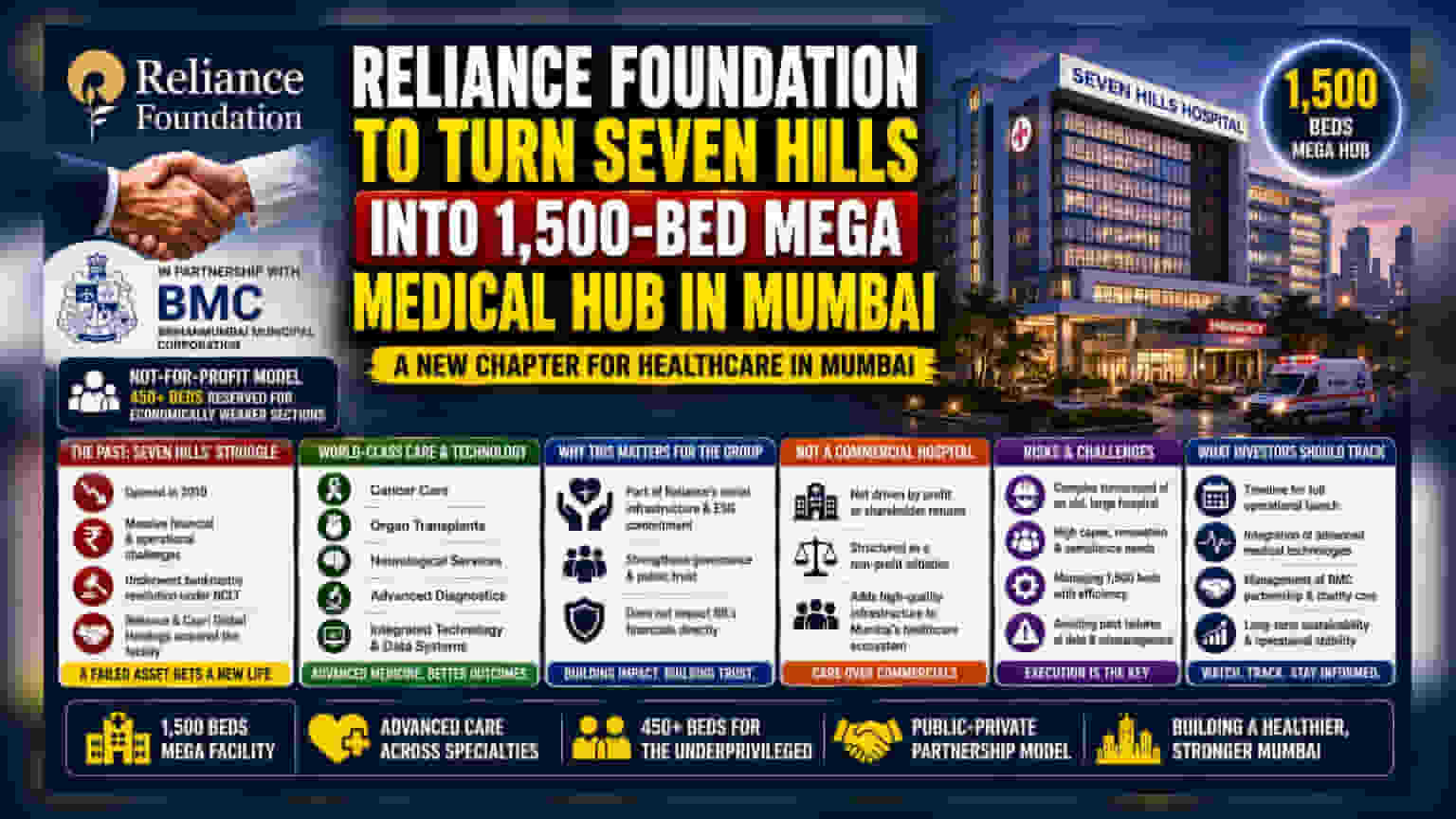
Reliance Foundation is transforming the legacy Seven Hills Hospital into a 1,500-bed medical city in Mumbai. In partnership with the BMC, the project will dedicate significant capacity to affordable healthcare. This move revives a facility that previously faced severe debt and bankruptcy, marking a notable expansion in the group's social infrastructure efforts.
What Happened
Reliance Foundation has announced a major plan to redevelop the Seven Hills Hospital in Mumbai into one of the city's largest medical facilities. The project aims to create a 1,500-bed medical hub that offers advanced medical care, including cancer treatment, organ transplants, and neurological services. The hospital will integrate technology and data systems to improve patient outcomes. A core part of this initiative is a partnership with the Brihanmumbai Municipal Corporation (BMC), where the facility will operate on a not-for-profit basis, with over 450 beds reserved for patients from economically weaker sections.
The Past Hurdles of Seven Hills
For investors, it is important to understand the history of this asset. The Seven Hills Hospital was originally opened in 2010 but faced massive operational and financial challenges over the years. The hospital eventually entered a bankruptcy resolution process under the National Company Law Tribunal. Reliance, along with Capri Global Holdings, acquired the facility as part of the resolution plan. The facility’s past struggle with high debt and poor financial management was a major concern for years. The current redevelopment represents a complete turnaround of a failed asset rather than a greenfield project.
Why This Matters for the Group
Reliance Industries, as a conglomerate, is heavily invested in energy, retail, and digital services. While this hospital project is led by the Reliance Foundation—the group’s philanthropic arm—it is part of a broader trend of the group expanding its footprint in social and healthcare infrastructure. Since the hospital is intended to be a not-for-profit institution, it does not directly add to the company’s quarterly profit or revenue numbers. Instead, it strengthens the group's social and governance (ESG) profile. Investors generally track such large-scale social projects to understand how the company balances its massive capital spending with its community and public relations strategy.
Why It Differs from Commercial Healthcare
Investors should distinguish this project from commercial hospital chains like Apollo Hospitals, Max Healthcare, or Fortis Healthcare. While commercial chains focus on maximizing patient throughput, margins, and operational efficiency to drive shareholder value, the Reliance Foundation project is structured as a non-profit initiative. This means it will not compete on the same financial metrics as publicly listed hospital companies. However, it does add to the competitive landscape of Mumbai’s medical infrastructure, as it will likely be a high-quality facility that patients might choose over private or public alternatives.
What Could Go Wrong
The primary challenge here is execution. Turning around a large, older hospital building requires significant renovations and infrastructure upgrades to meet modern standards for specialized care like organ transplants and research. Historically, the facility failed because of operational difficulties. Even with a strong promoter group like Reliance, the complexity of managing a 1,500-bed facility, especially one with a large public-private partnership component for charity care, remains a major task. Investors and the public will be watching whether the group can manage costs and staffing efficiently to keep the facility running smoothly without the financial failures seen in the past.
What Investors Should Track
While this project may not move the stock price of Reliance Industries, it is a significant infrastructure development in Mumbai. Key monitorables include the timeline for the hospital’s full operational launch, the successful integration of advanced medical technologies as promised, and how the partnership with the BMC is managed. The facility’s ability to sustain operations over the long term, avoiding the debt and bankruptcy issues that plagued its previous owners, will be the true test of this revival strategy.