 Whalesbook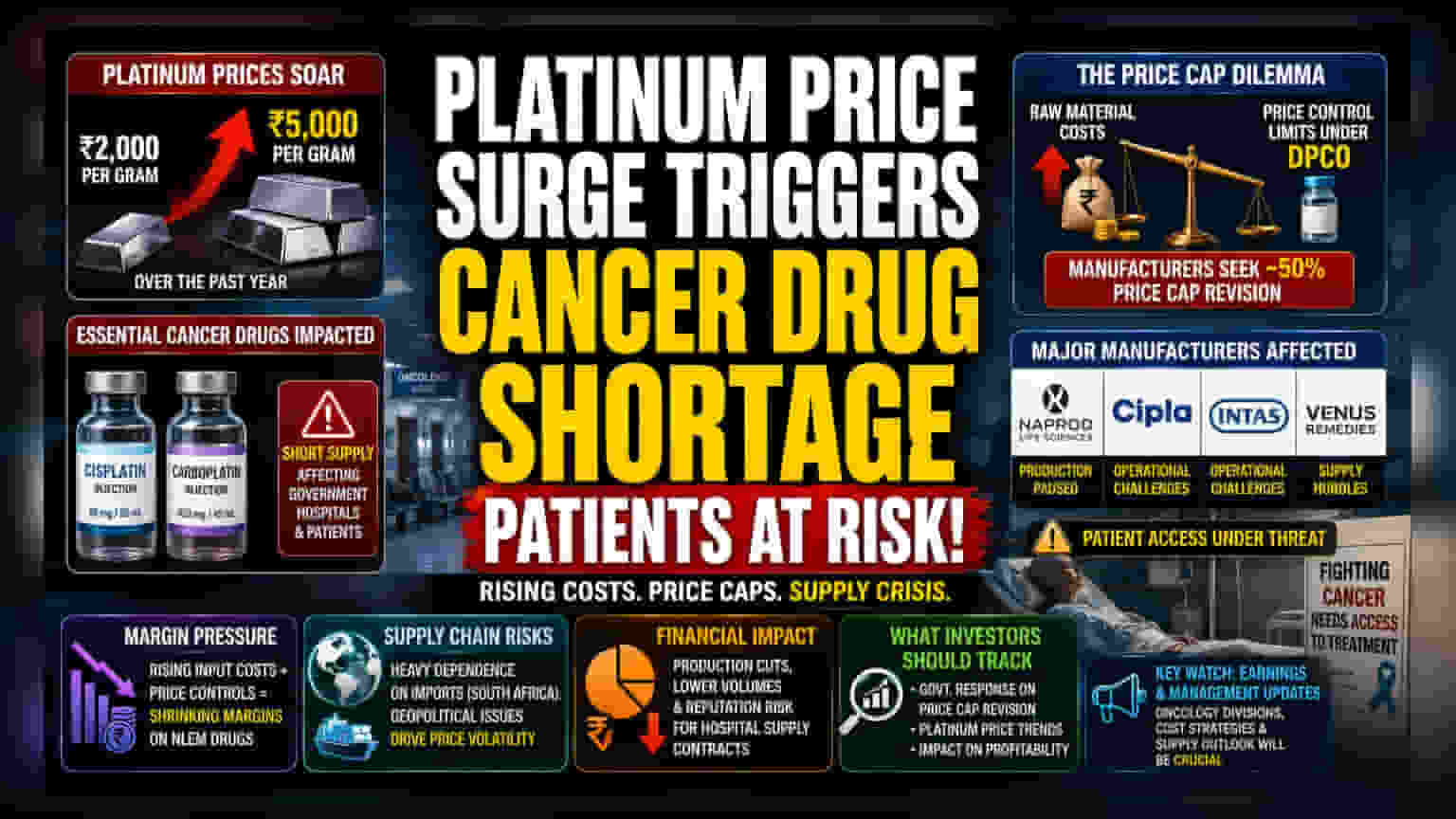


What Happened
India is facing a significant shortage of essential platinum-based cancer drugs, including cisplatin and carboplatin. This crisis has been triggered by a massive surge in the cost of platinum, a key raw material used in these chemotherapy agents. Market reports indicate that platinum prices have climbed from approximately 2,000 rupees per gram to 5,000 rupees per gram over the past year. Several manufacturers, such as Naprod Life Sciences, have reportedly paused production, while other major players like Cipla, Intas Pharmaceuticals, and Venus Remedies face operational hurdles. The shortage has made it difficult for patients to access these critical treatments, particularly in government-run healthcare facilities.
The Price Cap Dilemma
For pharmaceutical companies, the core challenge lies in the government-mandated price controls. Drugs like cisplatin and carboplatin are included in the National List of Essential Medicines (NLEM). Under the Drug Price Control Order (DPCO), manufacturers are restricted in the prices they can charge for these medicines. While raw material costs have skyrocketed, companies cannot adjust the retail price to recover these expenses. This effectively traps manufacturers between rising input costs and fixed selling prices, leading to a situation where producing these drugs becomes financially unviable for some firms. Manufacturers have formally requested the government to increase these price caps by nearly 50% to align with current costs, but the situation remains unresolved.
Why This Affects Pharma Bottom Lines
This event highlights a classic margin pressure scenario for the pharmaceutical sector. When a manufacturer deals with price-controlled products, their ability to pass on inflation to the end consumer is severely limited. If the cost of active pharmaceutical ingredients or raw materials like platinum increases significantly, the gross margins on these specific drugs drop sharply. For companies with a large portfolio of NLEM-listed drugs, such volatility can weigh on the overall profitability of their oncology or injectables divisions. Investors should be aware that while these drugs are essential for revenue volume, they may currently act as a drag on profit margins due to the inability to offset supply chain inflation.
Sector Challenges and Supply Risks
Beyond immediate margins, the sector faces a broader challenge regarding supply chain reliability. India’s pharmaceutical industry remains heavily dependent on imports for various raw materials, including platinum, often sourced from regions like South Africa. Geopolitical instability and supply chain bottlenecks can lead to sudden price volatility, as seen in this instance. When production is halted due to cost mismatches, it not only impacts financial performance but also raises operational risks. Frequent supply disruptions can damage a company’s reputation with institutional buyers and government hospitals, which often rely on consistent, long-term supply contracts.
What Investors Should Track Next
The most important factor for investors is the government's response to the industry's request for price cap revisions. If regulators allow for a price increase, it could alleviate the margin pressure on manufacturers. Conversely, if the price caps remain unchanged, investors may monitor whether companies continue to reduce production or if they find ways to optimize their cost structures. Additionally, tracking raw material price trends for platinum is essential to understand whether this cost pressure is temporary or structural. Finally, watching the management commentary of pharmaceutical companies involved in the oncology segment during upcoming earnings calls will provide insight into how they are managing these supply shortages and the impact on their profitability.