

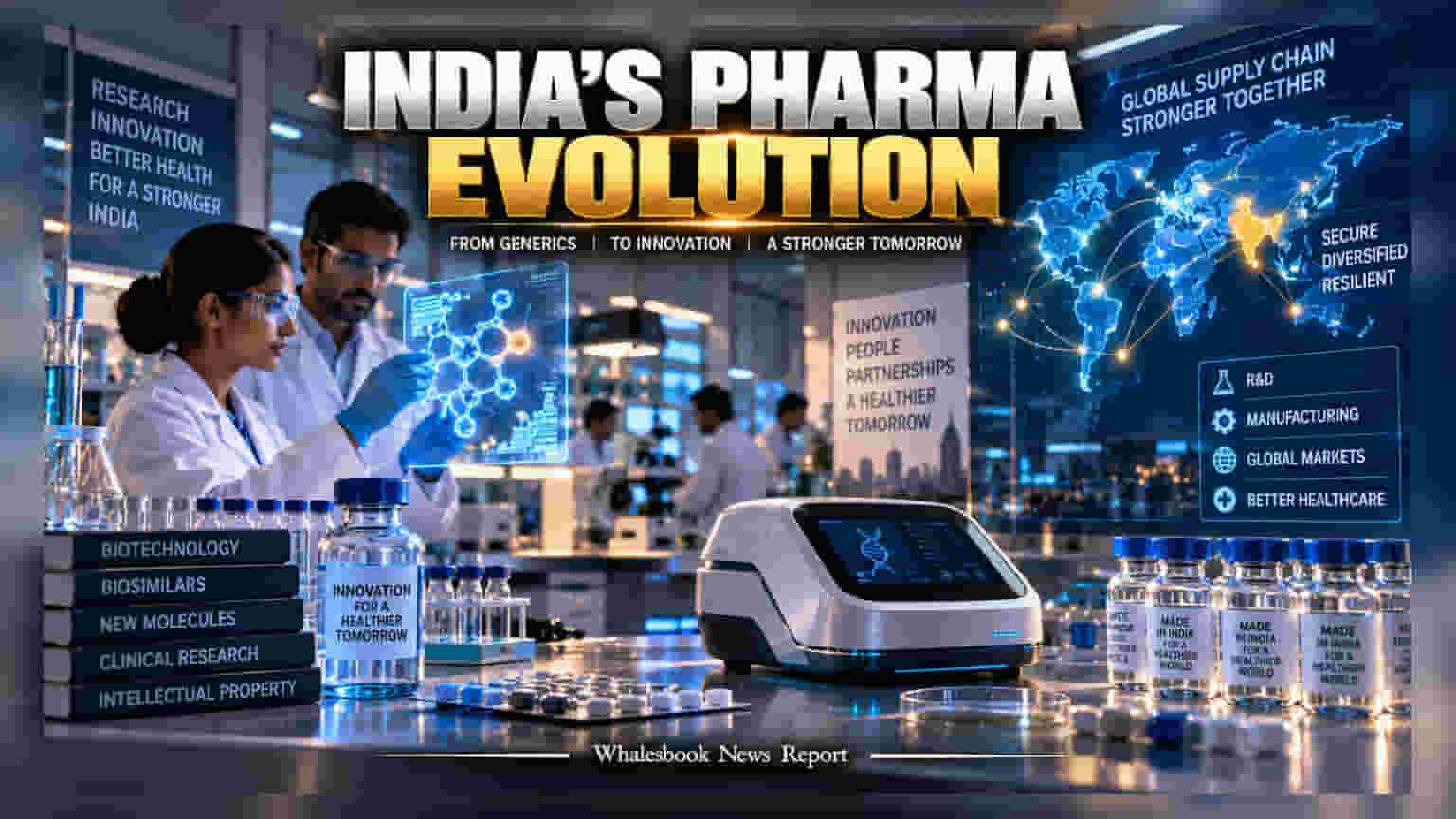
Union Commerce Minister Piyush Goyal has challenged Indian pharmaceutical companies to move beyond generic drug manufacturing toward high-value research, biotechnology, and biosimilars. Addressing industry leaders, he highlighted the need for supply chain resilience to reduce dependence on single-country imports. This shift aims to strengthen India’s global market position and mitigate risks from geopolitical trade disruptions.
Union Commerce and Industry Minister Piyush Goyal has issued a clear directive to the Indian pharmaceutical sector: shift focus from volume-driven generic production to innovation-led growth. Speaking at the Bharat Health Global Expo 2026, the minister emphasized that while the industry has achieved success as the 'pharmacy of the world' through generics, the next phase of growth must rely on high-value activities including biotechnology, biosimilars, and new molecule development.
Moving Beyond Generics
Goyal argued that relying solely on generic medicines is not a sustainable long-term strategy for the sector. He urged companies to invest more heavily in domestic research and development (R&D) and patent filings. Historically, the Indian pharmaceutical industry has faced criticism for low R&D spending compared to global innovators, often lingering around 0.7% of GDP. By moving toward complex drugs and biotech, the government aims to improve profit margins and secure a stronger competitive advantage in global markets.
Strengthening Supply Chain Resilience
A critical part of the minister’s address centered on the vulnerability of the current supply chain. The industry remains significantly dependent on imports for Active Pharmaceutical Ingredients (APIs) and Key Starting Materials (KSMs), often from single geographies. Goyal warned that these dependencies expose the sector to geopolitical volatility, where trade routes or supply availability could be weaponized during international conflicts. To combat this, the government is advocating for diversified, resilient procurement channels that ensure the stability of essential medicine production.
Regulatory Alignment for Investment
To facilitate this transition, the government is pushing for regulatory convergence with developed nations. The minister noted that aligning Indian regulatory frameworks with global standards is essential to make the country a preferred destination for international clinical trials and foreign investment in life sciences. This move is designed to attract companies that require high-standard, transparent, and globally recognized approval processes for their advanced research projects.
Investor Monitorables
For investors, this policy push signals a long-term strategic shift for the pharmaceutical sector. While the goal is to move toward higher-value products, the transition involves significant challenges. Key factors to track include whether companies can successfully scale their R&D spending without putting excessive pressure on current cash flows or profit margins. Additionally, the ability of firms to reduce API import reliance and successfully navigate the regulatory changes required for clinical trials will be essential in determining their future growth and competitive position in the global healthcare market.