

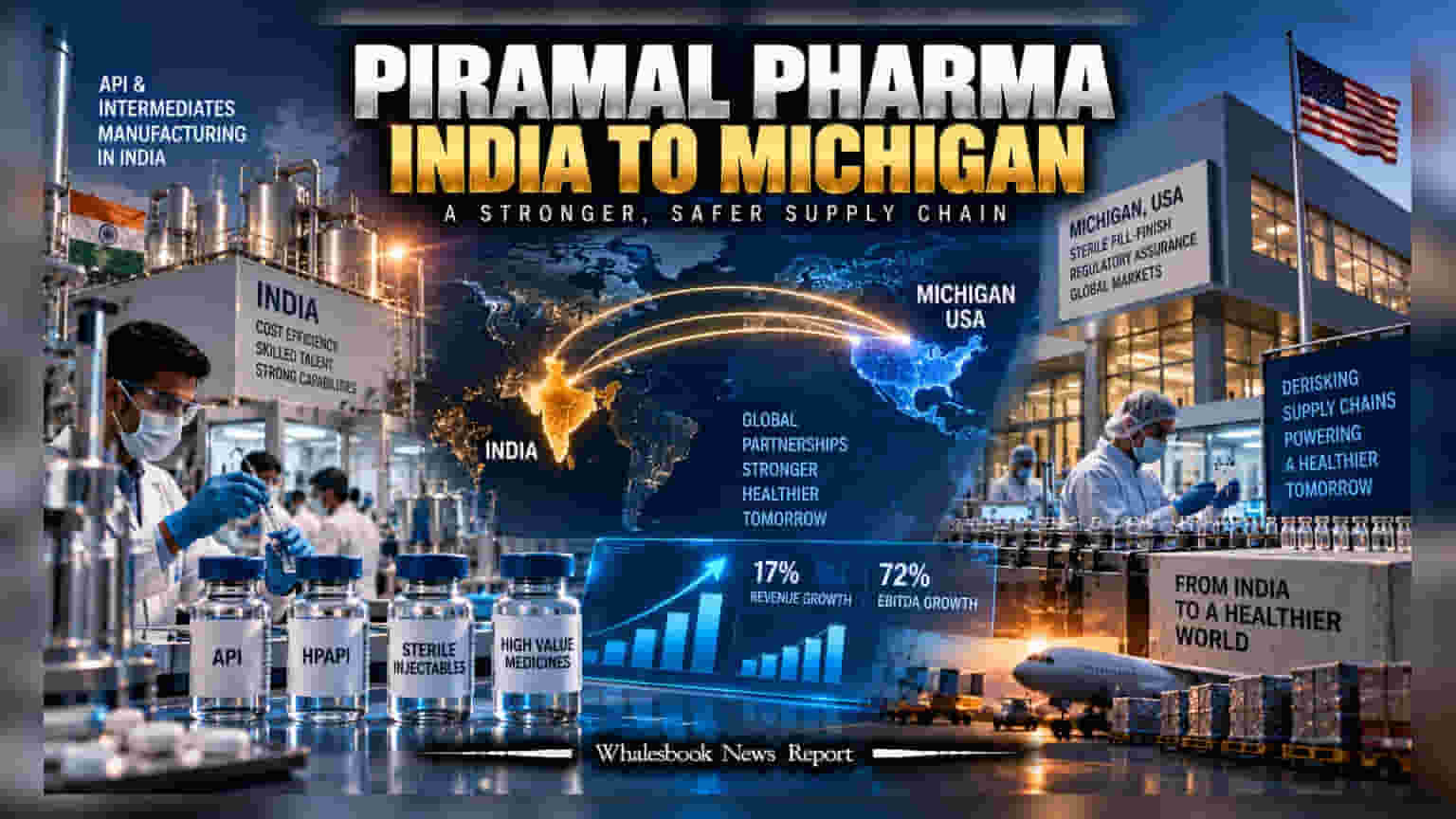
Piramal Pharma is highlighting its hybrid manufacturing footprint in India and the US to attract global clients concerned about potential tariff hikes on imports. The company’s recent performance shows strong growth, with Q1 FY27 revenue rising 17% to ₹2,270 crore, supported by its ability to offer both cost efficiency and regulatory security.
Piramal Pharma is increasingly positioning its manufacturing model as a strategic solution for global pharmaceutical companies looking to derisk their supply chains. With rising concerns over potential US trade policies and tariff hikes, global clients are actively seeking partners who can balance cost-effective manufacturing with regulatory reliability. The company’s integrated model, which splits production between early-stage chemical synthesis in India and final-stage manufacturing in the US, allows its partners to maintain supply continuity while mitigating potential tariff exposure.
This operational structure serves as a key selling point for the company’s Contract Development and Manufacturing Organization (CDMO) business. By utilizing its Michigan-based facilities for final sterile fill-finish processes, Piramal Pharma provides a layer of security for clients worried about import levies that could target offshore pharmaceutical supplies. This hybrid approach enables firms to access the cost benefits of Asian manufacturing without compromising on the proximity and regulatory assurance required for the US market.
The effectiveness of this strategy is currently reflected in the company’s recent financial results. In the first quarter of fiscal year 2027, Piramal Pharma reported consolidated revenue of ₹2,270 crore, marking a 17% increase compared to the previous year. Profitability also saw significant improvement, with EBITDA jumping 72% to ₹285 crore, resulting in an EBITDA margin of 12.5%. This growth highlights the firm’s focus on scaling its presence in complex service areas.
Regulatory compliance remains a critical differentiator in this sector. The company maintains a strong track record, including a Zero Official Action Indicated (OAI) status from the US Food and Drug Administration at its key manufacturing sites. This level of quality assurance is essential for securing high-value contracts in complex segments such as sterile injectables and high-potency active pharmaceutical ingredients, which typically command better margins than standard medicine manufacturing.
Despite these strengths, the company faces inherent risks that investors should track. The reliance on complex global supply chains means that any shift in international trade policy, beyond just tariff hikes, could impact operations. Furthermore, the company has earmarked $120 million to $135 million for capital expenditure to expand its capacity in complex modalities. Investors should watch how effectively the company executes these projects, as any delays in commissioning new facilities or integrating new technologies could impact future margins and return on capital. Additionally, the company's performance remains sensitive to global demand trends and the competitive landscape for contract manufacturing services.