 Whalesbook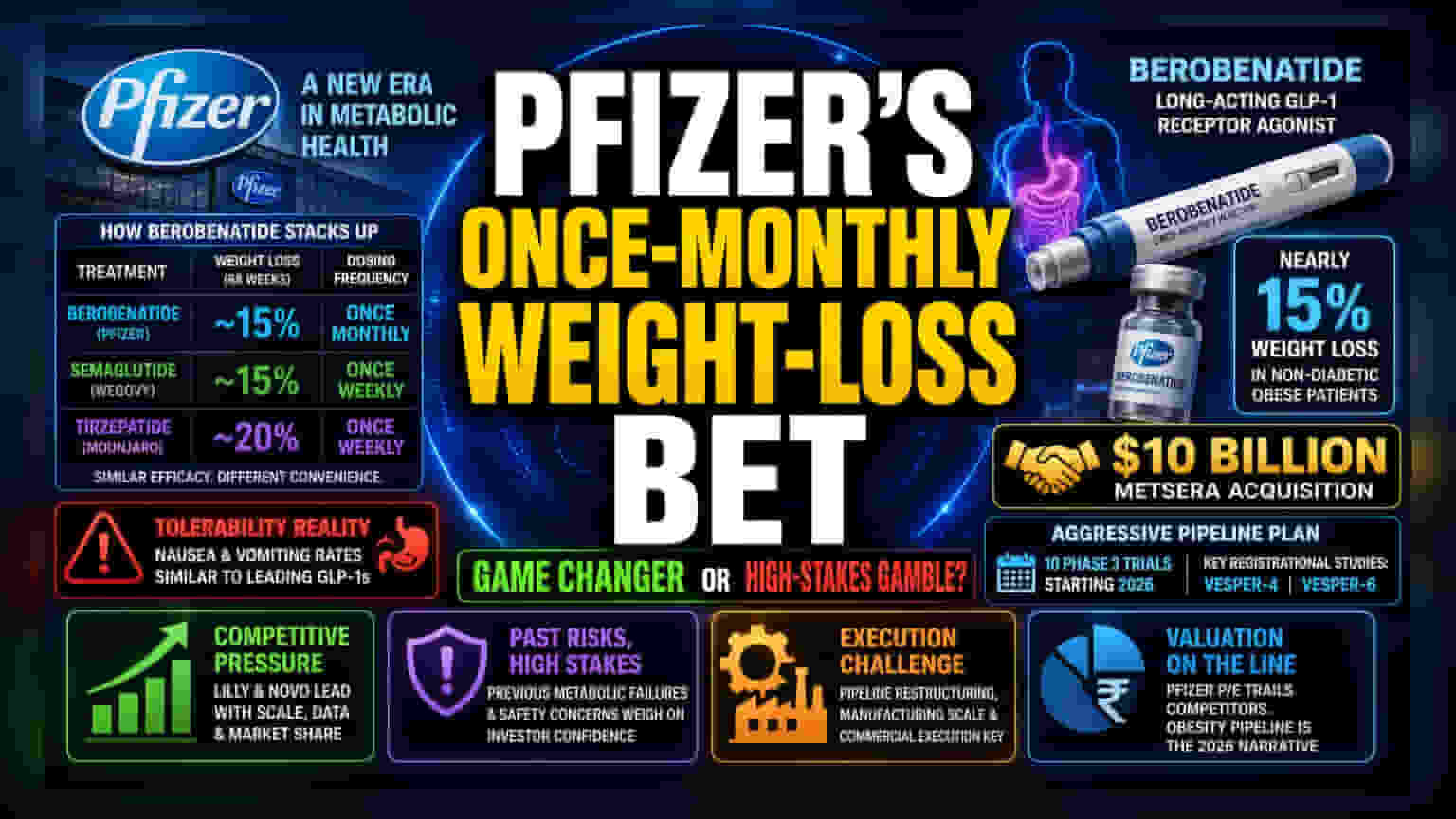


The Competitive Positioning
Pfizer’s recent presentation at the American Diabetes Association’s 86th Scientific Sessions represents a high-stakes pivot for a company struggling to regain momentum in the metabolic disease space. Following the failed development of oral candidates like danuglipron, the company is pinning its hopes on berobenatide, a long-acting, once-monthly GLP-1 receptor agonist acquired through the $10 billion purchase of Metsera. While the data suggests that berobenatide can achieve weight loss of nearly 15% in non-diabetic obese patients, the primary value proposition rests on the administration frequency rather than efficacy superiority. By moving to a monthly dosing schedule, Pfizer intends to offer a convenience-driven alternative to the established weekly therapies that currently define the standard of care.
Tolerability and Market Dynamics
Despite the potential for improved patient adherence, the trial data reveals that berobenatide carries a gastrointestinal side-effect profile nearly identical to current market-leading treatments. With reported nausea and vomiting rates mirroring those seen in early trials of Wegovy, the clinical narrative has shifted from superior tolerability to the feasibility of a monthly maintenance regimen. Investors should note that the competitive landscape is rapidly evolving; Eli Lilly and Novo Nordisk have established entrenched positions with massive manufacturing scale and multi-year real-world evidence. Pfizer’s strategy to initiate ten Phase 3 trials in 2026 implies a rapid-fire attempt to close this gap, yet the similarity in adverse events suggests that the company may find it difficult to capture meaningful market share without undercutting the pricing power currently enjoyed by its rivals.
The Forensic Bear Case
Pfizer’s aggressive push into the obesity market is not without structural risks. The company’s past failures in this space—most notably the discontinuation of two metabolic programs due to liver safety concerns—create a high hurdle for investor trust. Furthermore, the company faces significant execution pressure as it attempts to integrate the Metsera portfolio while navigating a period of broader pipeline restructuring and margin management. Unlike the specialized focus of Novo Nordisk or the obesity-led growth at Eli Lilly, Pfizer remains a diversified pharmaceutical giant juggling various oncology and vaccine programs, potentially diluting its focus in a category where speed-to-market and aggressive commercial execution are paramount. Any further safety signals or delays in the planned Phase 3 programs could cause the market to heavily discount the long-term commercial potential of the Metsera acquisition.
Forward Outlook
Market analysts remain divided on the long-term impact of the berobenatide program. While the ability to offer a monthly injection provides a clear differentiation, the absence of a 'best-in-class' safety profile forces a reliance on logistical convenience. As Pfizer moves toward its registrational trials, such as the planned VESPER-4 and VESPER-6 studies, the focus will intensify on the company’s ability to scale manufacturing and differentiate its pricing strategy. With Pfizer’s P/E ratio currently trailing behind its more focused metabolic competitors, the success of this obesity pipeline is becoming the central narrative for the company’s 2026 valuation and beyond.