

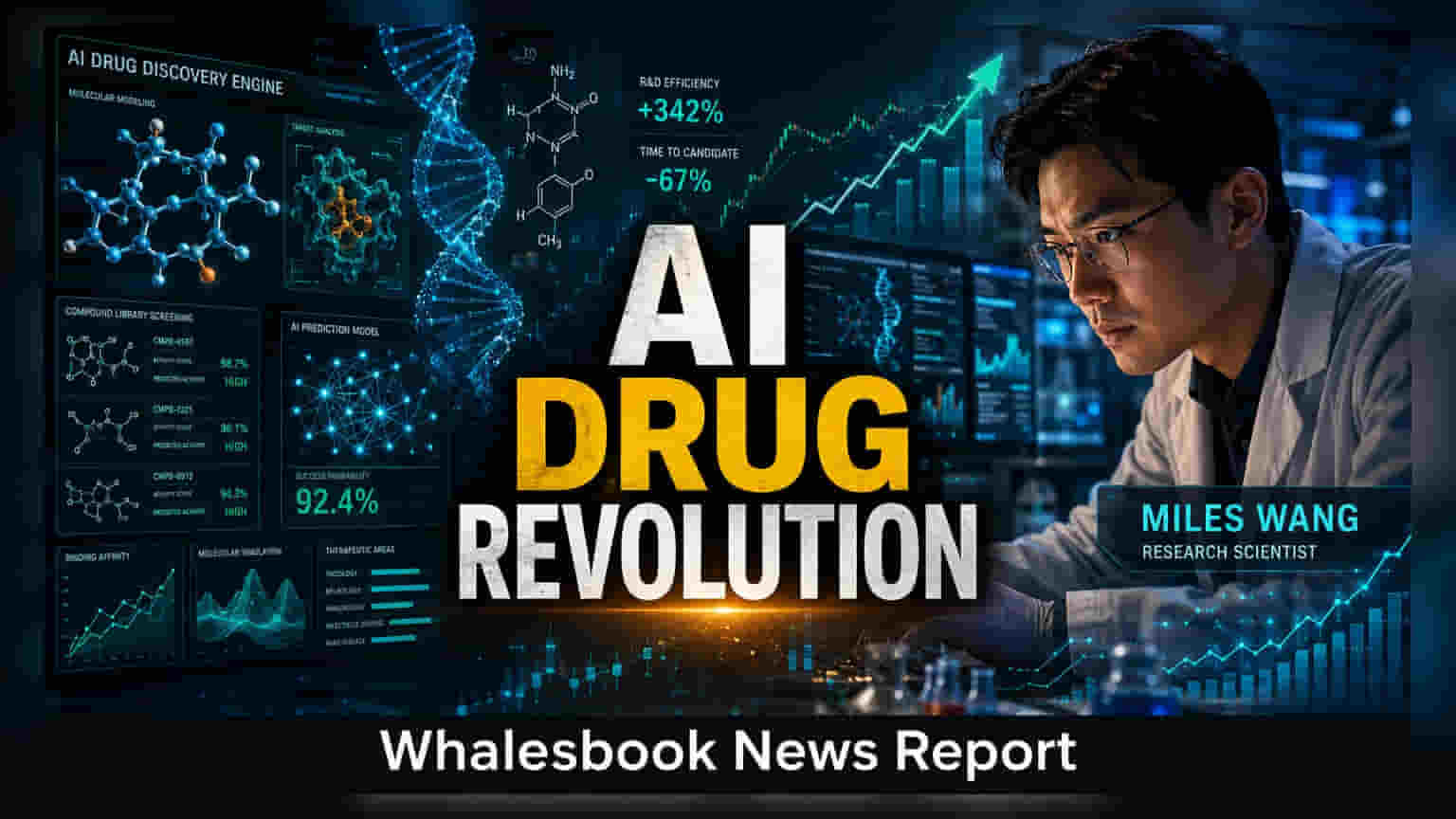
Former OpenAI researcher Miles Wang is launching an AI-driven drug discovery startup, reportedly targeting a $200 million funding round at a $2 billion valuation. The move signals high investor interest in using artificial intelligence to accelerate pharmaceutical research and drug development.
Miles Wang, a researcher previously associated with OpenAI’s initiatives in scientific discovery, is set to launch a new venture aimed at using artificial intelligence to modernize drug discovery. Reports indicate that the startup is in early discussions to secure approximately $200 million in funding. The venture is seeking a valuation of $2 billion, with venture capital firm Lightspeed reportedly in talks to lead the investment round.
The startup’s business model is expected to focus on drug repurposing. This involves identifying new medical applications for existing drugs, including compounds that may have previously failed during clinical development. By utilizing AI to analyze these already-tested medications, the company aims to reduce the time and high costs typically associated with developing new drug compounds from scratch. This strategy could provide a faster path to commercialization since the safety profiles of these drugs have often already been established in prior research.
AI Trends in Life Sciences
This entry into the market comes as investors show increasing interest in the intersection of artificial intelligence and healthcare. The sector has recently seen significant capital inflows. For example, Chai Discovery recently secured $400 million at a valuation of $3.8 billion, while Google DeepMind's Isomorphic Labs completed a $2.1 billion Series B round. These transactions reflect a growing belief among venture capitalists that machine learning can significantly improve the efficiency of identifying viable medicine candidates, a process that has traditionally been slow and expensive for pharmaceutical companies.
Potential Risks and Market Challenges
While the valuation reflects high investor confidence, the drug discovery sector carries inherent risks. AI startups in this space often face long timelines before generating steady revenue, as their products must still undergo rigorous clinical trials and regulatory approvals regardless of the speed of initial discovery. Furthermore, competition is intensifying as both established pharmaceutical giants and well-funded tech startups pour resources into AI research. The success of this new venture will depend on its ability to prove that its proprietary AI models can consistently identify successful drug candidates that traditional methods have missed. Investors will likely monitor the company’s ability to move from initial funding to actual clinical partnerships and verified drug efficacy, as these will be critical milestones for the business to justify its valuation in the long term.