

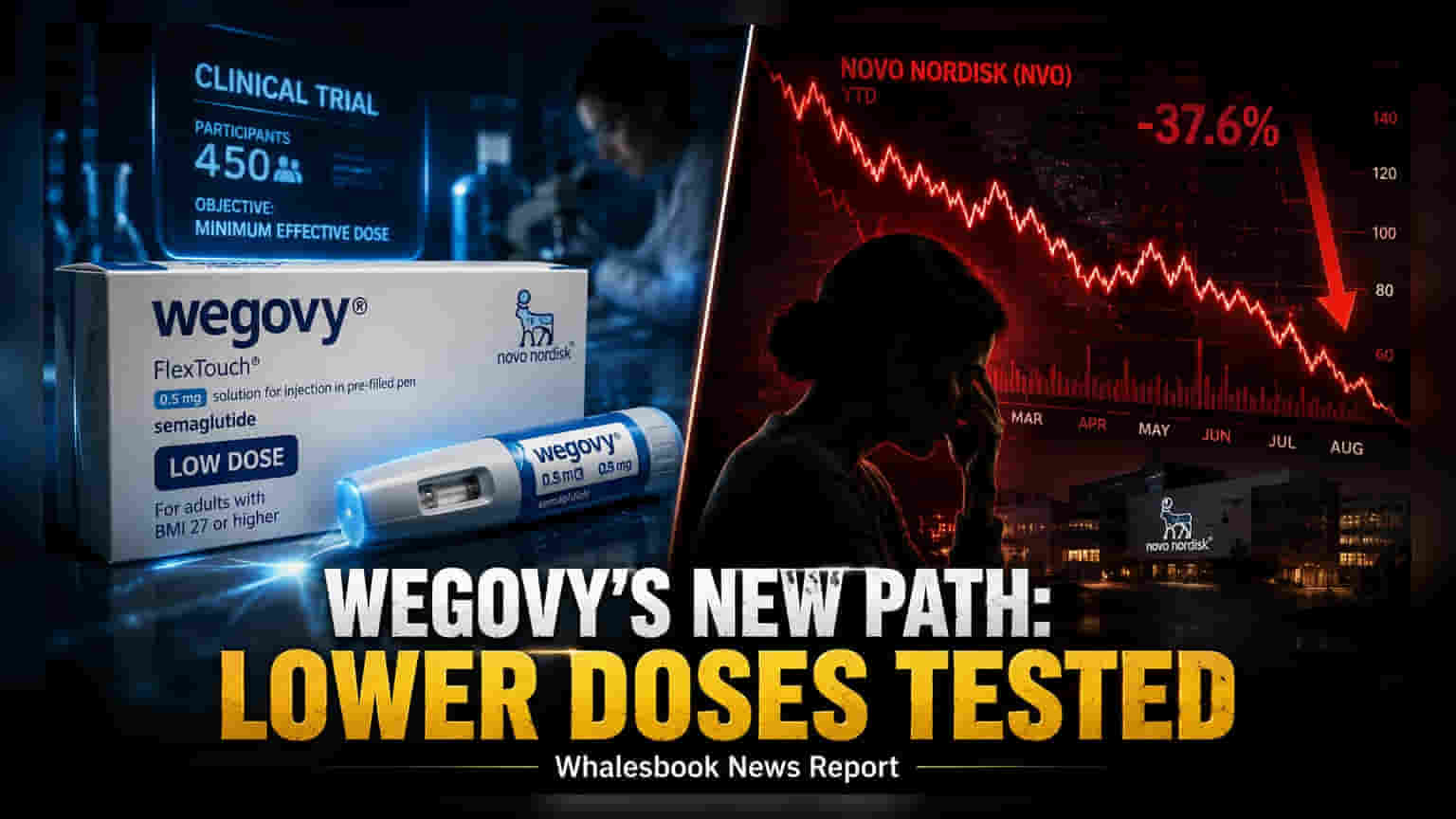
Novo Nordisk has begun a 450-person clinical trial to test lower, undisclosed doses of its weight-loss drug, Wegovy. This initiative aims to address patient side-effect tolerance and improve accessibility. Investors should evaluate how this strategy balances volume-led growth against potential revenue shifts per patient amid intense competition from rivals like Eli Lilly.
On August 12, 2026, Novo Nordisk initiated a 450-person clinical trial to evaluate the effectiveness of lower, undisclosed dosages of its weight-loss medication, Wegovy. Unlike standard obesity drug studies that often prioritize finding the highest tolerated dose, this trial aims to identify the minimum effective amount for individuals with a Body Mass Index (BMI) of 27 or higher. By investigating these lower levels, the company is attempting to address real-world patient needs, as many users naturally prefer lower doses to manage side effects.
This shift in strategy highlights the company's effort to potentially expand its patient base to individuals who might otherwise discontinue treatment due to side effects. For the business, the outcome of this study could lead to more flexible treatment protocols. However, the commercial success of this approach hinges on volume. If a larger number of patients opt for lower-dose, lower-cost options, the company will need to demonstrate that this increased user count can offset any reduction in revenue per prescription.
The trial news comes shortly after the company's second-quarter 2026 financial report, released on August 4, 2026. Following strong performance in that period, Novo Nordisk raised its full-year guidance for both sales and operating profit, indicating steady operational momentum. Despite this, the company operates in a high-stakes sector characterized by rapid growth and aggressive rivalry.
Sector Competition and Risks
The obesity drug market is defined by intense competition, primarily from Eli Lilly, which offers competing treatments such as Zepbound and Mounjaro. This competitive environment places pressure on pricing and necessitates consistent innovation. Beyond the direct competition, Novo Nordisk faces significant operational challenges. Scaling manufacturing and supply chains to meet global demand remains a priority, while the prevalence of unapproved, compounded versions of semaglutide continues to pose risks to both patient safety and brand reputation.
Additionally, regulatory scrutiny regarding drug pricing and potential changes in federal pricing agreements could influence profit margins in the long term. Investors should note that the company’s future financial health will depend on its ability to manage these supply chain pressures and navigate a regulatory landscape that is increasingly focused on the affordability of blockbuster treatments.
The most important monitorables moving forward will include the final results of this low-dose trial, as they could reshape the company’s product strategy. Investors should also track management commentary regarding manufacturing capacity expansion and the impact of product mix shifts on operating margins.