 Whalesbook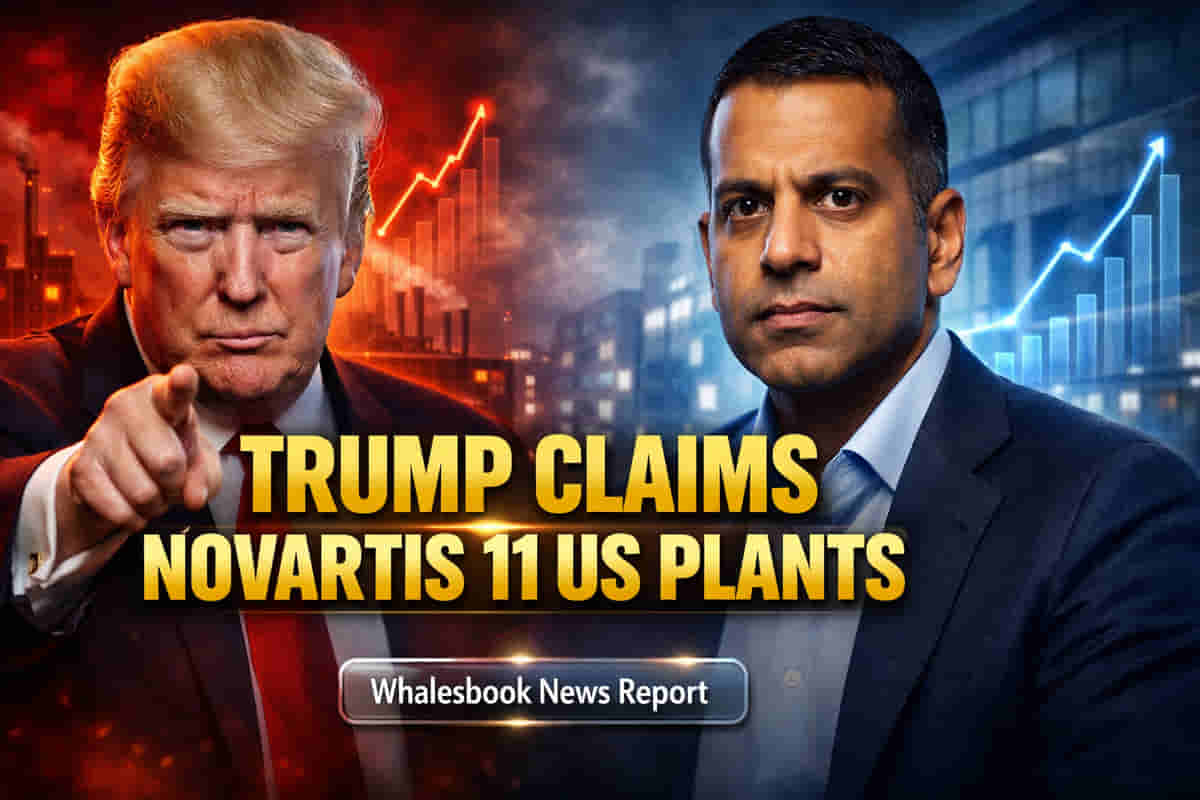
1. THE SEAMLESS LINK
The confirmation of significant U.S. manufacturing and research facility development by Novartis arrives amidst assertive claims by President Trump linking these expansions directly to his tariff policies. While the pharmaceutical giant acknowledges strategic investments, the nuanced articulation of its progress invites scrutiny into the interplay between corporate operational strategy and governmental political narratives. The market response, muted thus far, suggests a wait-and-see approach as investors parse the verifiable extent of these developments.
The Political Claim vs. Corporate Reality
President Trump recently stated that Novartis, the Swiss pharmaceutical firm, is in the process of building 11 new manufacturing plants across the United States, directly attributing this initiative to the economic influence of his administration's tariff policies. These remarks were delivered during a public address in Rome, Georgia. In contrast, a spokesperson for Novartis provided a statement confirming "progress, including recent groundbreakings for manufacturing and research facilities in North Carolina and California and plans to expand our radioligand therapy manufacturing network with a new site in Florida." Crucially, the company did not validate the precise figure of 11 facilities nor did it explicitly link these expansions to the president's trade actions. This measured response follows an earlier announcement from the prior year where Novartis signaled an intention to invest $23 billion in developing and enhancing 10 U.S. facilities, a plan that emerged during a period of heightened trade tensions and potential drug import duty threats from the Trump administration. As of mid-February 2026, Novartis (NVS) trades with a market capitalization of approximately $220 billion and a P/E ratio around 19x, reflecting established operational scale. The stock price showed minimal immediate reaction to the dual pronouncements, indicating that the market is prioritizing concrete operational news over political commentary.
Strategic Investments Amidst Policy Rhetoric
Novartis's stated commitment to expanding its U.S. footprint is part of a broader trend within the pharmaceutical industry towards strengthening domestic manufacturing capabilities. This strategic shift is driven by a confluence of factors including supply chain resilience imperatives, growing demand for advanced therapies, and the pursuit of market access. Competitors such as Roche and Pfizer are also undertaking substantial investments in their U.S. operations, focusing on areas like biologics, diagnostics, and vaccine production, often highlighting job creation and R&D integration. The global pharmaceutical sector, while generally stable in early 2026 due to demographic trends and innovation pipelines, faces ongoing scrutiny over drug pricing and regulatory frameworks. Novartis's previous multi-billion dollar investment announcements in the U.S. in the past year were met with positive, though not dramatic, stock movements, suggesting that the market values these strategic capital expenditures for their long-term growth potential rather than immediate political endorsements. The company's overall strategy emphasizes innovation in oncology, cell and gene therapy, and advanced manufacturing techniques, which naturally necessitate significant investments in state-of-the-art facilities, irrespective of specific trade policies.
The Bear Case: Growth Drivers and Unseen Risks
Despite Novartis's robust investment in U.S. infrastructure, several risks warrant consideration from a risk-averse perspective. The company's growth trajectory, while supported by its advanced pipeline, remains subject to the success of clinical trials and regulatory approvals, particularly in key therapeutic areas like oncology. Any significant shift in U.S. healthcare policy or regulatory enforcement, especially concerning drug pricing or market access, could materially impact revenue streams and future investment decisions. Furthermore, the competitive intensity within the pharmaceutical sector is escalating, with rivals continuously innovating and challenging existing market dynamics. While Novartis has demonstrated a track record of strategic capital allocation, its highly leveraged operations or susceptibility to patent cliffs on blockbuster drugs could present challenges. Additionally, global supply chain vulnerabilities, though being addressed, could still pose disruptions. The company's historical performance shows sensitivity to major pipeline setbacks or adverse regulatory outcomes, which can overshadow positive manufacturing news.
Forward-Looking Perspectives
Analysts largely maintain a positive outlook on Novartis, primarily citing its strong pipeline in oncology and its expanding capabilities in innovative therapeutic modalities. Current analyst consensus suggests continued revenue growth, driven by product launches and strategic geographic expansion. The company's stated long-term guidance emphasizes sustained investment in research and development, alongside optimizing its manufacturing network to meet global demand. While political rhetoric may influence short-term sentiment, the fundamental drivers of Novartis's growth are expected to stem from its scientific innovation and its ability to navigate evolving healthcare markets worldwide.