

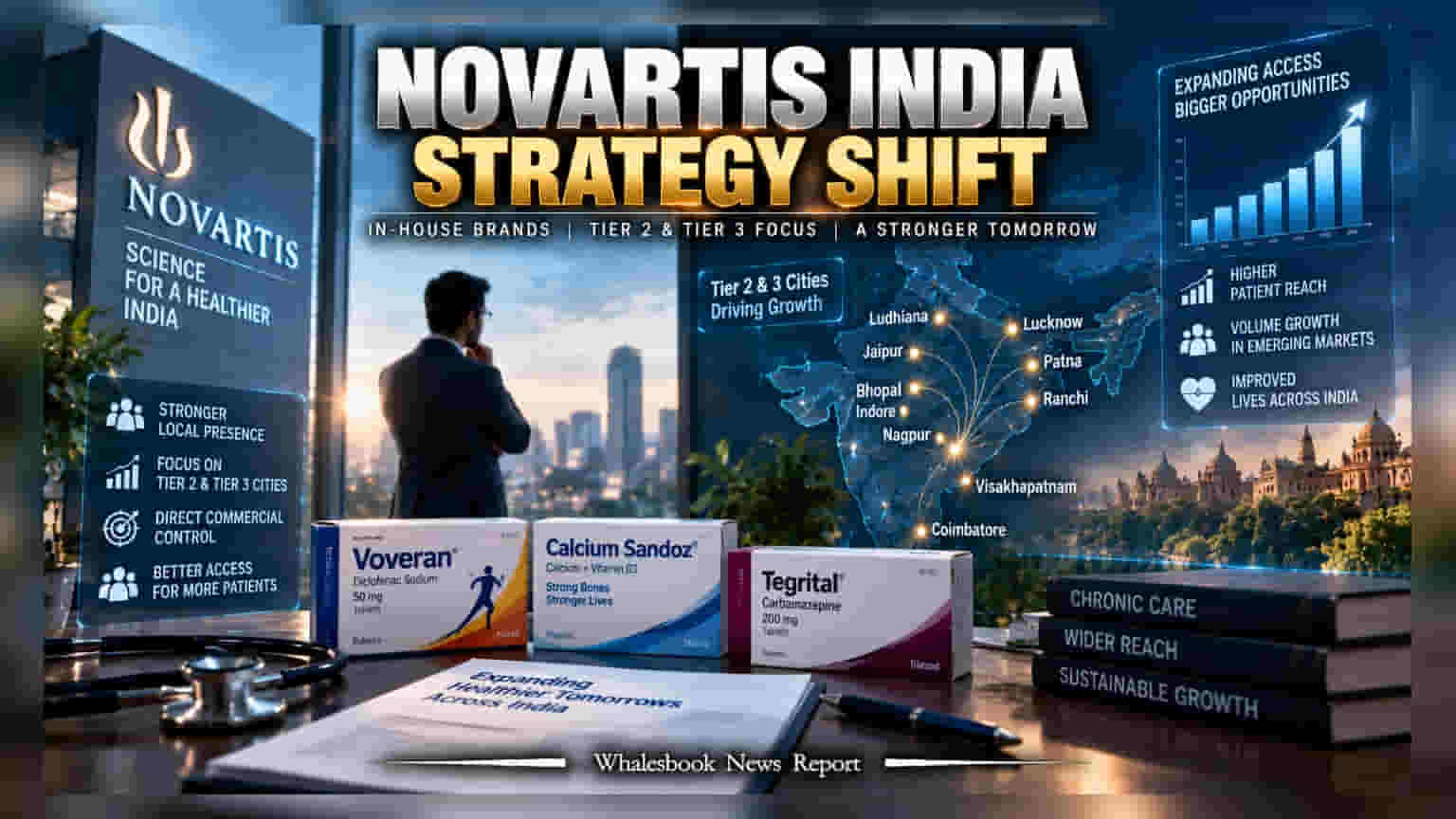
Novartis India is overhauling its distribution model by taking direct control of key brands like Voveran and Calcium Sandoz, ending its pact with Dr. Reddy’s effective September 30, 2026. Following its acquisition by a ChrysCapital-led group, the firm is pivoting to boost presence in Tier 2 and Tier 3 cities. Investors are watching how this transition impacts operational efficiency and market reach under new management.
Novartis India is making a significant change to its business model as it prepares for its next phase of growth. Following the acquisition of a 70.68% stake by a ChrysCapital-led consortium in July 2026, the company is moving to take direct commercial control of its primary legacy brands. This shift includes bringing products such as Voveran, Calcium Sandoz, and Tegrital in-house by terminating the existing distribution and promotion agreement with Dr. Reddy’s Laboratories, which is set to end on September 30, 2026.
Under the leadership of new Managing Director and CEO Vikas Gupta, the company is recalibrating its focus toward Tier 2 and Tier 3 cities. The strategy aims to capture volume growth in these markets, where the firm believes demand for chronic disease management is underserved. By managing its own distribution, the company aims to have greater control over pricing and how its products reach the end consumer, moving away from the intermediary-heavy model used previously.
The company’s latest financial performance provides a baseline for this transition. For the quarter ended June 30, 2026, Novartis India reported revenue of ₹103.8 crore, an increase of 18.6% compared to the previous year. Net profit also rose by 16.6% to ₹32.2 crore. As a debt-free entity with a lean permanent workforce, the company maintains a stable financial position, which may provide some flexibility during the current operational changes.
However, this strategic pivot carries execution risks. Moving from a third-party distribution setup to an in-house model requires significant operational oversight, particularly for a company with a small permanent employee base. The firm is also undergoing a rebranding process as it separates its identity from the global Swiss parent company, Novartis AG. This rebranding creates uncertainty regarding how effectively the company can maintain brand equity and customer trust during the transition period.
Investors are now looking toward the company's 78th Annual General Meeting, scheduled for September 24, 2026. Key monitorables for shareholders include updates on the official name change, the success of the transition plan after the Dr. Reddy's agreement concludes, and how the company intends to scale its distribution capabilities to reach smaller cities effectively without compromising its profit margins.