 Whalesbook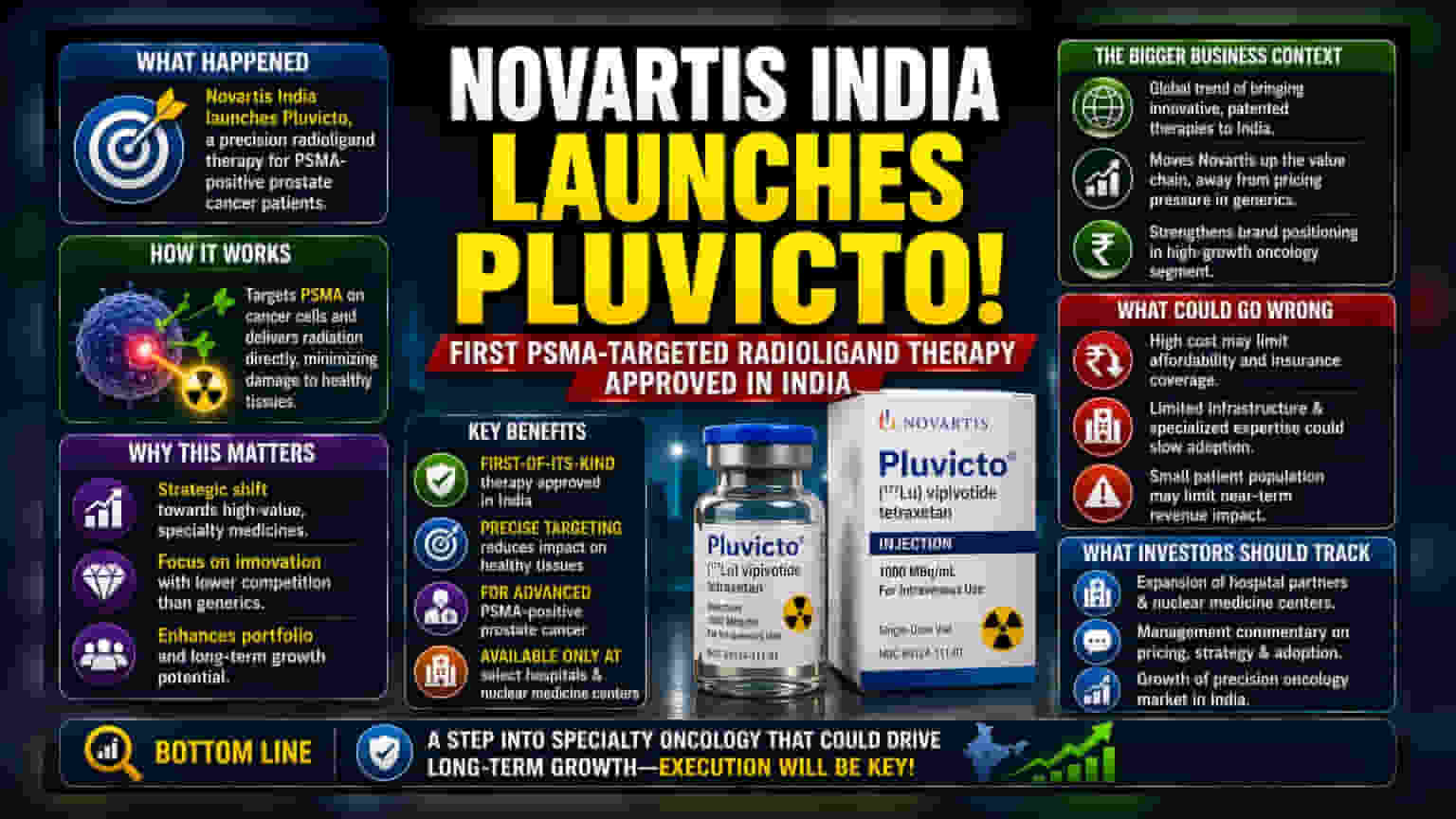


Novartis India has launched Pluvicto, a specialized radiotherapy for prostate cancer, marking India's first approved radioligand therapy. The move highlights the company's shift toward high-end precision medicine. Investors will monitor how this launch impacts the company's revenue mix and hospital partnerships in the coming quarters.
What Happened
Novartis India has announced the commercial launch of Pluvicto in India. This product is a precision radioligand therapy designed for patients suffering from prostate-specific membrane antigen (PSMA)-positive prostate cancer. This is the first therapy of its kind to receive regulatory approval in the country. The drug works by specifically targeting and delivering radiation to cancer cells, which is intended to reduce the impact on healthy tissues.
Why This Matters For Investors
For investors, the launch of Pluvicto represents a strategic move by Novartis India to focus on high-value, specialty medicines. Unlike mass-market drugs, which compete on volume and price, this therapy belongs to a niche segment of precision oncology.
This move signifies the company’s push into complex therapies where competition is often lower compared to generic medicines. However, because this is a highly specialized treatment, it is not a mass-market product. The revenue impact for the company will depend on the speed of adoption by hospitals and the company's ability to navigate the complex logistics of radioligand therapy.
How Investors May Read This
Investors often look at such product launches as an indicator of a company’s ability to bring global innovation to the local market. The shift toward specialized cancer care is a trend seen across the pharmaceutical sector, as companies look to improve their brand positioning and move away from the intense pricing pressure often found in the generic medicine segment.
However, the rollout strategy is equally important. The company has stated that the therapy will be available only through select hospitals and nuclear medicine centers. This creates a natural limit on the initial scale of the business, as the treatment requires specific medical infrastructure. Investors will likely watch whether these partnerships expand over time and if the company can effectively manage the distribution of this specialized medicine.
The Bigger Business Context
Novartis India has historically positioned itself around innovative therapeutic areas. The Indian pharmaceutical market is currently witnessing a trend where multinational companies are increasingly bringing their patented, high-value assets to India. While this enhances the company’s product portfolio, it also brings challenges such as ensuring patient affordability and accessibility.
It is also worth noting that the pharmaceutical sector in India faces continuous pressure on profit margins for older, generic products due to government price controls. By introducing patented, specialty therapies, the company is attempting to capture growth in segments that are less sensitive to these price caps. The success of this strategy, however, depends on successful market penetration and physician adoption.
What Could Go Wrong
The primary risks for investors in this segment relate to the limited patient base and the high cost of therapy. Since this is a new type of treatment, insurance coverage and patient affordability will be critical factors. If the cost of the treatment remains out of reach for a large portion of the target demographic, the total revenue generated from this product may remain limited.
Additionally, there is the risk of operational hurdles. Because the therapy requires specialized infrastructure at hospitals, any delay in setting up these centers or a shortage of trained nuclear medicine professionals could slow down the rollout. Investors should be aware that the financial benefit of such specialty launches is usually seen over a longer time horizon rather than in the immediate short term.
What Investors Should Track
Moving forward, shareholders may want to monitor a few specific points. First, the pace at which the company adds new hospital partners and nuclear medicine centers across India is crucial, as this dictates the accessibility of the drug. Second, management commentary in upcoming earnings calls will be important to understand how the company plans to price the product to balance market penetration with profitability. Finally, tracking the overall adoption of precision oncology in India will provide insight into the potential size of this market segment.