

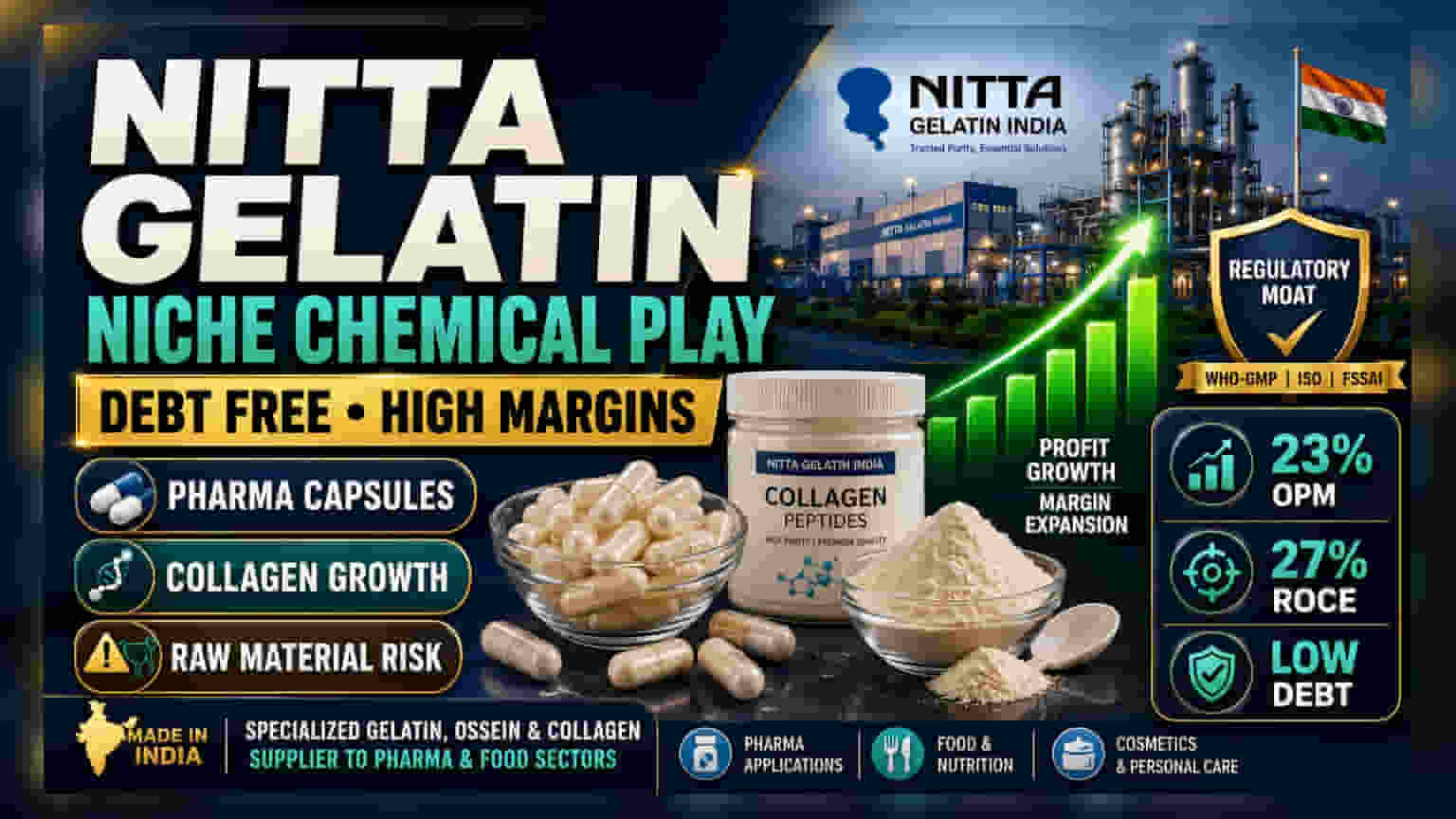
Nitta Gelatin India is growing its presence in the essential pharmaceutical ingredient market, focusing on gelatin for capsules. With a debt-free balance sheet and strong profit growth, the company highlights the importance of high-barrier niches. However, investors must weigh these factors against risks such as raw material price volatility in this specific industry.
What Happened
Nitta Gelatin India operates in a highly specialized sector of the chemical industry: the production of gelatin, ossein, and collagen peptides. These products are critical raw materials used primarily in pharmaceutical drug capsules, food processing, and protein supplements. The company, based in Kochi, acts as a joint venture between Japan’s Nitta Gelatin Inc. and the Kerala State Industrial Development Corporation. Recently, attention has turned to the company due to its unique position in a market that is shielded from intense foreign competition by strict regulatory standards.
Why The Niche Matters
The pharmaceutical industry requires high-quality, certified ingredients for medicine capsules. Because of the stringent approvals required to supply these global drug makers, it is difficult for new, low-cost competitors to enter this space. This creates a protective barrier, often keeping out cheaper imports that might otherwise disrupt the market. Nitta Gelatin India, by maintaining these certifications, has managed to secure its role as a key supplier for domestic and export needs.
Financial Position And Valuation
Financially, the company has shown a trend of profit growth despite modest revenue increases. Over the last five years, while sales growth has averaged about 8%, the company’s net profit has seen a faster pace of growth at 41% annually. A major driver for this has been the expansion of its operating margins, which have moved from 11% to 23%.
A key strength often cited by investors is the company’s balance sheet. Nitta Gelatin India is virtually debt-free and generates enough cash from its daily operations to fund its own expansion and maintenance work. Its return on money invested in the business (known as Return on Capital Employed, or ROCE) is roughly 27%, which is notably higher than the typical median for many chemical manufacturers. While the stock has seen a rise, its price-to-earnings (PE) ratio remains lower than the industry median, though valuations can fluctuate based on broader market mood.
The Raw Material Risk
Investors looking at this sector should understand the primary business risk: raw material costs. Gelatin production relies on animal-derived raw materials, such as bone and hide. The price and availability of these materials can be volatile due to changes in agriculture policy, seasonal factors, and social regulations. Unlike a standard manufacturing business where raw materials might be easier to source, Nitta Gelatin’s reliance on these specific inputs means that any disruption in supply chains or a sharp rise in procurement costs can put pressure on profit margins.
What Investors Should Track Next
For those following the stock, the main things to monitor are not just the topline revenue growth, but the stability of profit margins. Investors may want to watch how the company manages the cost of raw materials and whether it can maintain its operating efficiency. Additionally, any updates on capacity expansion or new product lines under its collagen brand will be relevant for long-term growth. Comparing its performance with peers like Narmada Gelatines can also provide a clearer picture of how different players in this niche manage the same industry-wide challenges.