

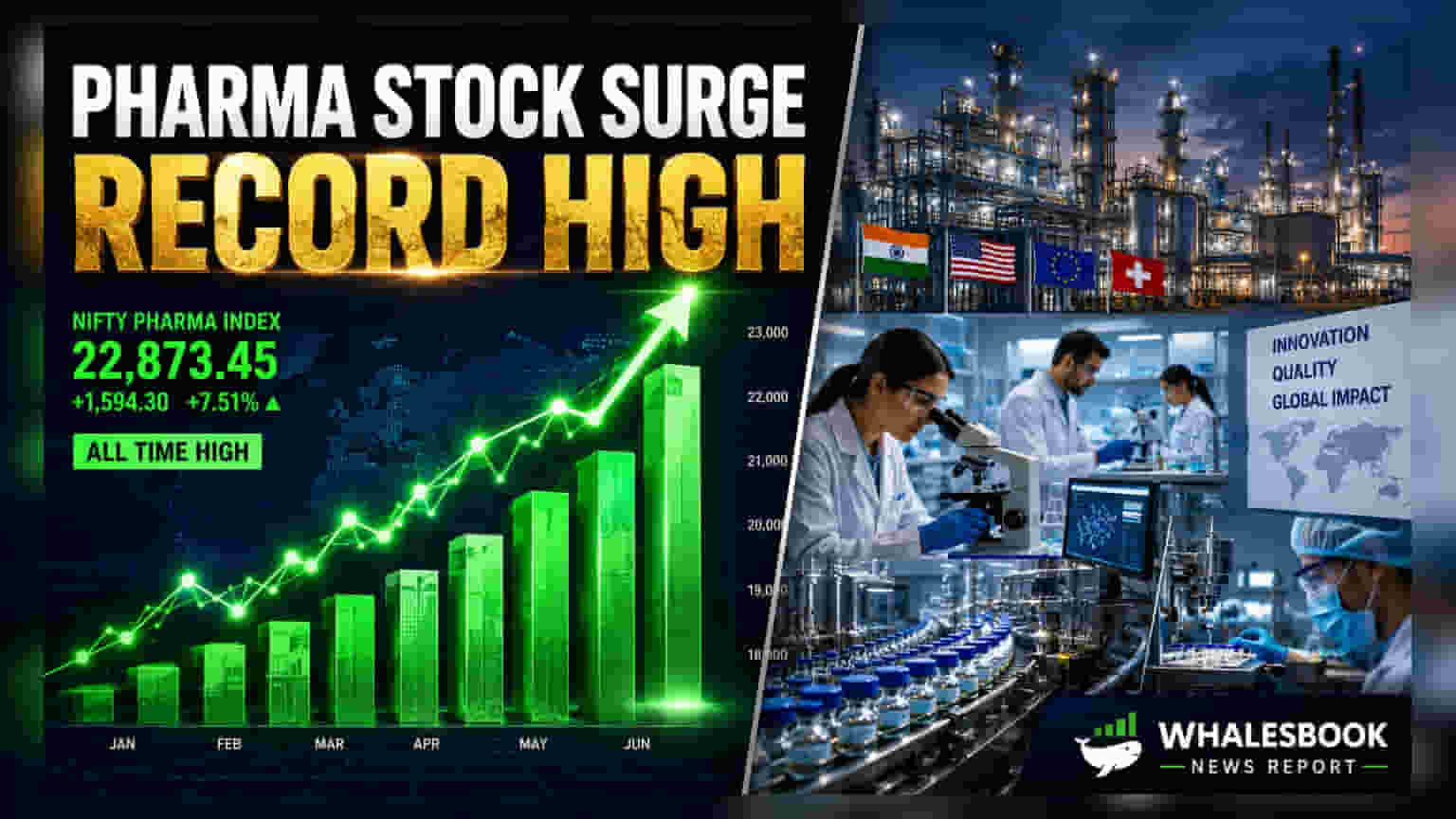
The Nifty Pharma index has surged to a record peak of 25,861, outperforming broader market indices. This rally is driven by strong global demand for contract manufacturing and steady domestic growth, despite headwinds in certain U.S. generic segments.
What Happened
On July 3, 2026, the Nifty Pharma index hit a fresh all-time high of 25,861.50, recording a single-day gain of 2%. This performance outpaced the benchmark Nifty 50, which rose by 0.5% during the same period. Year-to-date in 2026, the sector has delivered a 14% return, standing out against the broader market index, which has declined by 6.7%. Several major companies, including Aurobindo Pharma, Ipca Laboratories, and Torrent Pharmaceuticals, reached new all-time share price highs, while industry giants like Sun Pharmaceutical and Zydus Lifesciences touched their 52-week peak levels.
The Shift Toward Contract Manufacturing
A significant driver behind this sector momentum is the growing role of Indian companies in the global Contract Development and Manufacturing Organisation (CDMO) space. Global innovator firms are increasingly shifting toward Indian manufacturers that offer integrated capabilities, robust regulatory compliance, and cost-efficient supply chains. Recent industry data points to a global medicine market projected to reach approximately $2.6 trillion by 2030. Companies like Laurus Labs are investing heavily in new technologies to capitalize on this demand for sophisticated pharmaceutical services.
Domestic Performance Versus U.S. Headwinds
While the sector is riding high, performance varies by region. In the final quarter of FY26, the domestic Indian market showed strong growth of 15%, with total sales reaching ₹15,285 crore, supported by higher patient volumes and demand for chronic care treatments. European markets also contributed positively through new product launches and favorable currency movements. In contrast, the U.S. market, a critical region for many Indian players, saw a 6% revenue dip to ₹14,117 crore. This decline was largely tied to intense competition for the cancer drug gRevlimid, showing that individual company fortunes remain tied to specific product portfolios.
Critical Role in Global Supply
Recent events underscore India's importance in global pharmaceutical stability. Reports indicate that the U.S. Food and Drug Administration (USFDA) has reached out to Indian manufacturers to address shortages of the cancer drug ifosfamide. Such requests highlight the reliance of global healthcare systems on Indian production capacity, potentially providing a long-term advantage for companies that can maintain high quality and supply consistency.
What Investors Should Track
Investors may monitor how individual companies balance capital spending on R&D with profitability. For instance, Sun Pharmaceutical has signaled R&D spending plans of 6% to 7% of its sales for the upcoming fiscal year. Beyond spending, the key monitorables include the intensity of price competition in the U.S. generic market, the ability of firms to secure larger CDMO contracts, and the sustained growth of domestic chronic therapy sales. Finally, any updates on regulatory approvals for new product pipelines will continue to be a primary factor influencing individual stock performance within the index.