

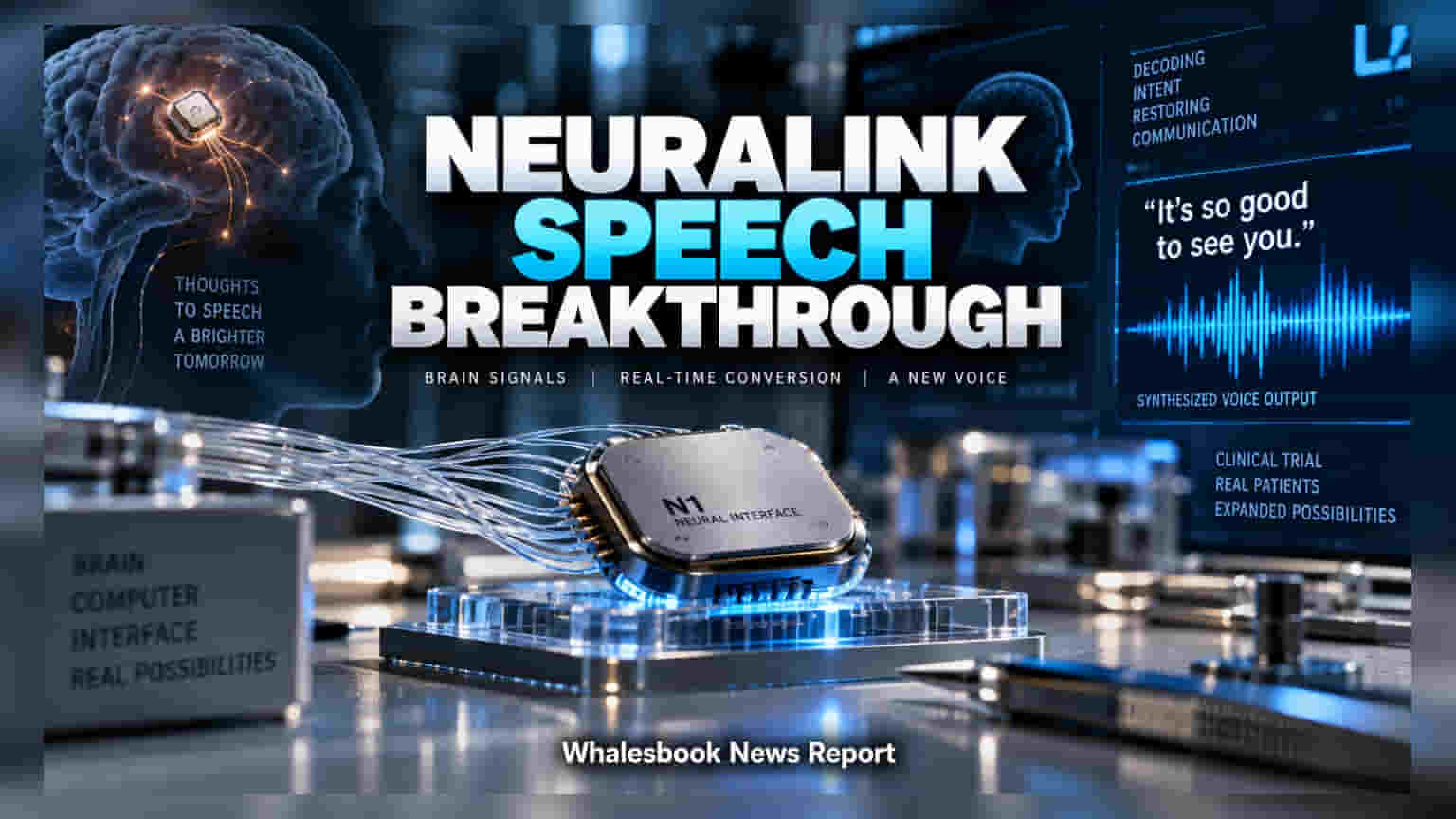
Neuralink has shared a clinical demonstration where a patient used its N1 brain implant to convert thoughts into synthesized speech. While this marks a key step in the company's VOICE study for patients with severe impairments, the device remains an investigational product without commercial FDA clearance. The long path to market includes extensive testing and regulatory review.
Neuralink has released video footage from its ongoing VOICE clinical trial, showing a participant using its N1 brain implant to communicate verbally with his partner. The interface works by reading neural signals directly from the brain and converting them into a computer-generated voice. This process effectively bypasses damaged neural pathways that typically prevent individuals with conditions like amyotrophic lateral sclerosis from speaking.
How The Technology Functions
The N1 implant is designed to detect the user's intent rather than physical movement. By translating neural activity into spoken words, the system allows for more natural communication. Research is currently focused on developing customized voices that can mimic the user’s original tone and cadence. This demonstration builds on previous integration milestones achieved earlier in 2026, marking a shift in how medical technology seeks to manage complex neurological conditions.
Regulatory And Clinical Hurdles
Despite the technical achievement, the device is currently classified as an investigational product. It has not received formal approval from the Food and Drug Administration for general commercial use. For investors and industry observers, it is important to note that clinical results are limited to specific trial participants. This data set is currently too small to determine the long-term reliability or broad-market potential of the technology.
The medical device sector, including companies focused on brain-computer interfaces, faces a lengthy and expensive path to regulatory approval. Success for such technology depends on proving consistent safety, long-term effectiveness, and technical stability across a larger group of patients. These hurdles often involve rigorous testing periods that can last for years.
For those tracking the sector, the next key updates will likely come from further clinical trial results and progress reports shared through regulatory filings. Investors should monitor whether the company can move from these individual proof-of-concept demonstrations to a broader study that confirms reliability across diverse patient profiles. The ultimate commercial impact of such technology will depend on these clinical outcomes and the subsequent path toward obtaining medical device certification.