 Whalesbook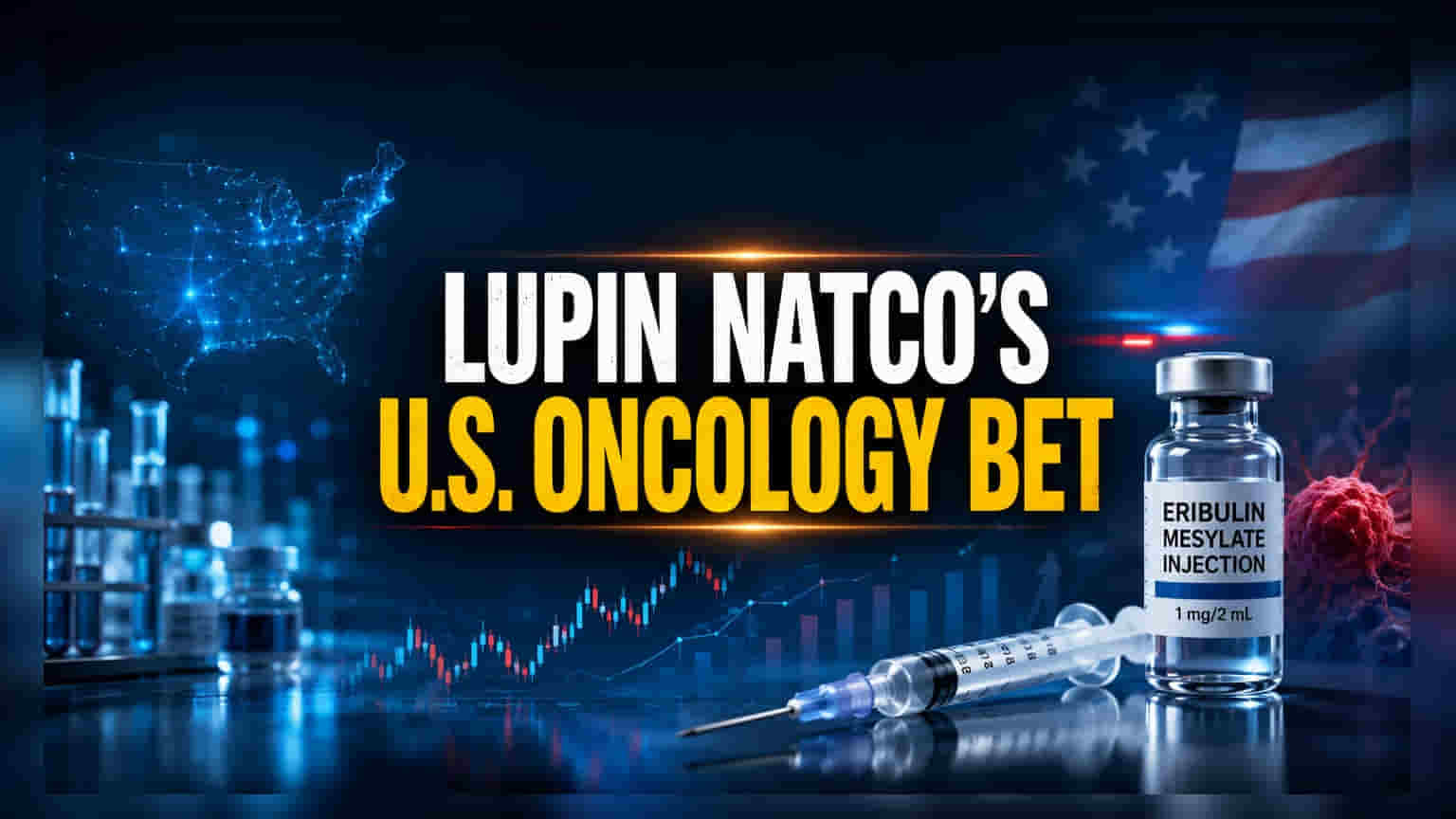


Strategic Expansion in Niche Oncology
The recent regulatory clearance of Eribulin Mesylate injection represents a tactical maneuver by Lupin and Natco Pharma to penetrate a specialized segment of the U.S. oncology market. The drug serves as a bioequivalent alternative to Eisai’s Halaven, a therapeutic agent indicated for metastatic breast cancer and unresectable or metastatic liposarcoma. While the reference product commands an estimated $43.7 million in annual U.S. sales, the entry of this generic option arrives amidst a maturing field where pharmaceutical margins are increasingly dictated by successful volume capture and early-mover advantages in complex generics.
The Competitive Landscape
Unlike high-volume, commoditized oral tablets, Eribulin is a complex, sterile injectable, raising the barrier to entry and protecting those who manage to secure approval. However, the market is not without existing challengers. Competitors like Glenmark Pharmaceuticals have previously signaled aggressive entry into this space, having announced their own generic versions as early as mid-2025. For Lupin and Natco, the objective is to leverage their alliance—combining Natco’s robust R&D for complex molecules with Lupin’s extensive commercial distribution network—to carve out market share from both the incumbent brand and other recent generic entrants.
The Forensic Bear Case
Investors should remain cautious regarding the impact of these approvals on near-term financial performance. First, the limited market size of $43.7 million suggests that this product will likely function as a portfolio filler rather than a transformative revenue driver for entities of this scale. Second, the oncology generic sector is prone to rapid price erosion once multiple players gain approval, which could compress margins faster than anticipated. Furthermore, Natco Pharma, while fundamentally strong, has previously faced scrutiny regarding FII ownership and institutional selling patterns that can lead to volatility. Any unforeseen supply chain disruption or manufacturing bottleneck in these complex injectable lines could lead to underperformance relative to analyst expectations for fiscal 2027.
Future Outlook and Sector Context
Market sentiment currently remains focused on the diversification of revenue streams beyond legacy products. Lupin, which recently reported a significant year-over-year profit increase, is under pressure to maintain this momentum through high-value product launches. Meanwhile, Natco’s reliance on export formulations makes it sensitive to global pricing pressures and regulatory shifts. Analysts will continue to monitor whether this alliance can secure enough share to offset rising input costs and sector-wide volatility. The long-term success of this launch will depend less on the initial approval and more on the companies' ability to manage pricing against a field of multiple competitors while maintaining the stringent manufacturing standards required for injectable oncology treatments.