

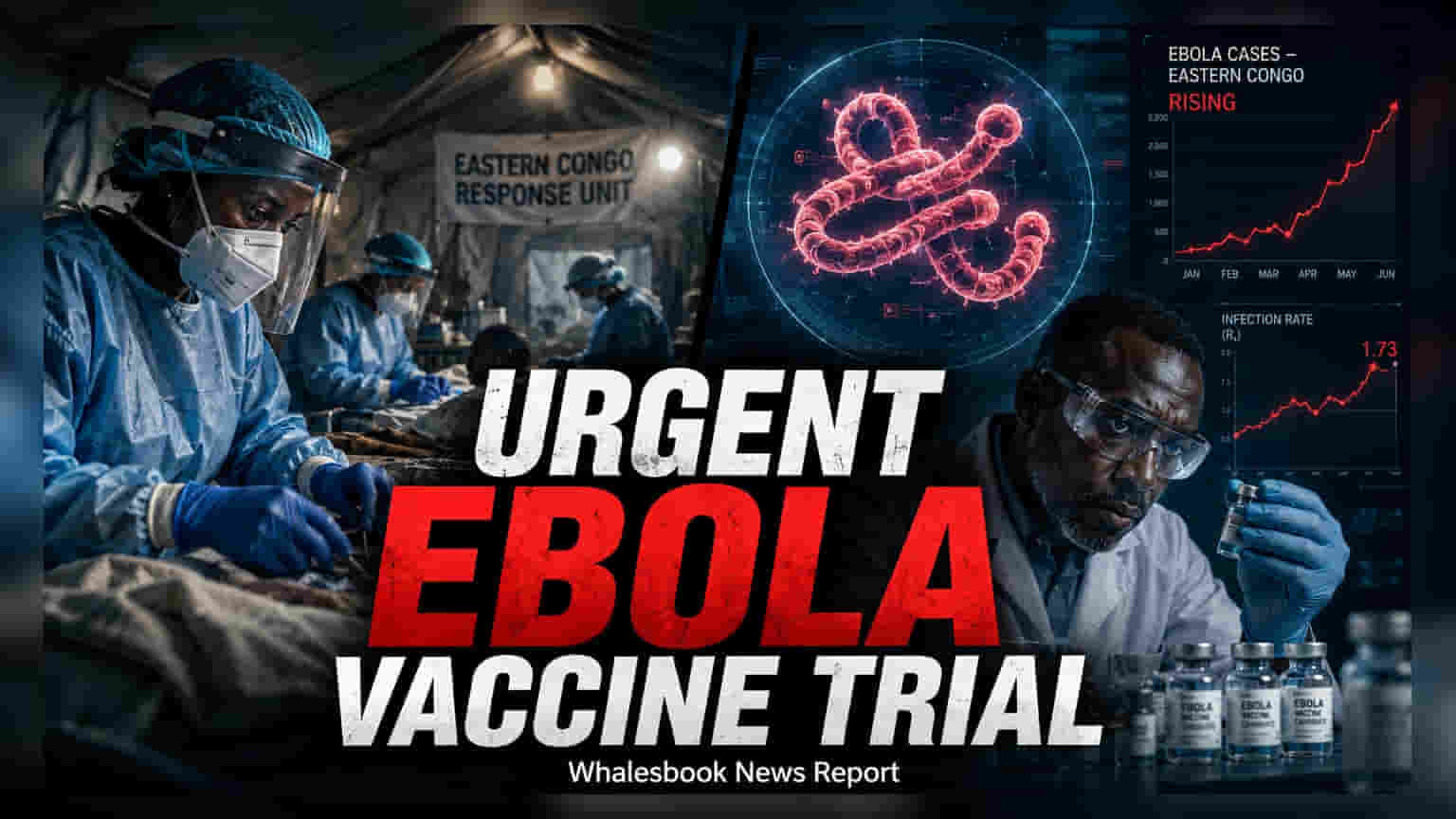
Researchers are planning a clinical trial to test if Merck & Co.'s Ervebo vaccine, paired with an experimental Sudan Ebola vaccine, provides protection against the Bundibugyo Ebola strain. The study aims to protect frontline health workers in Congo, where the current outbreak has already caused 36 deaths among responders.
Detailed Coverage
Health officials and international partners are organizing a study to evaluate an experimental vaccine strategy to combat the Bundibugyo strain of the Ebola virus in eastern Congo. The proposed trial focuses on whether administering Merck & Co.’s licensed Ervebo vaccine, which primarily targets the Zaire Ebola strain, followed by an experimental Sudan Ebola vaccine, can trigger a sufficient immune response to offer protection against the Bundibugyo variant.
The Africa Centres for Disease Control and Prevention (Africa CDC), in collaboration with Médecins Sans Frontières, is designing this clinical study. The urgency for this initiative follows a high number of infections among frontline staff, with at least 121 health workers impacted during the current outbreak, resulting in 36 fatalities. The Africa CDC has discussed providing an initial $500,000 to fast-track the launch of the study, pending necessary regulatory and ethical approvals.
Assessing Cross-Strain Protection
The medical community is currently examining the potential for cross-protection, a concept where a vaccine designed for one virus strain offers partial immunity against a related one. While existing vaccines like Ervebo generate immune responses that recognize the Bundibugyo strain, their ability to provide actual disease prevention remains unproven in humans. Previous studies on macaques have suggested that a prime-boost strategy—using two different vaccines—could potentially broaden the immune system's defense. This trial aims to gather safety and immune-response data, which are critical steps before confirming vaccine efficacy.
Regulatory and Ethical Stance
The World Health Organization maintains a cautious position, advising against the widespread use of Ervebo against the Bundibugyo strain outside of controlled research settings. Health authorities are concerned that if the vaccine fails to prevent infections, it could harm public trust in future vaccination programs. However, experts from Médecins Sans Frontières have argued that given the severe risks faced by healthcare personnel, offering a regimen that might provide even partial protection is an ethical consideration, provided that participants receive clear information regarding the limited evidence.
Investors and stakeholders in the healthcare sector are monitoring this development for two main reasons. First, the trial represents a potential expansion of the clinical application for existing vaccines, which could impact the long-term utility of the Ervebo product line. Second, the study could influence future government and international agency procurement strategies for Ebola preparedness. The next important step for the project will be the outcome of the ethical review process and the subsequent commencement of the study, which could occur within two weeks of receiving formal authorization.