

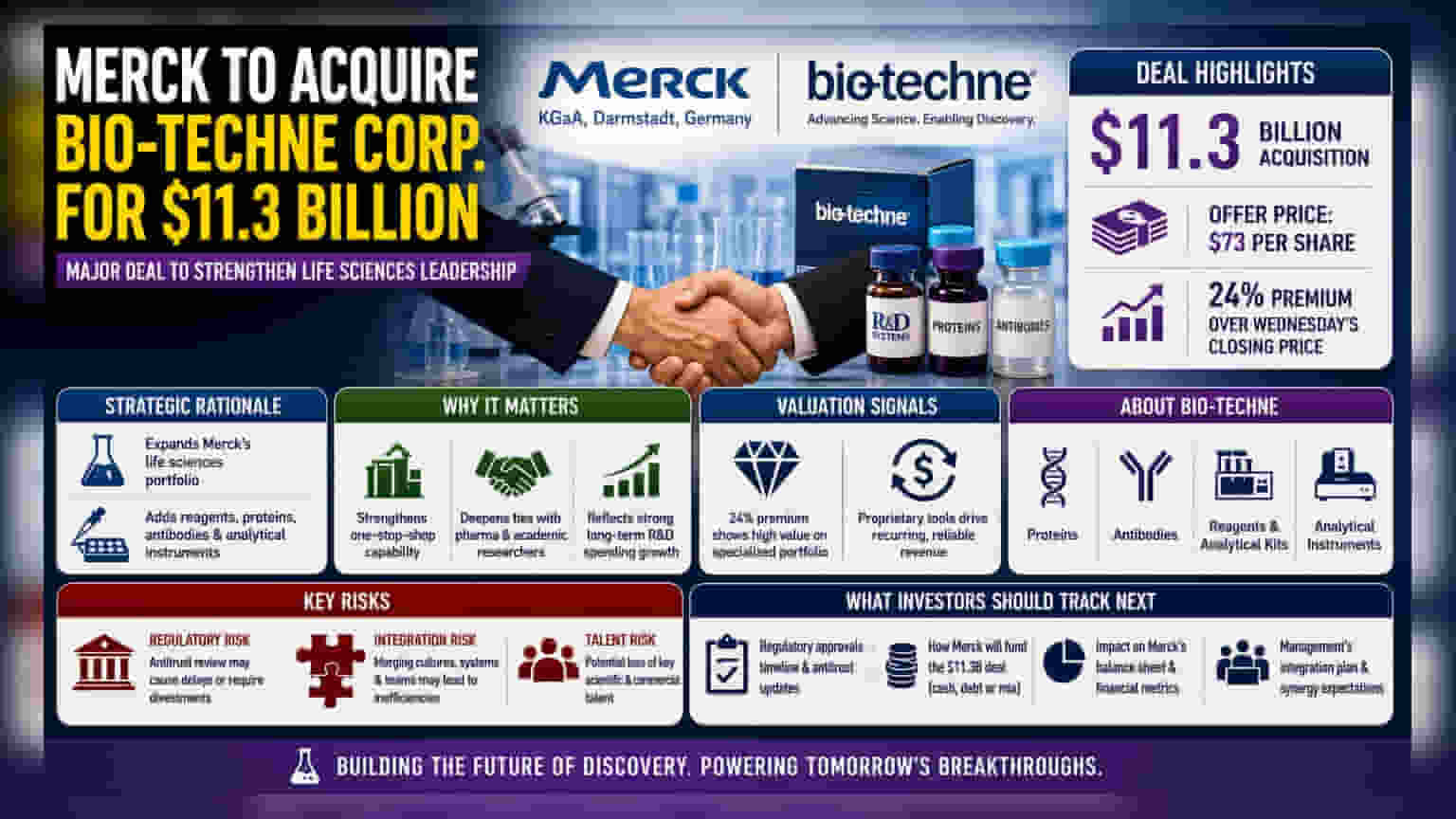
German conglomerate Merck KGaA is buying U.S.-based Bio-Techne for $11.3 billion, paying a 24% premium to shareholders. The deal aims to expand Merck’s presence in the global life-science research tools market, a critical area for pharmaceutical development.
What Happened
German science and technology company Merck KGaA has announced a definitive agreement to acquire the U.S.-based biotechnology firm Bio-Techne Corp. for $11.3 billion. The offer is priced at $73 per share, which represents a 24% premium over Bio-Techne's closing price as of Wednesday. This deal is designed to significantly increase Merck's capacity in the life-sciences sector, specifically by adding Bio-Techne’s portfolio of reagents, proteins, antibodies, and analytical instruments to its existing research supply business.
Why This Matters for the Life Sciences Sector
This acquisition highlights a major trend of consolidation in the global life-sciences supply chain. Companies like Bio-Techne are essential partners for pharmaceutical firms and academic researchers because they provide the foundational tools—such as proteins and analytical kits—needed for drug discovery. By acquiring Bio-Techne, Merck KGaA is effectively broadening its 'one-stop-shop' capability for laboratories. For investors, this move signals that Merck is betting heavily on the long-term growth of global R&D spending, as drug developers continue to demand more advanced and specialized research materials.
What the Valuation Suggests
The 24% premium offered to Bio-Techne shareholders is a clear indicator of how highly Merck values the company’s specialized product portfolio and market position. In the biotech supply industry, proprietary reagents and analytical tools create a reliable, recurring revenue stream because researchers tend to stick with established, validated suppliers to maintain the consistency of their experiments. Merck’s willingness to pay this premium suggests it views Bio-Techne not just as a one-time purchase, but as a strategic asset to deepen its relationship with high-end research clients.
Key Risks Investors Should Consider
While the deal appears strategic, large-scale acquisitions of this size carry inherent risks that investors often monitor. First, there is the regulatory risk. Global antitrust regulators frequently scrutinize deals of this magnitude to ensure they do not create a monopoly in the supply of critical research tools, which could potentially lead to delays or required asset divestments. Second, there is integration risk. Merging a specialized biotech entity into a massive conglomerate like Merck requires blending different corporate cultures, supply chain systems, and sales networks. If the integration does not go smoothly, it can lead to temporary inefficiencies or a loss of key talent within the acquired business.
What Investors Should Track Next
For those watching the sector, the most important updates will relate to the timeline for regulatory approvals and the financial impact on Merck's balance sheet. Investors should look for management commentary on how the company plans to fund the $11.3 billion acquisition—specifically, whether they will use cash reserves, debt financing, or a mix of both. Additionally, tracking any updates on potential antitrust reviews or competition concerns raised by regulators will be important to gauge if the deal will proceed as planned.