

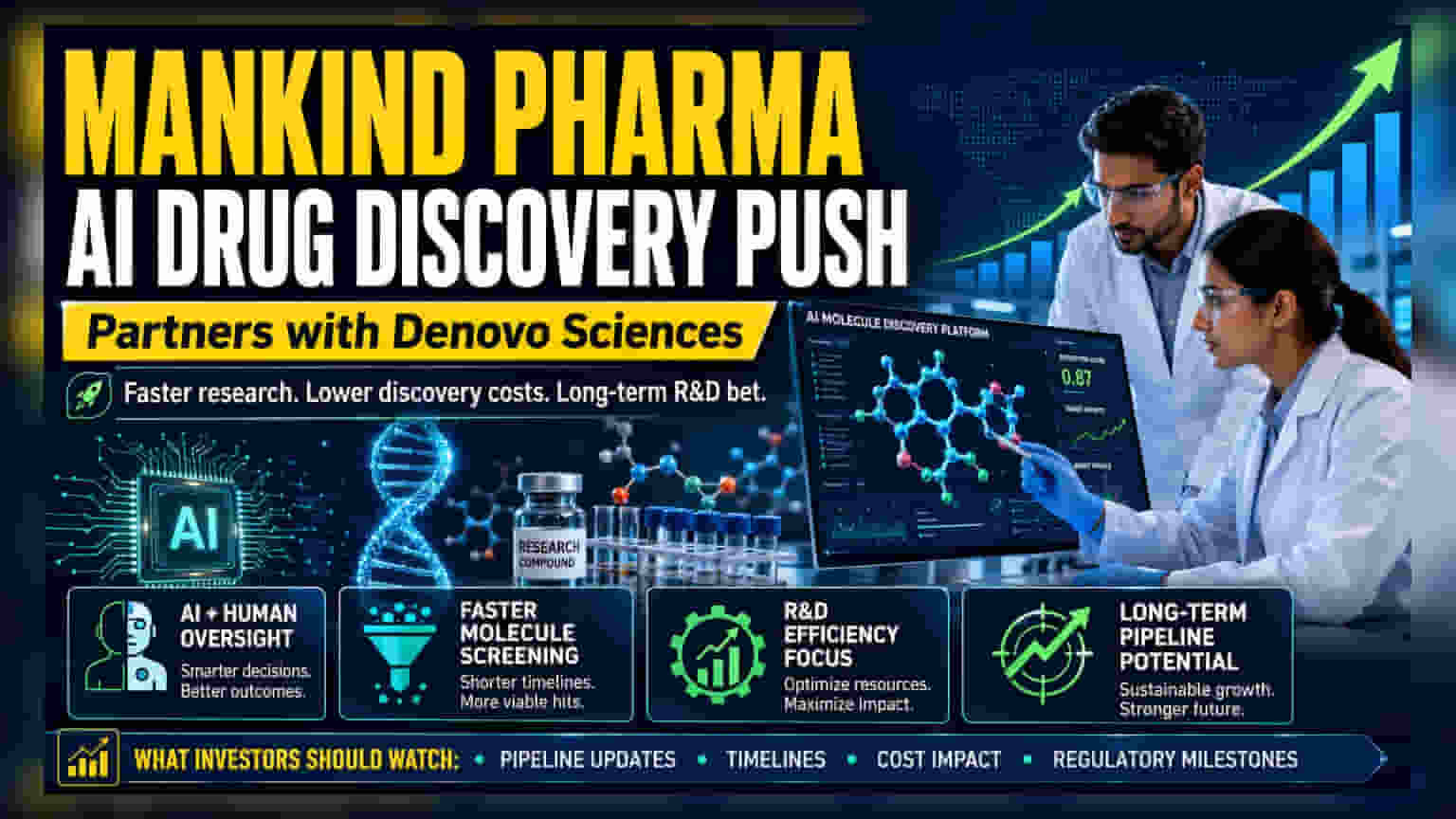
Mankind Pharma has signed a deal with Denovo Sciences to use AI for drug discovery, targeting faster development and lower R&D costs. The collaboration uses a "human-in-the-loop" system to combine AI-generated molecular research with expert human validation. This move signals a push toward technology-backed R&D, though the actual financial impact will depend on the long-term success of these new research projects.
What Happened
Mankind Pharma has entered into a strategic collaboration with Denovo Sciences to integrate artificial intelligence (AI) into its drug discovery processes. Announced on Wednesday, the partnership aims to overhaul early-stage research by using Denovo’s proprietary AI platform to identify and prioritize potential drug candidates. By shifting towards AI-based models, the company intends to reduce the time typically spent in the initial phases of pharmaceutical research and lower the associated development costs.
The venture will operate under a "human-in-the-loop" model. In this setup, AI handles the complex task of generating and evaluating vast numbers of molecular candidates, while Mankind Pharma’s scientific experts oversee the process, conduct necessary validations, and guide the AI’s output. This hybrid approach aims to maintain strict scientific standards while benefiting from the speed of computational research.
Why R&D Efficiency Matters
Drug discovery is traditionally a time-consuming and expensive process, often spanning several years before a molecule even reaches clinical trials. Many potential drug candidates fail during these early stages, resulting in significant resource wastage. For a company like Mankind Pharma, which has a strong footprint in the Indian domestic market, optimizing R&D is a standard industry priority to protect profit margins and improve long-term competitiveness.
By adopting AI, the company is looking to screen molecular structures more efficiently. If successful, this can lead to a more robust pipeline of viable drug candidates. However, it is important to note that this is an investment in capability rather than an immediate revenue driver. The financial benefits from such initiatives typically take years to materialize as the company moves through clinical trials and regulatory approvals.
The Technology And Strategy
AI in pharma is primarily used to explore "molecular space," which refers to the vast number of potential chemical combinations that could function as medicines. Traditional lab methods can only test a limited number of these combinations due to time and budget constraints. AI allows researchers to simulate and test thousands of variants digitally, prioritizing only the most promising ones for physical laboratory validation.
For Mankind Pharma, this partnership represents a conscious shift toward using technology to improve its research capabilities. The management has noted that integrating AI allows the company to explore a much broader set of opportunities than traditional research methods allow, while the human oversight ensures that the results remain scientifically sound.
Risks In AI-Led Pharma R&D
While AI holds promise, investors should be aware of the inherent risks in this sector. Firstly, drug discovery is inherently unpredictable; even with advanced technology, there is no guarantee that AI-identified molecules will pass regulatory clinical trials or prove effective in human patients. R&D investments are "sunk costs"—money spent today that may not yield a product for many years.
Secondly, there is the risk of execution. Integrating external technology platforms into existing R&D infrastructure can lead to operational delays. Additionally, the regulatory environment for AI-discovered drugs is still evolving, and companies must ensure that their research methods meet the stringent requirements of regulators like the CDSCO in India or international counterparts if they plan to market these drugs globally.
What To Watch Next
The most important factor for investors will be the progression of these research projects. While the collaboration is a positive step toward modernization, the real value will only be visible when these research initiatives move from the conceptual stage to successful, patentable, or clinical-stage assets.
Key monitorables for shareholders include:
- Project Timelines: Updates on whether the partnership is actually reducing the time taken for lead optimization and candidate selection.
- Pipeline Updates: Future investor presentations detailing any specific therapeutic areas where AI-generated molecules are showing promise.
- Cost Impact: Whether the company provides guidance on R&D expenditure and if this tech integration effectively lowers the long-term cost of development.
- Regulatory Milestones: Any future filings or progress on molecules that move into formal clinical development stages.