

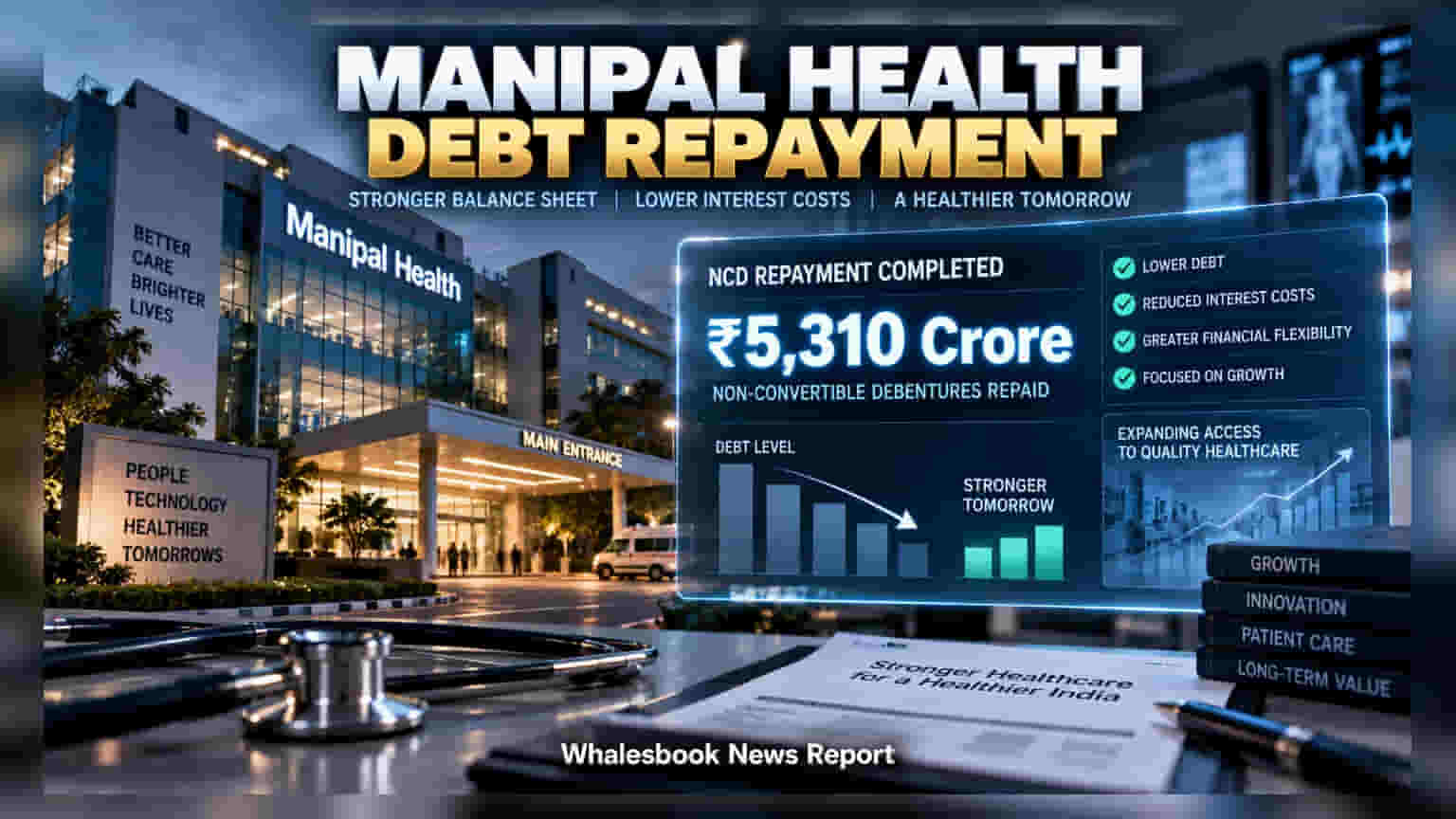
Manipal Health Enterprises has used proceeds from its August 2026 IPO to fully repay ₹5,310 crore in debt. This move aims to clean up the company's balance sheet by removing high-cost liabilities, allowing the hospital chain to focus on future operations and growth.
Manipal Health Enterprises Limited has completed the repayment of ₹5,310 crore in non-convertible debentures. This was a major part of the company's plan shared with investors before its public market debut on August 5, 2026. By using the cash raised from the IPO to clear these dues, the company has taken a significant step toward improving its financial health.
Impact on Financial Flexibility
The debt being repaid was primarily linked to the company's rapid expansion phase. In recent years, Manipal Health grew by acquiring other hospital networks, including Columbia Asia and Sahyadri Hospitals. While these acquisitions helped the firm grow quickly, they also led to a high debt load. By paying off these loans, the company reduces the amount it spends on interest payments each quarter. This creates more flexibility for the management to use future cash for business operations rather than servicing debt. CFO Sameer Agarwal noted that this was a key priority for the company to stabilize its finances.
Operational Scale and Performance
Manipal Health currently operates a large network of 13,140 beds, making it one of the largest private healthcare providers in the country. The repayment comes at a time when the company has shown strong growth in its financial results. In the first quarter of the fiscal year, the company reported revenue of ₹3,091 crore, which was a 38.1% increase compared to the same period last year. Its profit after tax stood at ₹243 crore, while EBITDA reached ₹749 crore, marking a 26.4% jump.
Investor Context and Market Competition
The hospital sector in India is highly competitive, with major players like Apollo Hospitals, Max Healthcare, and Fortis Healthcare constantly expanding their networks and services. Because hospital businesses require large capital spending for new beds and advanced medical equipment, managing debt levels is crucial for long-term survival. Investors in the sector often monitor how companies balance their expansion goals with their debt obligations. While the debt repayment is a positive move for the balance sheet, the focus for shareholders will now shift to how effectively the company can use its remaining capital to improve profit margins and handle the intense competition in the healthcare industry. The next important update for investors will be how this reduction in interest costs reflects in the upcoming quarterly profit margins.