

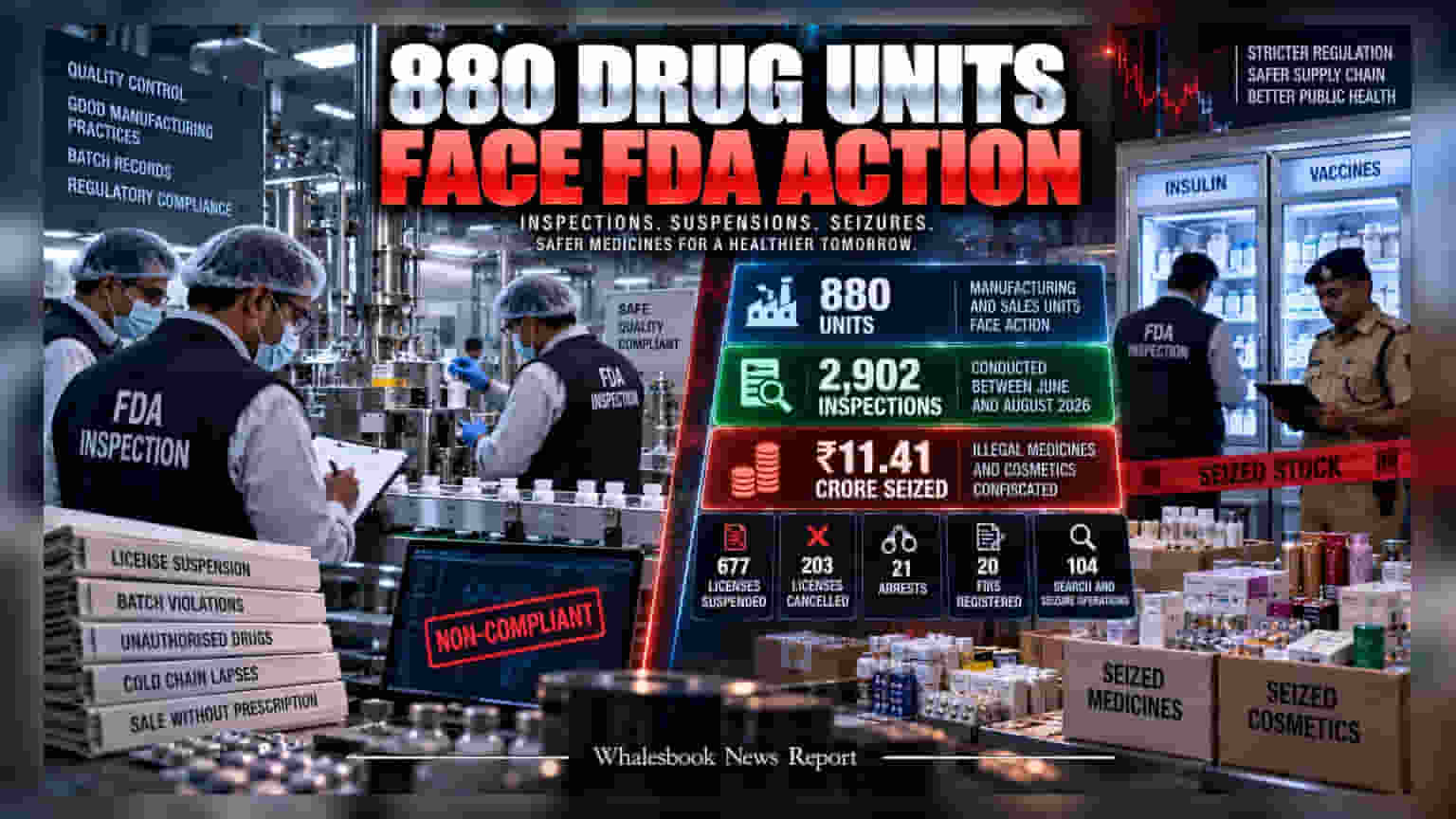
The Maharashtra Food and Drug Administration has taken enforcement action against 880 pharmaceutical and sales units after a three-month inspection drive ending in August. With 677 licenses suspended and 203 cancelled, the crackdown highlights increasing regulatory pressure on the healthcare supply chain, signaling potential rising compliance costs and operational scrutiny for companies across the state.
The Maharashtra Food and Drug Administration (FDA) has significantly intensified its regulatory oversight of the pharmaceutical industry, conducting 2,902 inspections between June and August 2026. This enforcement drive has resulted in direct action against 880 manufacturing and sales establishments, with officials suspending 677 licenses and cancelling another 203 to address serious compliance lapses.
During this period, authorities conducted 104 search-and-seizure operations, resulting in the confiscation of illegal medicines and cosmetics valued at ₹11.41 crore. The crackdown involved 20 First Information Reports (FIRs) and 21 arrests, indicating a shift toward stricter penal action rather than just warnings for non-compliance.
Operational and Compliance Risks
The inspection data reveals that violations were not limited to a single area of the supply chain. Authorities identified critical failures in quality control and production standards, including the manufacturing of unauthorized medicines. For investors, these findings underscore a growing business risk: the cost of non-compliance is rising, and regulatory tolerance for systemic failures—such as improper record-keeping—is falling.
A major area of concern noted by the regulator was the handling of temperature-sensitive products, including insulin and various vaccines. The investigation found that many outlets failed to maintain the required cold-chain environment, which can render life-saving medications ineffective. Additionally, the regulator flagged the common practice of selling drugs without valid prescriptions or proper pharmacist supervision. These lapses pose significant operational risks to retail and distribution businesses that may face sudden license suspensions or permanent closure.
Implications for the Healthcare Sector
Under the leadership of FDA Commissioner Tukaram Mundhe, the department is signaling a more aggressive stance toward the entire pharmaceutical supply chain, from manufacturing units to final retail points. For the broader industry, this increased scrutiny implies that compliance is no longer a passive administrative task but a core business requirement. Smaller, unorganized players with weak infrastructure or limited oversight systems may face the highest risk of disruption as the FDA continues its expanded inspection strategy.
While this enforcement wave primarily impacts local manufacturing and retail units, the broader market impact is a clearer move toward higher standardization. Companies with robust audit trails, quality-assurance systems, and established supply chain management are better positioned to weather this stricter regulatory environment. Conversely, firms or retailers that depend on cost-cutting measures—such as omitting professional supervision or neglecting cold-chain storage—may face escalating business sustainability challenges.
Investors and stakeholders tracking this sector may continue to monitor the frequency and scale of future regulatory actions. The key monitorable will be whether this trend of aggressive enforcement leads to a sustained increase in operating expenses for companies struggling to meet these tightened safety and quality standards.