

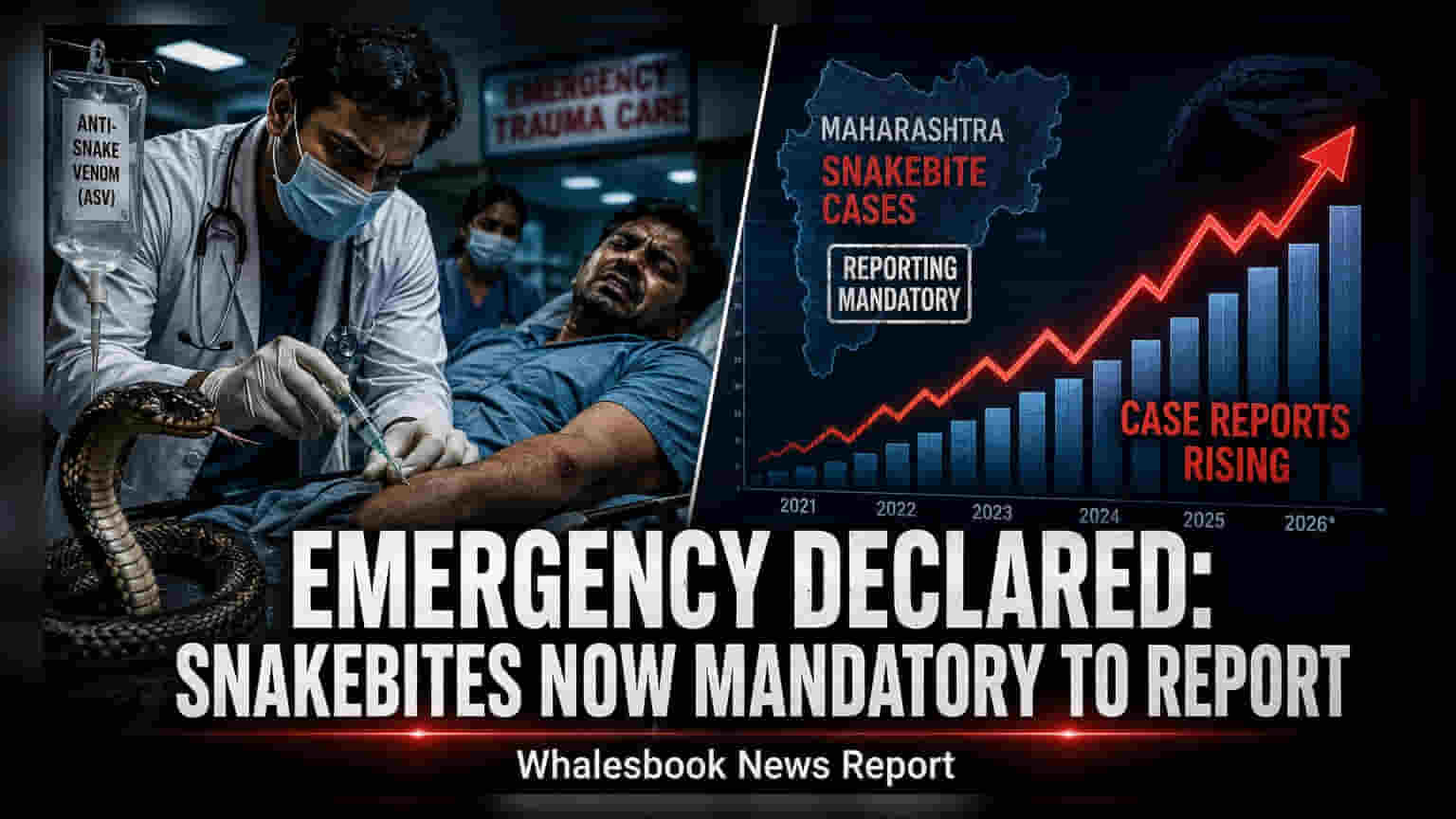
Maharashtra has mandated that all healthcare providers report snakebite cases and track anti-snake venom (ASV) inventory. The policy aims to improve treatment speed and state-wide supply chain efficiency. For the healthcare sector, this shift may lead to more structured government procurement and better visibility into the actual demand for anti-venom medications.
The Maharashtra government has officially classified snakebite as a 'notifiable disease,' requiring all government and private hospitals, medical colleges, and healthcare practitioners to report every suspected or confirmed case and fatality. This regulatory shift, implemented in August 2026, aims to create a reliable state-wide database and significantly improve the management of life-saving anti-snake venom (ASV).
Impact on Supply Chain and Procurement
The most critical investor angle from this policy change lies in the supply chain management of ASV. Previously, tracking the precise demand and consumption of anti-venom across diverse regions was challenging due to fragmented reporting. By mandating that institutions maintain detailed records of ASV received, utilized, and in stock, the government is building a framework that will likely reveal clear consumption patterns. This systematic data collection can help the state optimize its procurement processes, potentially leading to more consistent and organized government tenders for pharmaceutical companies that manufacture and supply anti-venom.
Operational Implications for Healthcare Providers
While the policy is a major public health initiative, it introduces new compliance requirements for healthcare institutions. All hospitals are now obligated to log comprehensive patient details—including the circumstances of the bite, symptoms, treatment administered, and ASV usage—directly into the Health Management Information System and the Integrated Disease Surveillance Programme. For hospital operators, this will necessitate better administrative processes to handle real-time data entry and inventory tracking. Institutions that fail to manage these compliance burdens efficiently could face operational friction, though the primary goal remains ensuring that stocks of anti-venom are available in regions with high incident rates.
Strategic Focus on Prevention
Beyond data collection, the notification establishes a formal nodal mechanism. State-level officials, along with district surgeons and health officers, are now tasked with overseeing prevention and control efforts. The focus is on the 'golden hour,' or the critical period immediately following a bite, where timely medical intervention is the primary factor in saving lives. Government authorities aim to use the new data to localize preventive strategies and awareness campaigns, which could influence the allocation of medical resources in high-risk districts.
Investors and stakeholders in the healthcare space may track the progress of this implementation, particularly regarding how the state manages inventory data and future procurement cycles. As the government integrates these records into centralized systems, the increased transparency in demand will be a key factor to watch for the pharmaceutical supply sector, as it may signal a move toward more standardized and data-driven public health spending.