

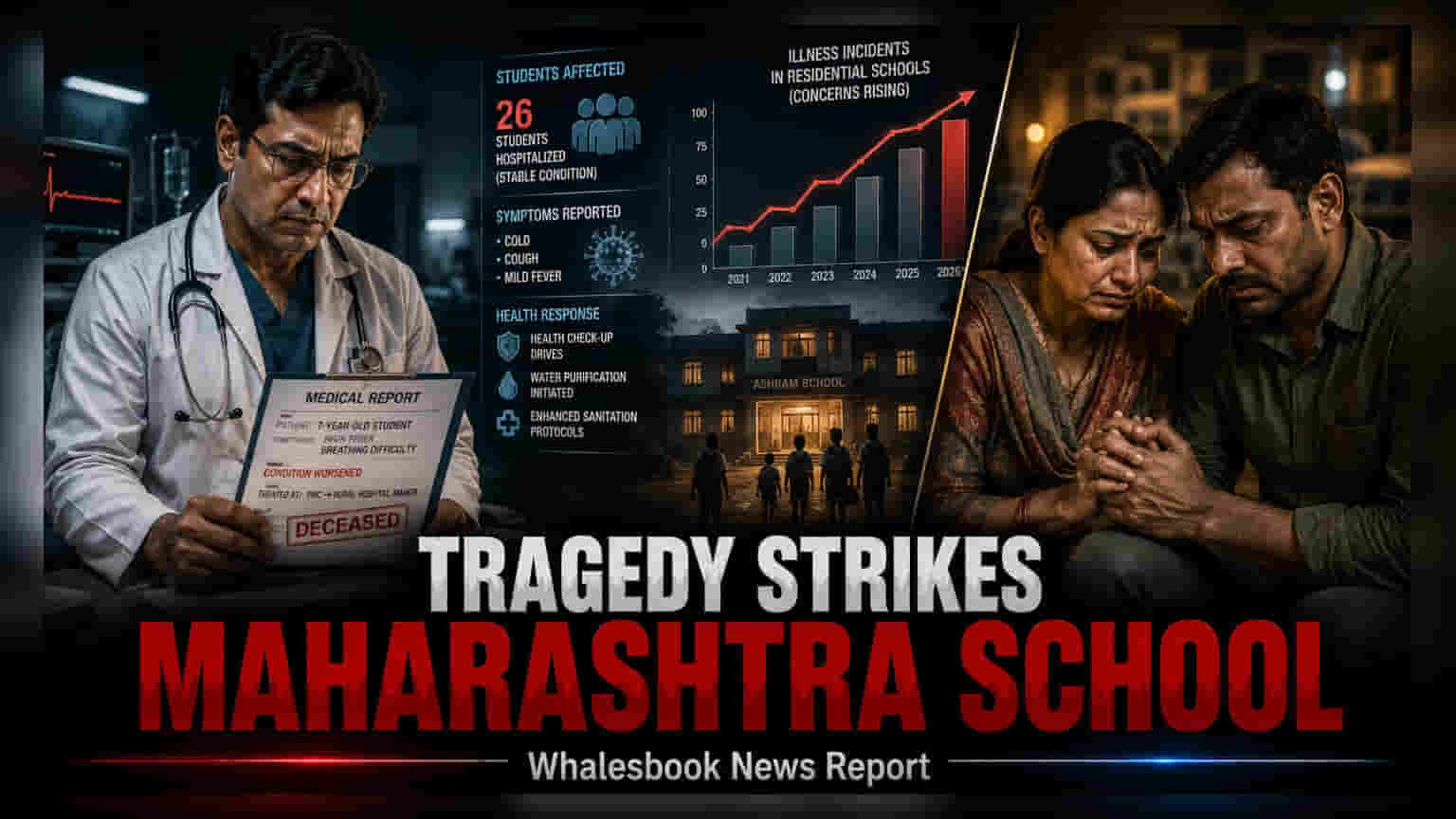
A seven-year-old student has died following a high fever at a residential school in Palghar, Maharashtra. Another 26 students have been hospitalized as a precaution. Authorities are now conducting health screenings and sanitation drives amid growing concerns over student safety in government-run residential tribal schools.
A seven-year-old student passed away at an ashram school in Maswan, Palghar district, Maharashtra, on August 25, 2026. The child had been suffering from a high fever and breathing difficulties since August 22, 2026. After receiving initial treatment at a local Primary Health Centre, the student's condition worsened, and they were transferred to a rural hospital in Manor, where doctors declared the student deceased.
Following the incident, health authorities launched a comprehensive medical review at the residential school, which currently houses nearly 400 students. As a precautionary measure, 26 other students exhibiting symptoms like cold, cough, and mild fever have been hospitalized for observation. Their conditions are reported to be stable as medical teams monitor the situation.
Official Response and Health Measures
Local government officials, including representatives from the Integrated Tribal Development Project, have visited the site to oversee the response. The administration has initiated immediate health check-up drives across the campus. Additionally, authorities are implementing enhanced sanitation and water purification protocols to mitigate any potential health risks or spread of infection among the resident students.
Systemic Concerns in Residential Schools
This incident highlights ongoing concerns regarding living conditions and medical oversight in Maharashtra's network of ashram schools. Similar residential schools have previously faced scrutiny following reports of student illnesses and accidents. The state government has historically responded to these issues by promising stricter safety audits, infrastructure improvements, and, in severe cases, the cancellation of licenses for institutions failing to maintain safety standards.
For observers of public welfare and state infrastructure, the key monitorable will be the outcome of the post-mortem report and the subsequent safety audit findings. The government’s ability to implement sustained healthcare and sanitation improvements remains the primary factor for ensuring the safety of students in these residential facilities.