

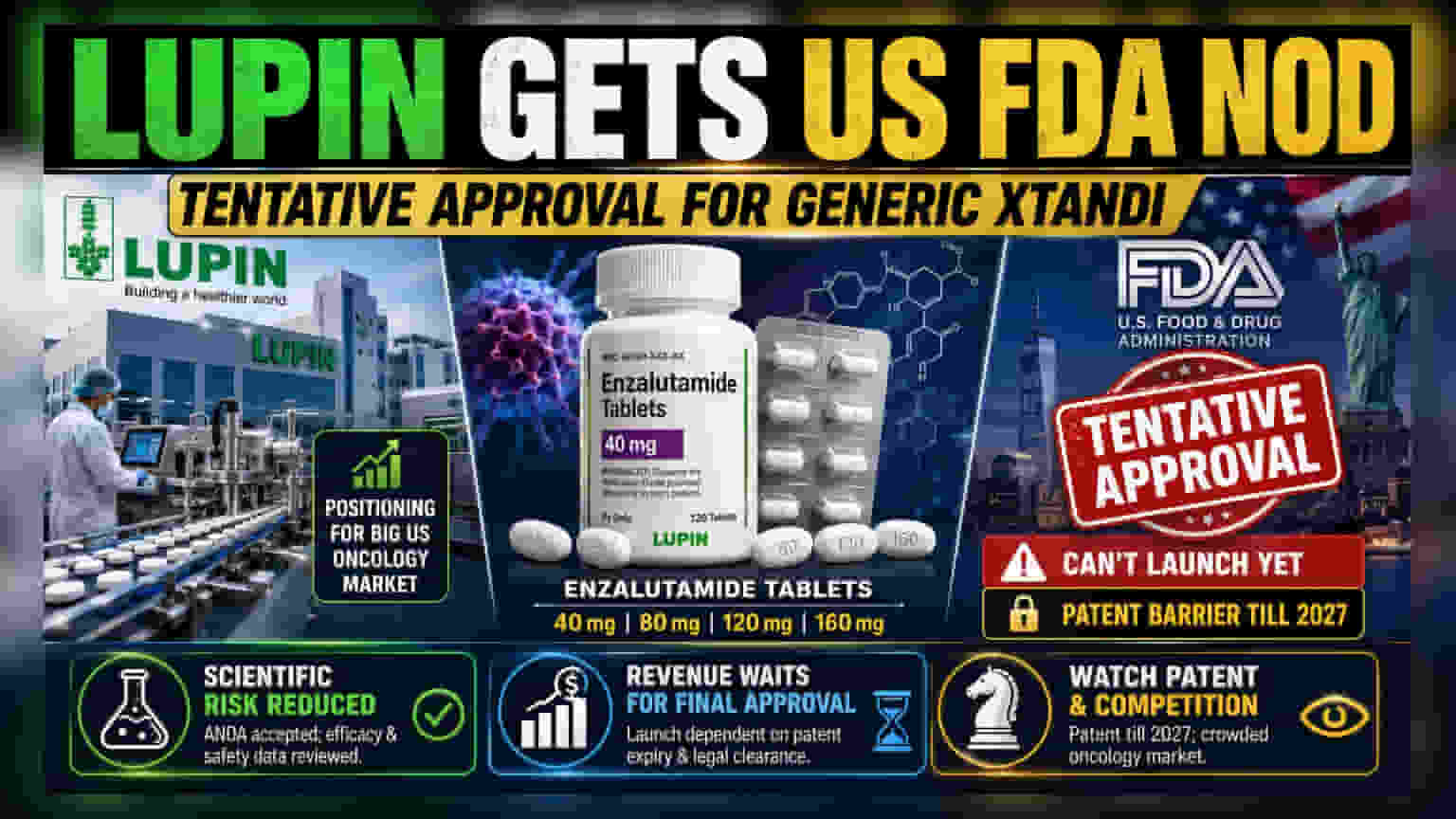
Lupin has received tentative US FDA approval for its generic version of the prostate cancer drug, Xtandi. The approval covers 40 mg, 80 mg, 120 mg, and 160 mg strengths. While this confirms the drug's quality and bioequivalence, Lupin cannot sell the product in the US yet due to existing patent protections on the original drug.
What Happened
Mumbai-based pharmaceutical major Lupin Limited has received tentative approval from the U.S. Food and Drug Administration (US FDA) for its generic Enzalutamide tablets. The approval covers four strengths: 40 mg, 80 mg, 120 mg, and 160 mg.
Lupin’s 40 mg and 80 mg versions are considered bioequivalent to the reference listed drug, Xtandi, which is manufactured by Astellas Pharma. Notably, the approval also includes 120 mg and 160 mg strengths, providing alternative dosing options not currently available in the original reference product. This is a scientific nod to the product's quality and therapeutic effectiveness, but the drug cannot be marketed or sold in the U.S. immediately.
Why Tentative Approval Matters
For investors, a "tentative approval" is a specific regulatory stage. It means the US FDA has completed its scientific review and confirmed the drug is safe, effective, and manufactured to high quality standards. However, the final approval is held back because the original drug (Xtandi) still has active patent or exclusivity protections in the U.S.
This status essentially puts Lupin in the queue, allowing it to move quickly once those legal barriers expire. It removes the uncertainty of the FDA review process—the "scientific risk"—but does not yet translate into revenue.
The Market Opportunity
Enzalutamide (marketed as Xtandi) is a significant drug in the oncology space, used for treating prostate cancer. The U.S. market for this therapy is substantial, with the original drug generating billions in annual sales. Astellas Pharma’s patent protection for Xtandi in the U.S. is expected to remain in force until 2027.
By securing tentative approval now, Lupin is positioning itself to be a participant in this market as soon as the patent cliff arrives. The inclusion of higher-strength tablets (120 mg and 160 mg) could offer a strategic advantage, potentially allowing for more convenient dosing regimens for patients compared to the traditional 40 mg and 80 mg versions.
Risks In The Generic Race
While this approval is a positive step, the generic pharma business faces ongoing challenges.
First, patent litigation is common. Other generic manufacturers are likely also targeting this drug, and patent settlements or additional legal hurdles can change entry timelines.
Second, the U.S. generic market is highly competitive. By the time a generic product launches, multiple companies might have secured similar approvals, which can lead to rapid price erosion and pressure on profit margins.
Third, manufacturing quality remains a critical monitorable. Even with a tentative approval, a company must maintain compliance across its manufacturing sites to receive the final sign-off from the regulator when the time comes.
What Investors Should Track
Investors may look for updates on the following:
- Legal and Patent Status: Any news regarding patent settlements or changes in the patent expiry timeline for Xtandi.
- Final Approval Timeline: The eventual transition from tentative to final approval, which will signal the green light for commercial launch.
- Competition: Monitoring how many other generic players receive similar approvals, as this will influence the future profitability of this specific product launch.