

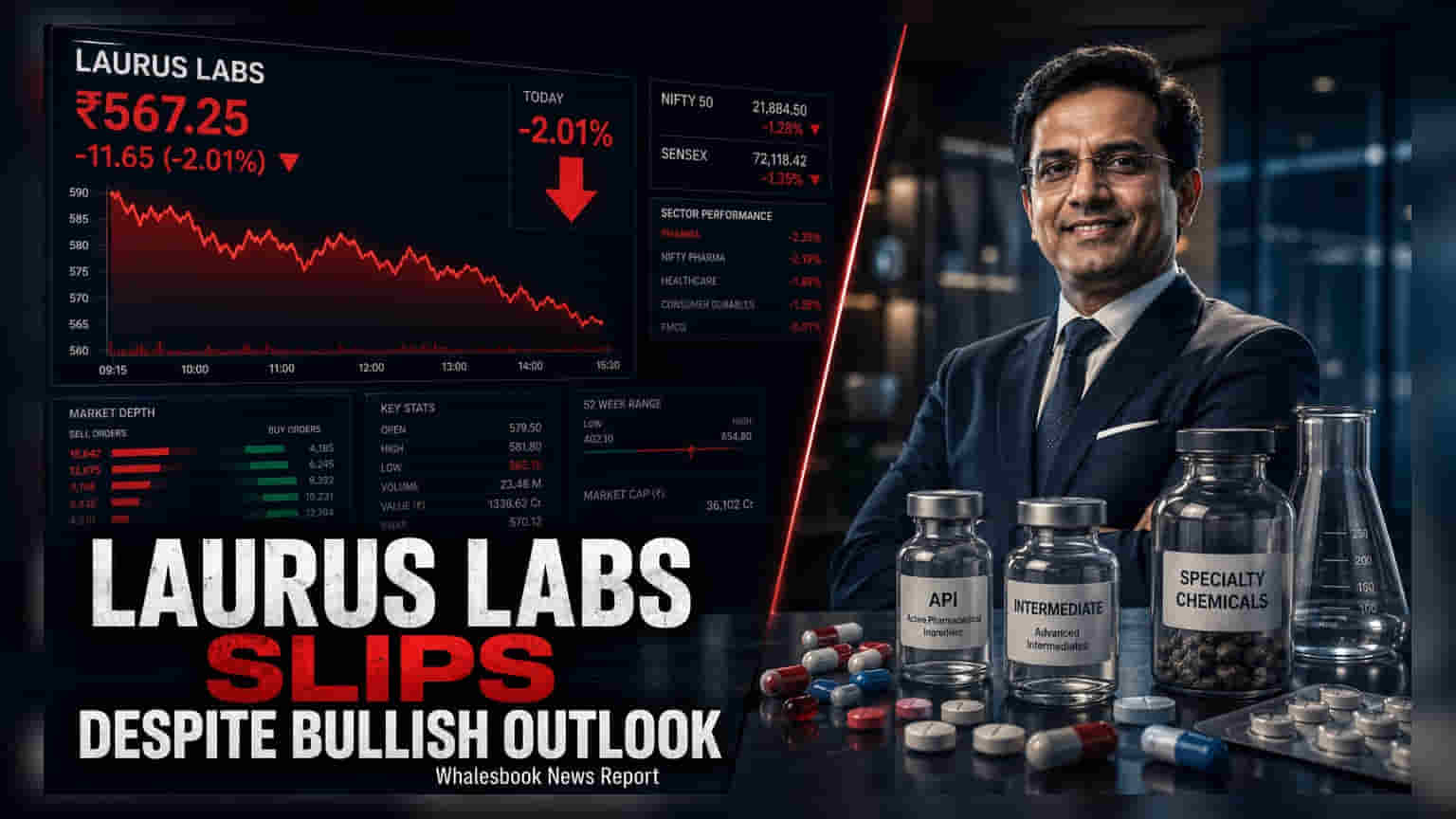
Laurus Labs shares traded slightly lower on Friday, even as the company reported a 29% jump in revenue and a 125% rise in net profit for the June 2026 quarter. Investors are now balancing this strong operational performance against the stock's recent rally and the company's heavy investment in future growth.
Laurus Labs shares experienced a mild decline of approximately 2% during Friday's trading session, settling in the range of Rs 1,814 to Rs 1,821. This movement followed a period of strong momentum for the stock, which has seen significant gains leading up to this point in 2026. Despite the intraday dip, the company's underlying business performance remains a focal point for shareholders.
The pharmaceutical firm recently announced its results for the first quarter of the 2027 fiscal year, reflecting a robust financial trajectory. Consolidated revenue for the June 2026 quarter rose to Rs 2,026.31 crore, marking a 29.1% increase compared to the same period last year. Net profit followed a similar upward trend, surging by 125.5% to Rs 367.6 crore. These figures highlight the company's successful efforts to scale its operations and improve profitability in a challenging sector environment.
Strategic Pivot Toward CDMO Services
A primary driver of the company’s recent performance is its strategic transition toward becoming a more specialized contract development and manufacturing partner. Laurus Labs is actively shifting its focus to its CDMO segment, with a goal to derive 50% of its total revenue from this area by fiscal year 2030. This business model involves providing research, development, and manufacturing services to global pharmaceutical companies, which typically offer better profit margins than traditional generic drugs.
To support this long-term ambition, the company has been investing heavily in expanding its capacity in complex areas like peptides, gene therapy, and microbial fermentation. These initiatives are designed to help the company secure a competitive edge and reduce its reliance on volatile price environments in the standard API (Active Pharmaceutical Ingredient) market.
Financial Health and Future Risks
The company’s balance sheet has shown signs of stabilization. By March 2026, the debt-to-equity ratio improved to 0.45, down from 0.60 in the previous fiscal year, indicating a more controlled approach to leverage. However, the company remains in a phase of high capital spending. Large investments in research and new manufacturing facilities are essential for future growth, but they also place temporary pressure on cash flows and return ratios like Return on Capital Employed (ROCE), where the company targets a long-term level of 23%.
Investors should be aware of the inherent risks in this expansion strategy. The pharmaceutical sector is subject to stringent regulatory scrutiny, and any delays in clearing audits at new facilities could impact growth timelines. Furthermore, the CDMO space is becoming increasingly competitive, requiring the company to maintain high standards of execution to retain clients and protect its profit margins. The primary monitorables for the coming quarters will be the utilization levels of the newly commissioned capacities and the company’s ability to sustain its margins amidst rising competition and ongoing capital expenditure.