

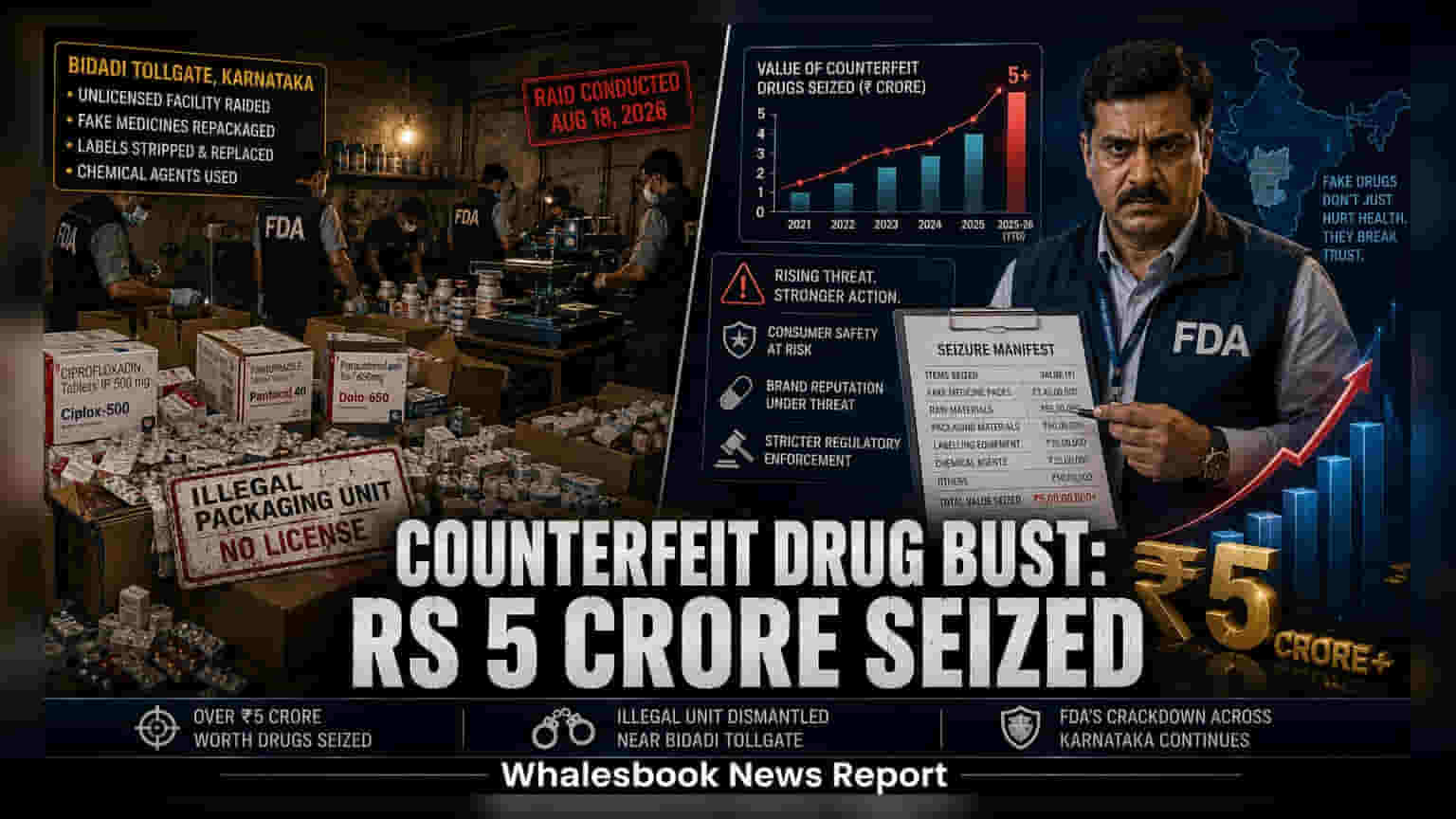
The Karnataka Food Safety and Drug Administration has confiscated over ₹5 crore in counterfeit medicines from an unlicensed facility near the Bidadi tollgate. This raid, part of a wider enforcement drive, involved illegal repackaging of drugs to mimic multinational brands. The incident highlights ongoing risks to pharmaceutical brand equity and the need for stricter supply chain monitoring in the healthcare sector.
The Karnataka Food Safety and Drug Administration (FDA) has carried out a significant operation near the Bidadi tollgate, dismantling an illegal facility involved in the repackaging of spurious medicines. During the raid on Tuesday, officials seized counterfeit drugs valued at over ₹5 crore. The facility was operating without a valid license and was reportedly using chemical agents to strip original labels from substandard drugs, replacing them with packaging designed to mimic well-known multinational pharmaceutical brands.
Impact on Pharmaceutical Brands and Reputation
While this specific incident involves an unlicensed, illegal entity rather than a publicly traded pharmaceutical company acting in bad faith, it highlights a recurring challenge for the broader pharmaceutical industry: counterfeiting. For established pharmaceutical firms, the infiltration of fake products into the market poses risks beyond simple revenue loss. It can lead to severe reputational damage, as consumers may attribute the failure of spurious medication to the genuine brand, thereby diluting brand equity and consumer trust.
Investors in the healthcare sector often monitor how companies implement anti-counterfeiting measures. This includes technologies like track-and-trace systems, unique barcodes, or specialized packaging, which help maintain the integrity of the supply chain from the manufacturing unit to the retail pharmacy. The prevalence of such incidents often forces regulators to increase surveillance, which may lead to higher compliance costs for legitimate manufacturers and distributors.
Intensified Regulatory Enforcement
This seizure is part of a broader, ongoing enforcement campaign by the state regulator across key cities, including Bengaluru, Mysuru, and Mangaluru. Recent official inspections have targeted unsafe food and drug practices, resulting in the confiscation of over 1,000 kg of materials found to be in violation of health standards, including expired and contaminated goods.
The Karnataka FDA’s current focus on rooting out these illegal supply chains serves as a reminder of the regulatory risks within the distribution network. Moving forward, the key monitorable for investors and stakeholders in the healthcare space is the continued commitment of regulators to tighten oversight. Increased scrutiny of the supply chain is generally expected in the coming quarters as authorities work to reduce the availability of non-compliant and spurious medical products in the state market.