 Whalesbook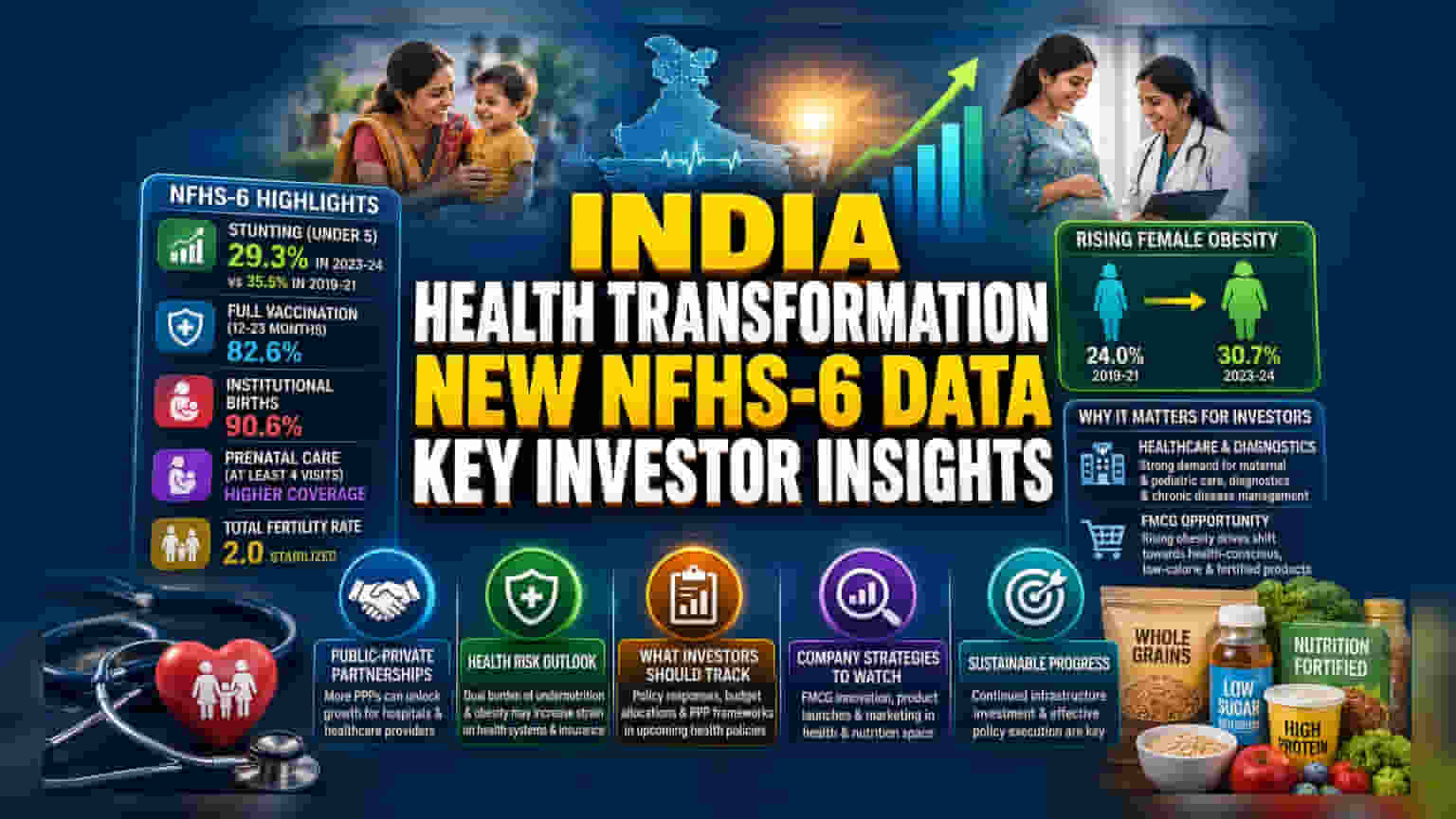


The latest NFHS-6 survey highlights significant progress in child vaccination and maternal care, alongside a rise in female obesity. These demographic and health trends signal potential shifts in long-term demand for diagnostic, healthcare, and nutrition-focused FMCG sectors.
What Happened
India’s National Family Health Survey-6 (NFHS-6) has released fresh data, providing a snapshot of the nation's public health progress. According to an SBI Research report analyzing these figures, India has made notable strides in several key areas. The proportion of stunted children under five has dropped to 29.3% in 2023-24, compared to 35.5% in 2019-21. Vaccination rates have also improved, with 82.6% of children aged 12-23 months fully covered. Maternal healthcare access has reached near-universal levels, with institutional births at 90.6% and higher rates of prenatal care visits.
Why This Matters For Investors
This demographic shift carries implications for two primary sectors: healthcare and fast-moving consumer goods (FMCG). The stabilization of the fertility rate at 2.0 indicates a maturing demographic, which shifts the focus toward health outcomes rather than just population growth.
For the healthcare and diagnostic sector, the high rate of institutional births and antenatal care suggests a sustained and stable demand for maternity and pediatric care services. Companies operating in the hospital and diagnostics space may see consistent volume, provided they can capture market share in this specialized segment.
For the FMCG sector, the report’s data on rising female obesity—which increased from 24.0% to 30.7%—is a critical data point. This trend often correlates with changing dietary habits and could accelerate the consumer move toward higher-value, health-conscious, or low-calorie product categories. Companies that focus on nutritional fortification and healthy food options may find a more receptive market as awareness regarding non-communicable disease risks rises.
The Public-Private Partnership Potential
The report emphasizes that future progress requires a move beyond traditional models, specifically suggesting increased public-private partnerships (PPP) to address nutritional and care delivery gaps. For listed hospital chains and healthcare providers, this signals a potential avenue for growth. If government policy leans toward integrating private sector expertise for public health goals, there could be opportunities for companies to participate in large-scale government-backed health initiatives.
The Health Risk Outlook
Investors should also consider the challenges flagged by the data. While vaccination and stunting metrics are improving, the report notes that progress in addressing undernutrition, specifically wasting and underweight conditions among children, has been modest. Furthermore, the rising trend of obesity in women presents a long-term risk. From a macro perspective, the dual burden of persistent undernutrition alongside escalating non-communicable diseases could increase the strain on public and private health insurance systems. This shift in the disease profile often necessitates more investment in chronic disease management and diagnostic screening, which may benefit providers of long-term healthcare services.
What Investors Should Track
Moving forward, the primary monitorable is the government's budgetary and policy response to these findings. Investors may track whether upcoming health policies include larger allocations for integrated maternal and child care or if they introduce new frameworks for private sector participation. Additionally, monitoring the product launches and marketing strategies of major FMCG companies can reveal how firms are positioning their portfolios to address the growing awareness of obesity and nutritional health. The sustainability of these health gains will depend largely on continued infrastructure investment and effective policy execution.