 Whalesbook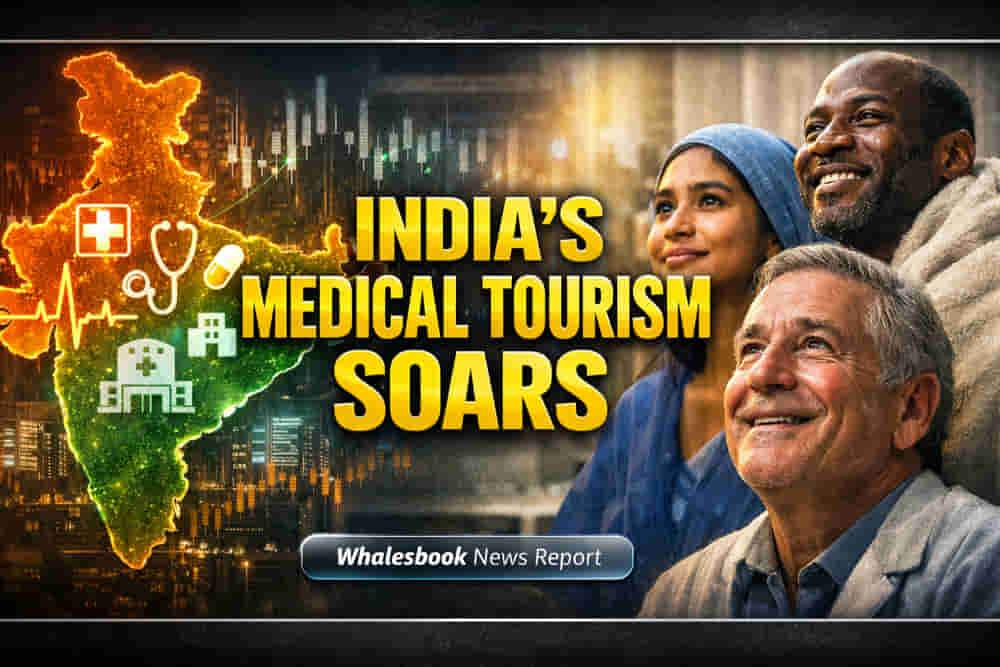
THE SEAMLESS LINK
The projected market expansion underscores India's ascendance as a critical global player in medical value travel. This growth trajectory is not merely an economic forecast but a reflection of the country's evolving healthcare capabilities and its strategic positioning to meet rising international demand for accessible, quality medical services.
The Catalyst for Market Acceleration
Union Minister Gajendra Singh Shekhawat highlighted that India's medical value travel market, valued at approximately $6 billion in 2022, is expected to exceed $13 billion by 2026. This significant surge is attributed to India's emergence as a comprehensive healthcare hub, offering a compelling mix of affordability, clinical excellence, and integrated wellness systems. International accreditations, a deep pool of respected medical professionals, and timely access to treatment have become key differentiators. Beyond cost savings, which can range from one-fifth to one-tenth of Western country expenses, patients are increasingly drawn to the holistic approach and the clinical expertise available. Initiatives such as the 'Heal in India' campaign, simplified medical visa processes, and the development of integrated medical and wellness hubs are designed to bolster the nation's appeal and build trust among global patients. The sector's growth is a testament to sustained efforts by healthcare providers, facilitators, policymakers, and industry bodies, contributing to a projected CAGR of 21.1% for India's MVT sector between 2020 and 2027.
Analytical Deep Dive: Benchmarking and Trends
India's competitive edge is sharpening against established medical tourism destinations like Thailand and Singapore. While Thailand has leveraged a 'best-cost provider' strategy and Singapore a 'differentiation' strategy focused on advanced medical systems, India's approach combines cost leadership with diversification across various medical specialties, including cardiology, orthopedics, and cosmetic surgery. The global medical tourism market itself is projected for substantial growth, expected to reach over $286 billion by 2030 from $115.6 billion in 2022, with a CAGR of 10.8%. For India, the market, pegged at $6 billion in 2022, is anticipated to grow significantly, with some estimates projecting it could reach $58.2 billion by 2035. Key patient source countries for India include Bangladesh, Iraq, Maldives, Afghanistan, Oman, Yemen, Sudan, Kenya, Nigeria, and Tanzania, accounting for a significant majority of inbound medical travelers. This growth is supported by robust policy reforms, infrastructure investments, and specialized visa categories like the AYUSH visa, positioning India favorably within the Asia-Pacific wellness tourism market, where it ranks fifth. The country's Medical Tourism Index (MTI) ranking reflects this growing stature, placing it 10th globally among 46 destinations.
The Forensic Bear Case: Navigating Systemic Challenges
Despite the optimistic outlook, significant challenges persist that could temper India's MVT ambitions. A primary concern is the lack of a unified regulatory framework, leading to a fragmented and unorganized sector, with inconsistent quality monitoring by facilitators and service providers. While India has a robust accreditation system with NABH, international patients often prioritize JCI accreditation, creating an awareness gap. Beyond clinical excellence, systemic maturity is crucial. Issues such as a perception of unhygienic conditions, potential for fragmented healthcare delivery outside major metros, and limited insurance portability and coverage for traditional medicine create hurdles. Competition remains fierce, with countries like Malaysia and Singapore posing significant threats. Furthermore, the reliance on a few key source markets, such as Bangladesh, presents vulnerability, as demonstrated by the impact of political developments on patient inflows. The equity of healthcare access also remains a point of concern, with potential for a two-tier system—one for domestic patients and a potentially superior one for international patients. Addressing these structural weaknesses requires concerted efforts beyond just marketing, focusing on standardization, data integrity, and aligning with international expectations to ensure sustained leadership.
The Future Outlook
Industry leaders and government bodies are actively addressing these challenges. The 'Heal in India' initiative and the establishment of a National Medical and Wellness Tourism Board signal a commitment to a coordinated approach. Future growth will depend on strengthening internal systems, enhancing data integrity, and ensuring transparent pricing. The focus is shifting towards building a cohesive ecosystem that combines clinical prowess with systemic reliability, ensuring India not only attracts patients but also retains its competitive advantage in the dynamic global medical travel landscape. The emphasis is on systemic maturity as much as clinical excellence to secure long-term success.