 Whalesbook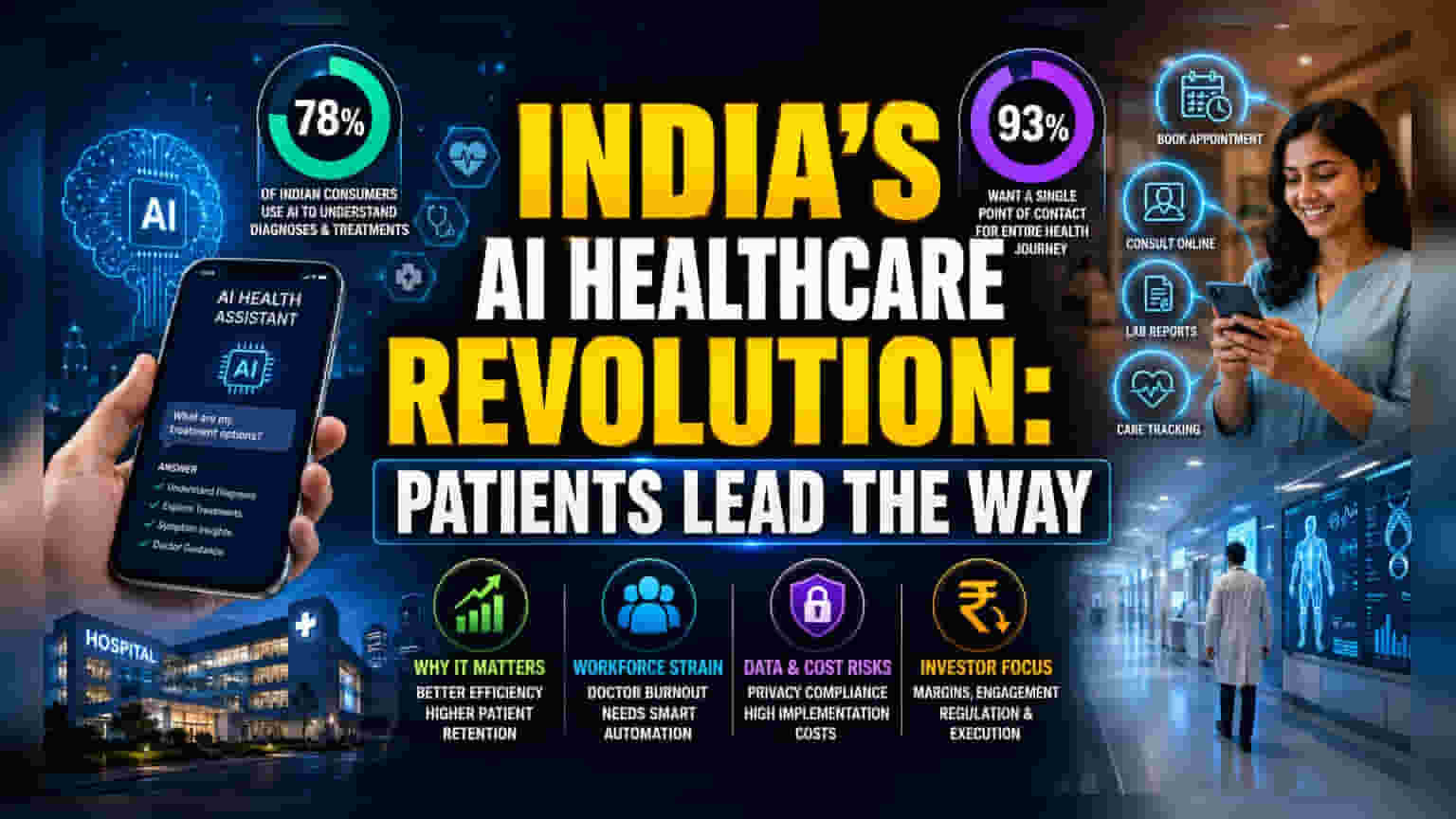


A new report shows 78% of Indian consumers are using Generative AI for healthcare, signaling a major digital shift. For listed hospital chains like Apollo, Max, and Fortis, this highlights both an opportunity to improve efficiency and the challenge of managing strained clinical systems. Investors should watch how companies balance technology spending with the rising demand for digital-first patient experiences.
What Happened
India is seeing a rapid shift in how patients interact with the healthcare system, driven by the adoption of Generative AI. According to a recent report by Bain & Company, 78% of Indian consumers are using AI tools to understand their medical diagnoses and explore treatment options. This high level of adoption highlights that Indian patients are increasingly comfortable with digital-first healthcare solutions, pushing the country to the forefront of the Asia-Pacific region’s digital health transition.
The Shift in Patient Expectations
The report identifies a clear gap between current healthcare delivery and patient expectations. Nearly 93% of consumers surveyed now desire a single point of contact to manage their entire healthcare journey. This demand for a seamless, digital-first experience is forcing healthcare providers to move beyond traditional, fragmented models. Indian hospital chains have been responding to this by investing in their own digital ecosystems, such as mobile apps and integrated care platforms that allow patients to book appointments, access lab reports, and consult doctors remotely.
Why Investors Should Watch AI Integration
For major players in the Indian hospital sector, such as Apollo Hospitals, Max Healthcare, and Fortis Healthcare, this trend is a double-edged sword. On the positive side, integrating AI and digital tools can help hospitals manage patient flow more efficiently, potentially reducing the administrative burden on doctors and staff. It also helps in patient retention, as those who engage with a hospital’s digital platform are more likely to stay within that specific healthcare network for their long-term medical needs.
However, this digital shift comes with significant business costs. Hospitals are currently spending substantial amounts on technology infrastructure. Investors should look for how these investments translate into tangible benefits, such as lower operational costs or higher patient volumes, rather than just higher capital spending.
Managing System Strain and Workforce Pressure
While the demand for digital solutions is growing, the physical healthcare system remains under pressure. The report highlights that clinical workforces are feeling the strain, with many doctors reporting burnout due to high workloads and repetitive tasks. This is a critical risk factor for the industry. If AI tools can successfully automate low-value administrative tasks, they could help alleviate some of this burnout. However, if hospitals fail to implement these systems effectively, the gap between rising patient expectations and the actual capacity to deliver care could widen, leading to operational inefficiencies.
The Data Privacy and Cost Risk
Investors must also consider the regulatory and cost risks associated with this digital transformation. As healthcare data becomes increasingly digitized, compliance with data privacy regulations, such as India's Digital Personal Data Protection (DPDP) Act, becomes paramount. A data breach or failure to comply with these norms could lead to significant legal, financial, and reputational risks for hospital chains. Furthermore, high implementation costs and the potential for project delays in scaling these technologies could put pressure on profit margins in the short term.
What Investors Should Track Next
Moving forward, investors may monitor a few key areas. First, watch for commentary from hospital management on how their digital investments are affecting profit margins and operational efficiency. Second, look for updates on patient engagement metrics—are digital platforms actually increasing patient stickiness? Finally, track the industry's ability to navigate data privacy requirements, as regulatory compliance will be a major factor in the long-term success of any digital health strategy.