

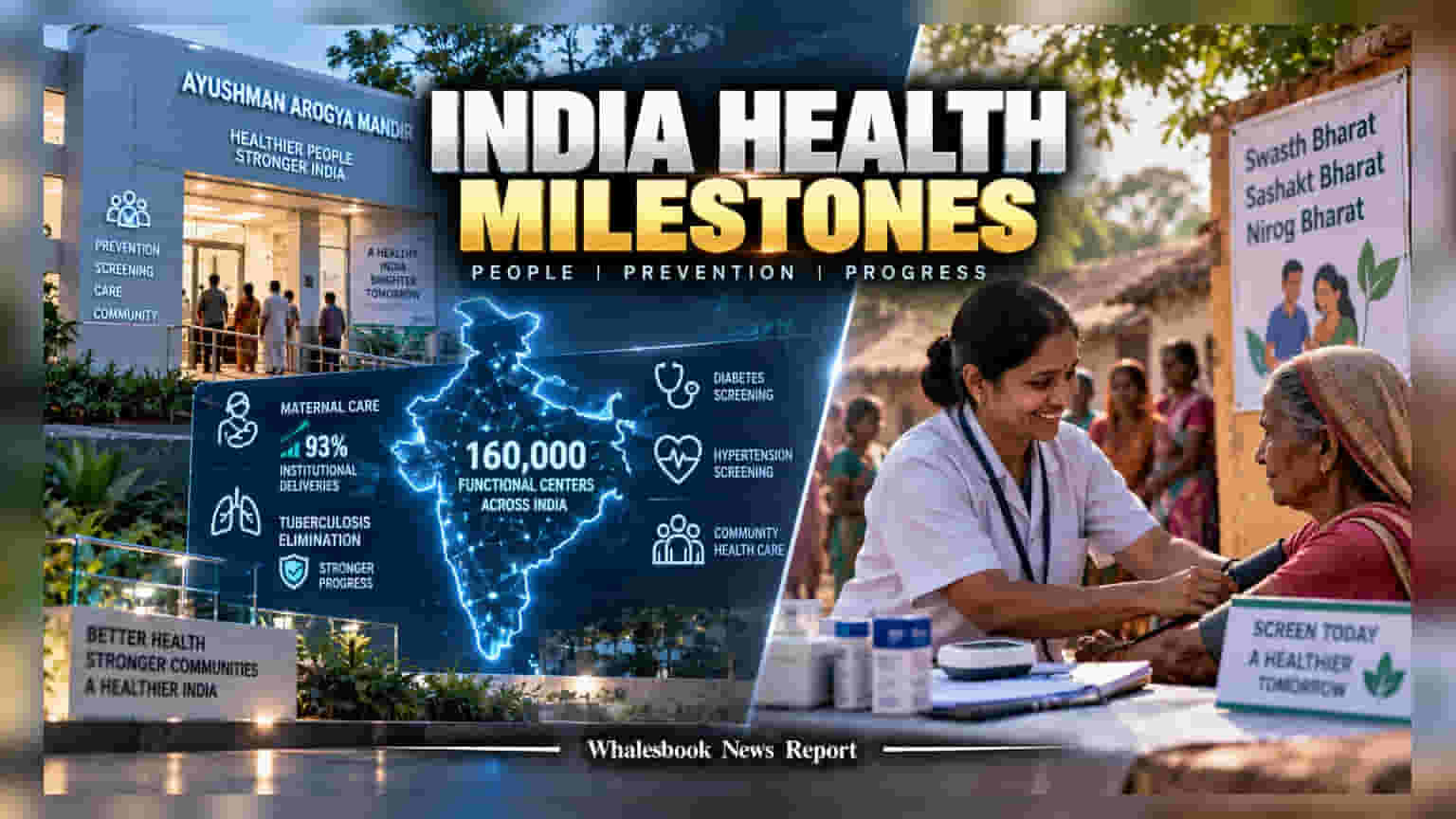
WHO Director-General Tedros Adhanom Ghebreyesus has commended India's progress in maternal health and tuberculosis eradication. With 160,000 operational Ayushman Arogya Mandir centers, the government continues to focus on rural diagnostics and public health. For investors, this underscores a sustained policy push in the healthcare sector, though balancing operational costs and service delivery efficiency remains a key monitorable.
The World Health Organisation (WHO) has officially acknowledged India’s progress in public health, highlighting advancements in maternal care and the national push to eliminate tuberculosis. During the 79th Session of the WHO Regional Committee for South-East Asia in Timor-Leste, Director-General Tedros Adhanom Ghebreyesus met with Union Health Minister JP Nadda to discuss these improvements. The dialogue emphasized the role of the Ayushman Arogya Mandir network, which now has 160,000 functional centers providing localized screenings for non-communicable diseases like diabetes and hypertension.
Impact on Healthcare Demand
For the Indian healthcare sector, this expansion of the Ayushman Arogya Mandir network serves as a significant signal. By moving healthcare closer to the patient, particularly in rural areas, the government is effectively creating a vast pipeline for diagnostic screenings. This localized approach can drive demand for medical equipment, rapid testing kits, and pharmaceutical supplies, as patients identified through these screenings are subsequently routed to clinical pathways. Companies involved in the diagnostics and medical device supply chain often see the benefits of such public infrastructure expansion through increased procurement contracts.
Public Health Initiatives and Market Dynamics
The progress in institutional deliveries, which have reportedly risen to 93% from 78% due to the efforts of frontline ASHA workers, reflects deep penetration of public healthcare services. While this government-led growth offers a stable demand environment, investors often look at the margin implications of such models. Much of this growth relies on government-led procurement, where price caps and cost-efficiency requirements are common. Companies supplying to these government-backed programs often face pressure on profit margins, as the focus remains on affordability and accessibility rather than high-value retail pricing.
Potential Risks and Sustainability
While the expansion is a positive step for public health metrics, the healthcare sector faces specific risks related to financial sustainability. High operational costs associated with running a massive, nationwide network can stretch fiscal resources. There is also the challenge of India’s status as a high-burden country for tuberculosis, which requires ongoing, long-term commitment and massive logistical support. Furthermore, broader economic factors like inflation can push up the costs of raw materials and logistics, potentially impacting the financial performance of companies involved in medical manufacturing and distribution. Reliance on public-private partnership models also brings questions regarding service accountability and long-term affordability for the end user.
What Investors Should Monitor
Moving forward, the focus for the sector will be on the government’s budgetary allocations for health and the pace of procurement for diagnostic and pharmaceutical needs. Investors should track updates on regulatory changes regarding medical product standards and the government’s continued commitment to funding these health missions. The ability of companies to manage volume-based growth while navigating price-sensitive government tenders will be a crucial factor in understanding the long-term impact of these policy initiatives on corporate earnings.