

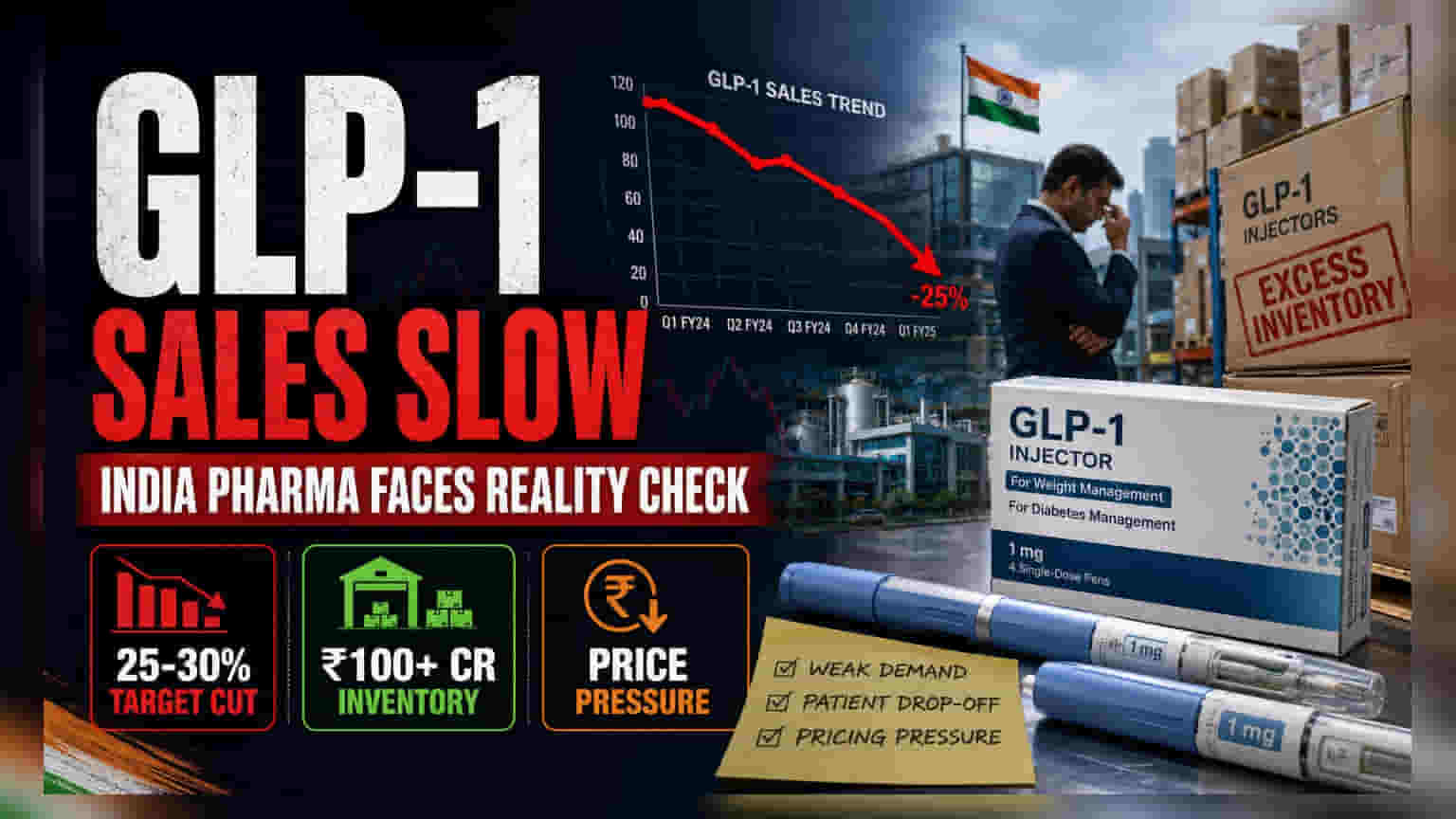
Indian pharmaceutical companies have cut sales targets for generic weight-loss drugs by up to 30% as demand hits a wall. High treatment costs, intense pricing pressure from innovators, and low patient retention have led to an inventory buildup of over ₹100 crore in the sector.
What Happened
India’s pharmaceutical sector is facing a reality check regarding the much-hyped market for generic GLP-1 weight-loss and diabetes drugs. Companies that had set ambitious revenue targets for their first year are now lowering them by 25% to 30%. This follows an unexpected trend where expected sales are failing to materialize. A clear signal of this market pressure is an inventory buildup exceeding ₹100 crore, indicating that the medicine is moving from warehouses to distributors and pharmacies, but not to the end-users as quickly as the companies had hoped.
The Patient Retention Hurdle
For pharmaceutical products that treat chronic conditions like diabetes or obesity, consistent long-term use is the engine of revenue. If patients stop taking the medicine after a few weeks or a month, the company loses out on the recurring income that justifies the high cost of production and marketing. Industry data suggests that after an initial spike in prescriptions, growth has flattened. This indicates that patients are dropping off the treatment faster than anticipated. When patients stop the medication, prescriptions do not renew, which halts the sales momentum for manufacturers.
Pricing Pressure From Innovators
The market for these drugs in India has become highly competitive, much earlier than firms expected. Large international innovators, such as Novo Nordisk, have implemented sharp price cuts. While local generic versions are still more affordable than the original innovator drugs, the gap has narrowed. This price war squeezes the profit margins of generic players, who operate on thinner margins compared to the original brands. Even at generic prices, the monthly cost of treatment—ranging from ₹2,000 to ₹4,000—remains a significant barrier for the average Indian consumer, limiting the total market size.
Business Reality Check
The unexpected slowdown is causing ripple effects in the industry. Companies that were planning to launch their own versions of these drugs in the second wave of releases are now pausing. This 'wait-and-watch' approach suggests that the business case for these drugs is being re-evaluated. If the cost of production remains high and patient retention remains low, companies may struggle to turn these projects profitable in the near term. For investors, this highlights the risks associated with betting on new drug launches without established demand.
What Investors Should Track Next
Investors may look for three key updates in the coming months. First, listen for management commentary in quarterly earnings calls regarding the 'GLP-1' or 'weight-loss' segment to see if they acknowledge these demand and inventory issues. Second, monitor whether companies decide to defer or cancel their planned product launches in this category. Finally, track whether any major player reports a write-down on inventory, which would be a clear sign that the product is not selling as planned.