

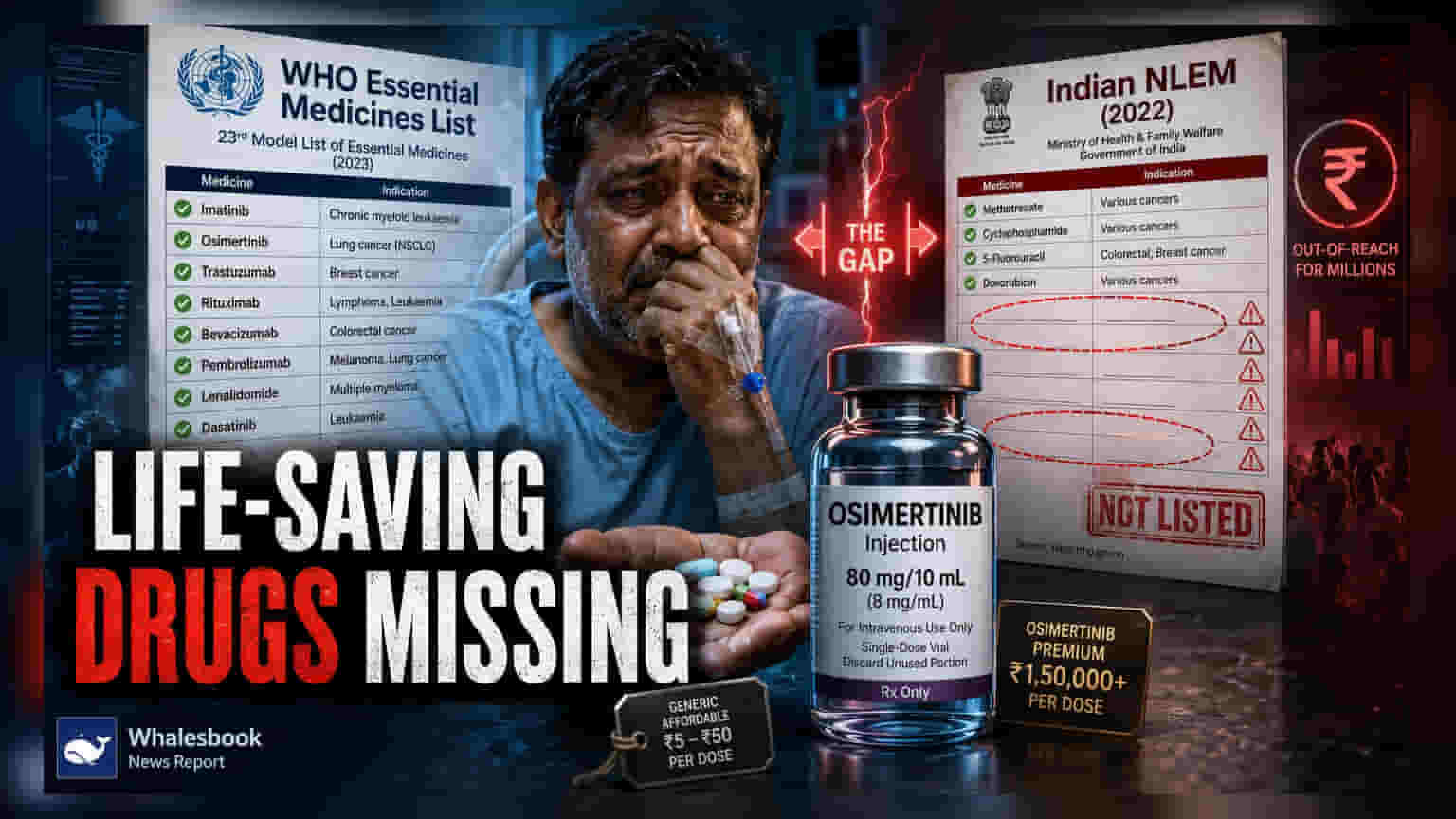
A civil society coalition has flagged that India's National List of Essential Medicines (NLEM) omits over a dozen WHO-listed drugs for cancer and diabetes. Inclusion in the NLEM is critical as it influences price controls and availability in public and private health systems. The current delay impacts affordability and access to newer, life-saving therapies for patients across the country.
What Happened
A civil society coalition, the Working Group on Access to Medicines and Treatments, has formally urged the Standing National Committee on Medicines (SNCM) to update India's National List of Essential Medicines (NLEM). The group states that India’s current list, which was last notified in 2022, fails to include more than a dozen critical drugs that the World Health Organization (WHO) has already recognized as essential. While the WHO Model List was updated in 2023 and 2025 to include 523 medicines, the Indian NLEM remains limited to 384 items. The coalition has reached out to the Union Health Minister and key departmental secretaries to demand a transparent and time-bound revision process.
Why This Matters For Investors
The NLEM is a cornerstone of India’s healthcare policy because it directly impacts the pharmaceutical sector. Medicines included in this list are subject to price caps set by the National Pharmaceutical Pricing Authority (NPPA) under the Drugs (Prices Control) Order. When a drug is added to the NLEM, its maximum price is regulated, which can impact the profit margins of manufacturers producing those specific medications. Conversely, the exclusion of newer, high-value therapies from the list allows companies more flexibility in pricing. Investors in the pharmaceutical sector typically monitor NLEM revisions closely, as changes can significantly alter the revenue profile and profitability of companies that rely on specialized cancer and diabetes treatments.
Impact on Medical Access and Revenue
The coalition specifically highlighted the absence of 17 active cancer-treating agents, including drugs like Abiraterone, Pembrolizumab, and Bevacizumab. Additionally, nine monoclonal antibodies, which are increasingly used in targeted cancer therapies, are missing from the current list. For pharmaceutical companies, the potential inclusion of these agents could mean increased volume demand through public procurement, but at lower, government-mandated price points. For private hospitals and health insurance providers, the inclusion or exclusion of these drugs also affects the cost of care and the scope of insurance coverage plans.
The Business Reality Check
The pharmaceutical industry in India operates on a balance between affordability initiatives and the need for returns on investment, particularly for expensive, patented, or complex drugs like monoclonal antibodies. If the government accelerates the inclusion of these drugs in the NLEM, companies currently selling these products at premium prices in the private market may face margin pressure. However, companies that dominate the generic supply chain for these therapies might see volume growth if their inclusion leads to widespread adoption in public hospitals. The pace of this revision is a critical factor, as it determines how quickly these regulatory changes impact company bottom lines.
What To Watch Next
Investors should monitor official notifications from the Ministry of Health and Family Welfare regarding the formation or findings of the SNCM. Future updates on whether the government intends to expand the NLEM to align with global WHO standards will be the primary trigger. Additionally, market participants may track any subsequent announcements from the NPPA regarding potential price-capping strategies for high-value oncology drugs, as these will directly influence the sector's long-term profitability and capital allocation strategies.