 Whalesbook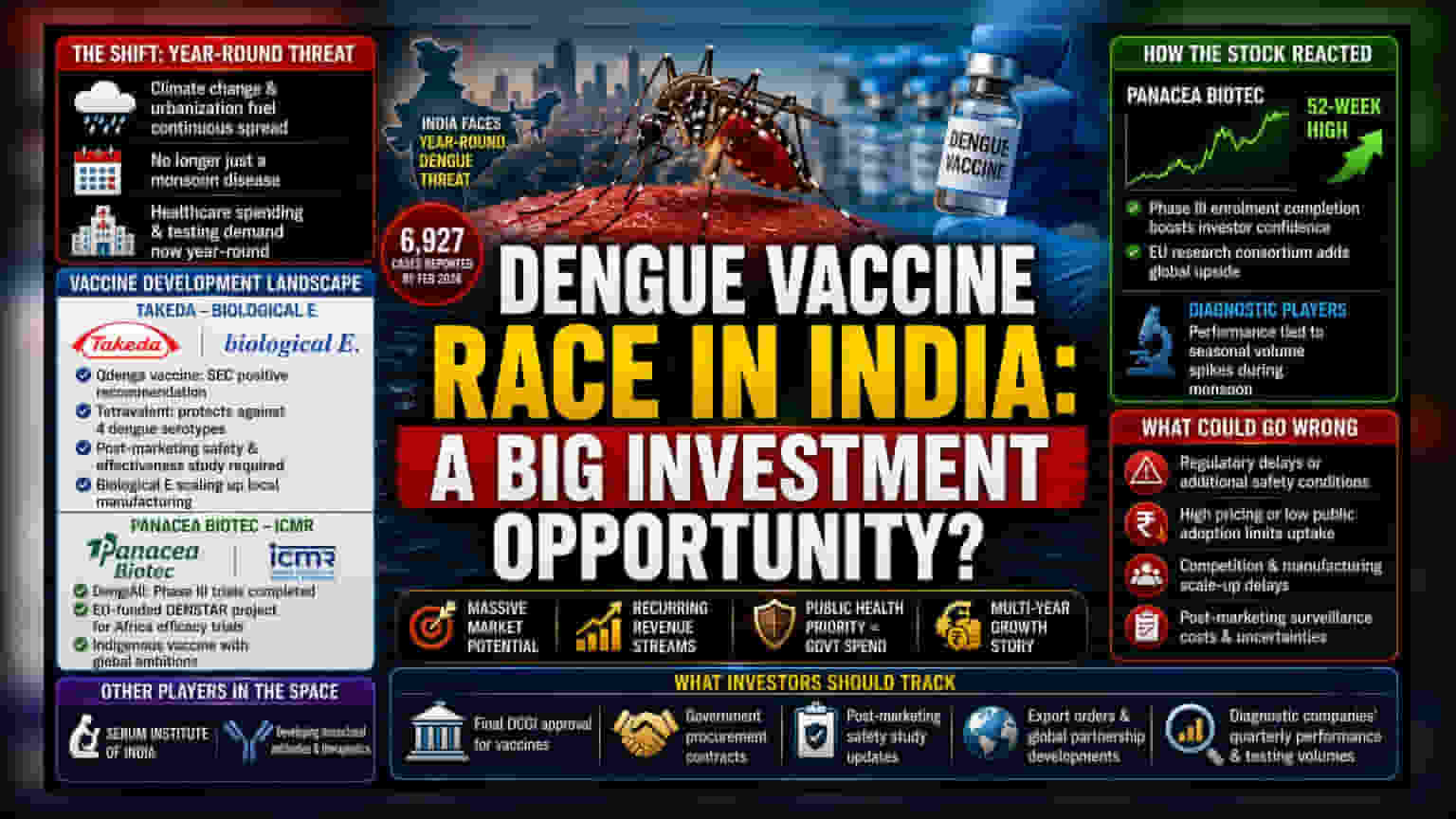


As dengue cases rise and the infection period extends across India, pharmaceutical companies are racing to introduce vaccines. With Takeda's Qdenga and Panacea Biotec's DengiAll reaching clinical milestones, investors are watching for regulatory approvals and manufacturing plans. This transition from a seasonal health burden to a persistent, year-round focus is changing the business case for vaccine makers and diagnostic providers.
What Happened
India is experiencing a significant shift in the epidemiology of dengue fever. What was once considered a seasonal monsoon-linked illness is now emerging as a persistent, year-round health challenge due to changing climatic patterns and rapid urbanization. Official data highlights an early surge in cases, with 6,927 cases reported by the end of February 2026. This data has drawn attention to the pharmaceutical sector, where key players are racing to bring the first dengue vaccines to the Indian market. Major developments include the expert panel recommendation for Takeda’s 'Qdenga' vaccine, which is being manufactured in partnership with Hyderabad-based Biological E. Simultaneously, Panacea Biotec, in collaboration with the Indian Council of Medical Research (ICMR), has completed Phase III clinical trials for its indigenous vaccine candidate, 'DengiAll.' Other major players like the Serum Institute of India are also involved in developing therapeutics, such as monoclonal antibodies, to manage the disease.
Why This Matters For Investors
For years, the business opportunity related to dengue in India was largely limited to diagnostic testing—where pathology labs and hospital chains benefited from high volumes of testing during seasonal spikes. The potential introduction of a vaccine shifts the narrative. If approved, vaccines offer a more stable, recurring revenue stream compared to the volume-heavy but seasonal diagnostic testing model. The shift toward a year-round threat also implies that healthcare infrastructure and public health spending must remain elevated throughout the year, potentially stabilizing demand for diagnostic and treatment services. Investors are now evaluating the ability of these companies to successfully navigate the regulatory approval process and scale up manufacturing to meet the immense potential demand of a country with India's population size.
The Vaccine Development Landscape
There are two primary tracks investors are monitoring in the vaccine space. The first is the import and manufacturing track involving Takeda and Biological E. Takeda has received a positive recommendation from the Subject Expert Committee of India's drug regulator for its Qdenga vaccine. This is a tetravalent vaccine, meaning it protects against the four main serotypes of the virus. Biological E is a critical partner here, tasked with scaling up local production capacity to support Takeda's global and domestic supply goals. The regulator has attached a condition requiring a post-marketing safety and effectiveness study, which is a standard regulatory hurdle to ensure long-term data in the Indian population.
The second track is the indigenous development effort, led by Panacea Biotec and ICMR. Their candidate, DengiAll, has completed Phase III trials. The company has also secured funding from European partners for a research project called DENSTAR, aimed at testing the vaccine's efficacy in African regions. This provides an additional layer of potential global scale beyond the Indian market. Panacea’s stock has reacted positively to these milestones, reflecting investor interest in the company’s ability to bring a homegrown solution to a critical public health gap.
How The Stock Reacted
Panacea Biotec’s shares have shown sensitivity to these developments, recently reaching a 52-week high. The market reaction indicates that investors are placing a premium on vaccine-related progress, particularly after the company announced the completion of Phase III trial enrolment and the initiation of its EU-backed research consortium. In contrast, while large-cap vaccine makers like the Serum Institute of India are active in research partnerships for therapeutics, their broader diversified portfolios often mask the specific impact of dengue-related news. Investors in the diagnostic sector, such as major pathology chains, typically see their stock performance tied more directly to quarterly volume growth during peak monsoon months rather than long-term vaccine development news.
What Could Go Wrong
Investing in vaccine development carries significant execution and regulatory risks. Even with successful Phase III trials, companies must secure final government approval, which can be subject to delays or additional safety conditions. Furthermore, there is the risk of post-marketing surveillance requirements, which require time and significant capital investment to execute. Market adoption is another factor; vaccine pricing, government procurement policies, and public acceptance are critical variables. If a vaccine is priced too high or if public awareness does not lead to uptake, the revenue potential could be lower than anticipated. Additionally, competition is intensifying, and any delay in manufacturing scale-up compared to rivals could impact a company's ability to capture market share.
What Investors Should Track
Moving forward, the primary monitorable is the final drug controller approval for both the Takeda-Biological E and Panacea Biotec vaccines. Investors should watch for announcements regarding government procurement contracts, as the public health sector will likely be the largest buyer of these vaccines. Additionally, monitoring the results of post-marketing safety studies and any updates on export orders—particularly for Panacea Biotec’s global research initiatives—will be key to understanding the full revenue potential. Finally, while the vaccine race is the current focus, the quarterly performance of diagnostic companies will continue to provide clues about the underlying demand for testing as the infection pattern evolves.