 Whalesbook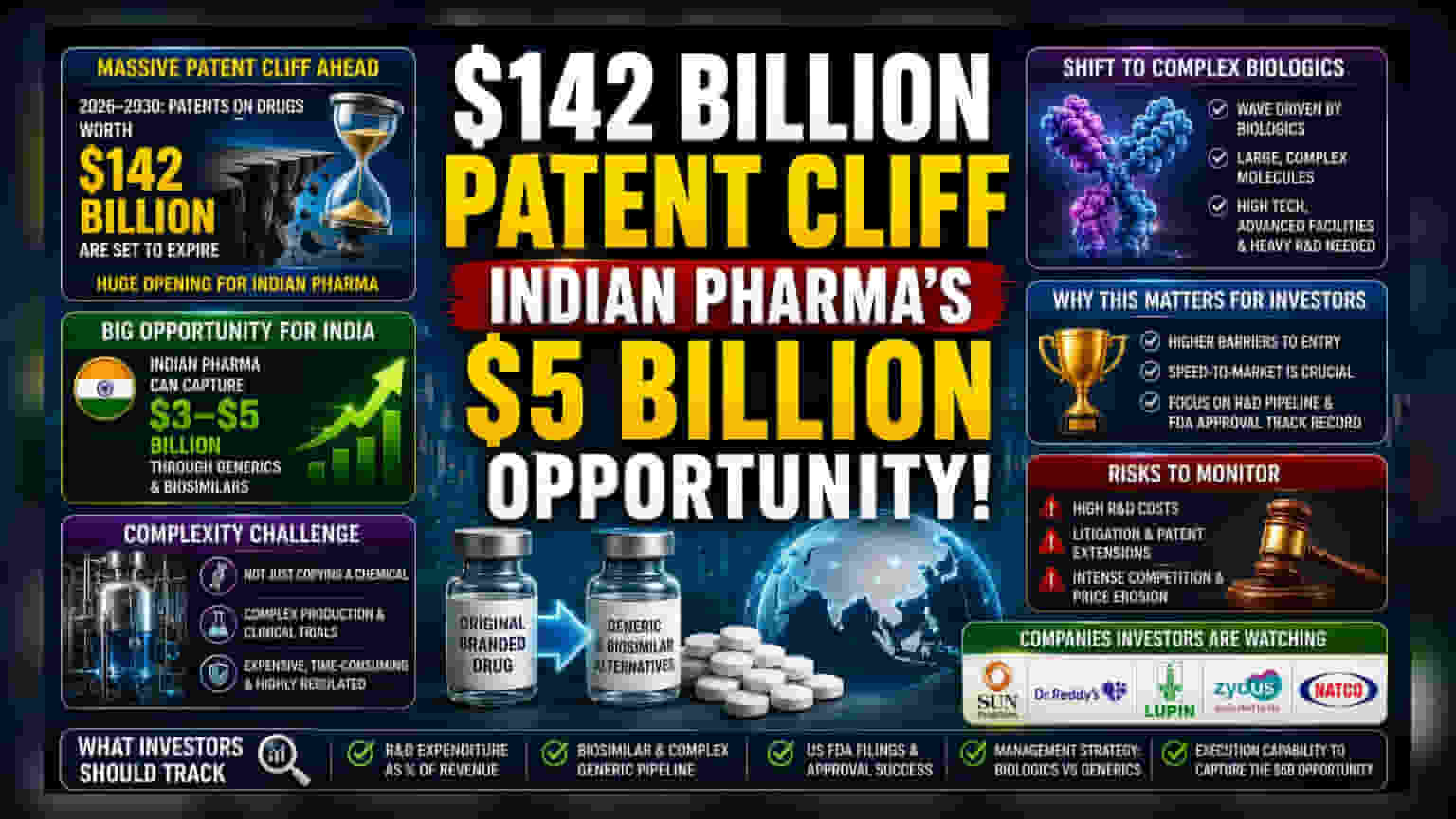
With $142 billion in global drug patents set to expire by 2030, Indian pharmaceutical companies are preparing to launch generic and biosimilar versions. Analysts estimate this could capture a $3-5 billion market share, though success now requires moving beyond simple pills into complex, high-investment biologics.
What Happened
Global pharmaceutical companies are facing a significant 'patent cliff' between 2026 and 2030. During this period, patents protecting drugs with a total market value of $142 billion are set to expire. For the Indian pharmaceutical industry, this event serves as a major growth opportunity. Analysts at CareEdge Ratings suggest that Indian manufacturers could capture between $3 billion and $5 billion of this revenue by introducing generic and biosimilar alternatives to these soon-to-be-off-patent drugs.
The Shift to Complex Biologics
Unlike previous cycles that relied heavily on traditional chemical drugs, this wave of expirations is dominated by biologics. These are large, complex molecules derived from living organisms, often used to treat chronic illnesses. Replicating these drugs, known as biosimilars, is significantly more difficult than producing standard chemical generics. This structural shift requires pharmaceutical companies to have higher technical capabilities, advanced manufacturing facilities, and a willingness to invest heavily in research and development.
Why This Matters For Investors
For investors, the potential profit is not guaranteed. While the opportunity is large, the barrier to entry has risen. In the past, Indian firms thrived on 'first-to-file' strategies for simple pills. Now, the market favors companies that can navigate the high technical and regulatory requirements of biologics. Speed-to-market is critical because once a patient begins a specific treatment, it is difficult for competitors to displace that drug, even with a cheaper version. Investors are now looking at companies with strong R&D pipelines and successful records of gaining approvals from strict regulatory bodies like the US FDA.
The Complexity Challenge
Developing biosimilars involves more than just copying a chemical formula. Since the base material is biological, small differences in the manufacturing process can change how the drug works. This makes clinical trials, complex production, and regulatory approval much more expensive and time-consuming. Companies that lack the capital or the technical expertise to manage these complex processes may find it difficult to compete, regardless of the size of the patent-expiry opportunity.
Risks to Monitor
Investors should consider the risks inherent in this sector shift. First, the cost of R&D is much higher for biologics, which can pressure short-term profit margins. Second, litigation remains a constant threat; original drug makers often use legal challenges to extend their patent protection or delay generic entry. Finally, there is the risk of high competition, as many global generic players are targeting the same lucrative patents, which can lead to rapid price erosion once these drugs hit the market.
What Investors Should Track
When evaluating companies like Sun Pharma, Dr. Reddy's Laboratories, Lupin, Zydus Life Sciences, or Natco Pharma, investors may monitor several indicators. These include the company’s R&D expenditure as a percentage of revenue, the number of 'complex generic' or biosimilar filings in their pipeline, and their historical success rate with the US FDA. Furthermore, management commentary regarding their strategy for biologics versus traditional drugs will provide clues into how they plan to capture this $5 billion opportunity while managing the associated costs and risks.

