

India's pharmaceutical sector has quadrupled its global patent share to 10%, driven by faster regulatory approvals and $5 billion in government support. While innovation in drug discovery is growing, the sector faces a significant funding gap compared to US research spending and requires more specialized capital to sustain this shift toward scientific discovery.
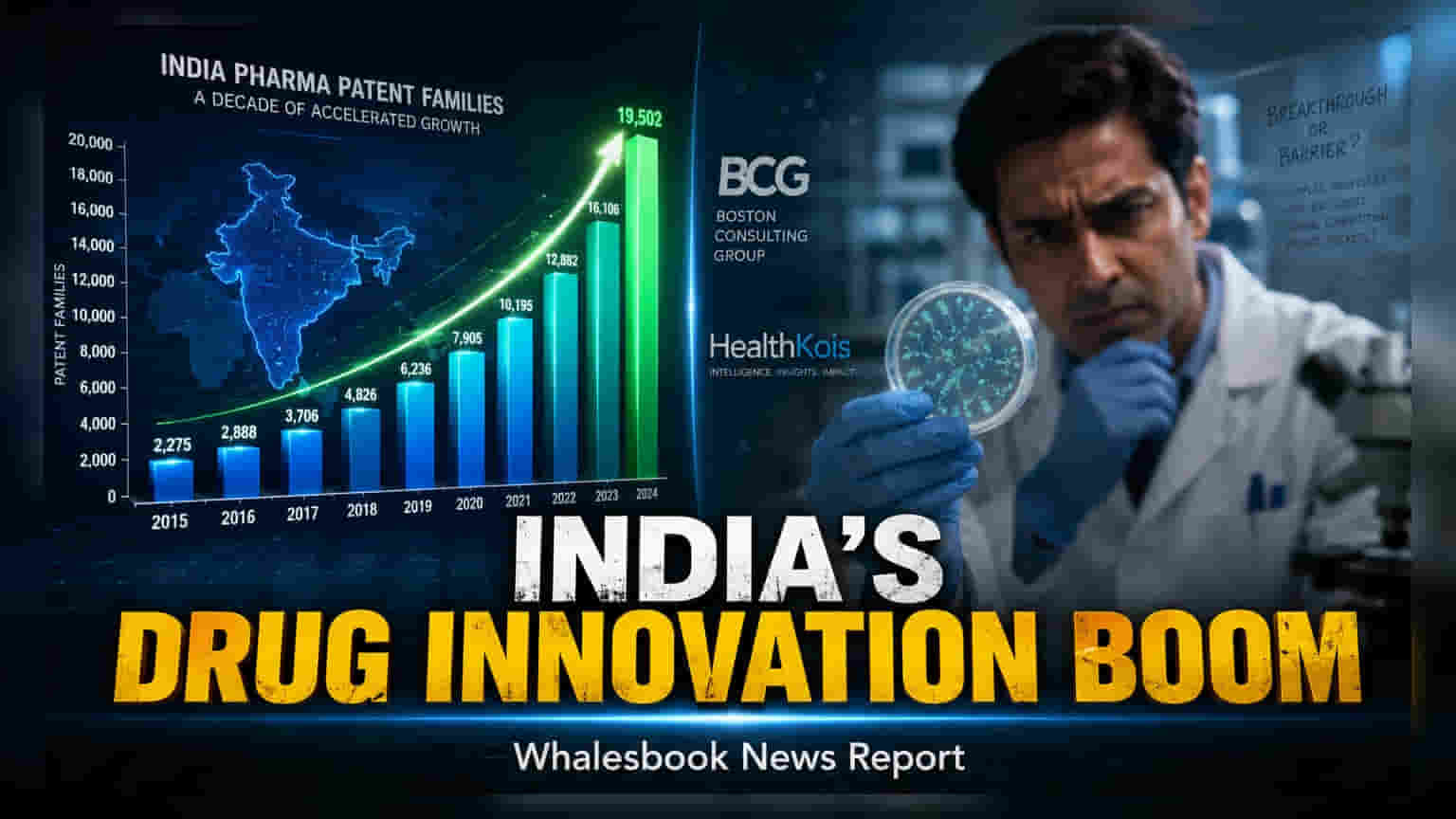
The Indian pharmaceutical and biotechnology sector is undergoing a strategic transformation, moving away from its traditional strength in generic drug manufacturing toward high-value research and innovation. Recent data shows that drug discovery programs in the country have expanded 1.5 times, reaching over 1,095 active projects across 195 companies. This shift is clearly visible in intellectual property trends, with pharma patent families originating from India jumping from 716 in 2015 to 2,995 in 2024. Consequently, India now contributes approximately 10% of global pharmaceutical patents, a significant increase from its 3-4% share a decade ago.
Efficiency Gains and Government Support
The government has played a direct role in this transition by injecting over $5 billion into early-stage and translational research initiatives. Regulatory reforms have also been a major contributor, with the average time for drug development approvals being slashed from the previous 180-270 day window down to a more streamlined 60-120 days. Shared infrastructure projects, such as Genome Valley and the Centre for Cellular and Molecular Platforms (C-CAMP), have further lowered the barrier to entry for smaller biotech firms by providing necessary laboratory and manufacturing facilities that would otherwise be cost-prohibitive.
Emerging Successes in Advanced Therapies
Evidence of this shift from replication to origination is emerging through specific therapeutic breakthroughs. For instance, the development of BIRSA 101, an indigenous CRISPR-based therapy, and NexCAR19, a CAR-T cell therapy, highlights India's growing capability in high-end medical science. These innovations are also notable for their cost-effectiveness compared to international versions. Market data supports this momentum, as private equity and venture capital inflows into the sector grew 2.1 times over the last five years, hitting $731 million for the fiscal year ending March 2026. The number of active biotech startups has expanded to 2,400.
Capital and Structural Hurdles
Despite these advancements, the industry faces substantial structural obstacles. While R&D spending in India has reached $2 to $3 billion annually, it remains a fraction of the $70 to $75 billion invested in the United States, indicating a massive gap in resources available for late-stage development and commercialization. A primary bottleneck is the lack of specialized 'patient capital.' Only 10-15% of domestic venture capital firms currently possess the deep technical expertise required to evaluate pharma and biotech risks, compared to roughly 60% in the US. Furthermore, India’s participation in global clinical trials remains limited at approximately 4%, which restricts the ability to validate these new discoveries on a global scale. Investors will need to track whether the industry can successfully bridge the talent gap in specialized research and attract the long-term, deep-pocketed funding necessary to compete at a global level.