

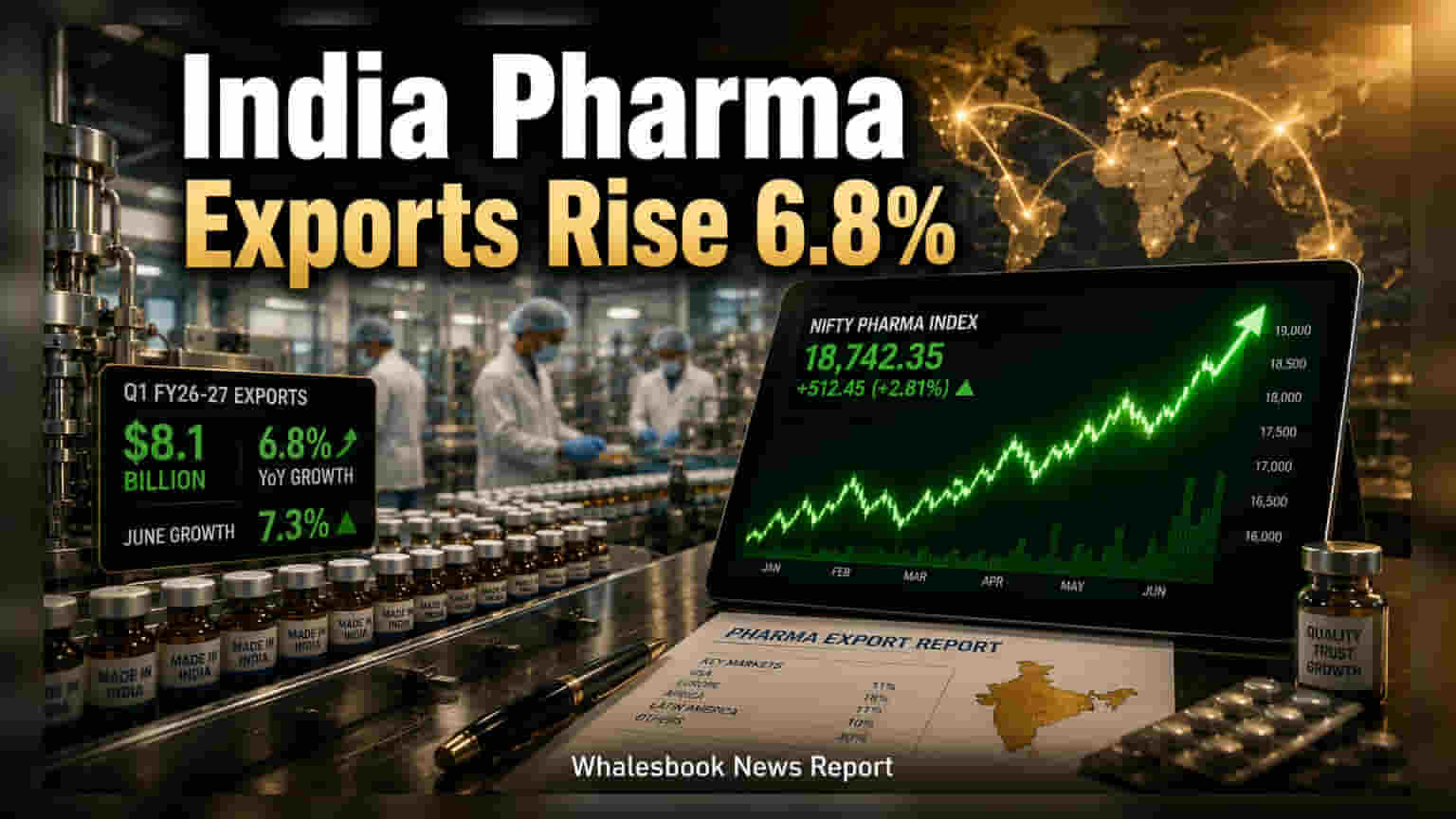
India's pharmaceutical exports climbed to $8.1 billion in the first quarter of FY27, recording 6.8% growth despite logistical hurdles in West Asia. While demand for formulations in the US remains high, companies face potential profit margin pressure from rising freight costs and supply chain constraints.
The Indian pharmaceutical sector started the 2026-27 financial year with a solid performance, recording a 6.8% increase in exports to reach $8.1 billion in the first quarter. Data from the industry shows that the growth momentum improved as the quarter progressed, with June exports expanding by 7.3% compared to the same period last year. This recovery suggests that the industry is navigating global logistical challenges effectively, keeping its role as a key contributor to national trade.
Demand Drivers and Key Markets
Drug formulations and biological products continue to form the backbone of these exports, accounting for nearly 74% of the total shipments. The United States remains the most critical market for Indian manufacturers, absorbing approximately 31% of the total export value. This reliance on the US market helps maintain volume, but it also means that the industry is sensitive to regulatory updates and inspection outcomes that can affect product launch timelines and supply stability.
Logistics and Margin Concerns
While the topline growth is positive, the sector faces hurdles that could impact profitability. Ongoing geopolitical volatility in West Asia has caused significant logistical disruptions and increased freight charges. These higher transportation costs are putting pressure on operating margins across the industry. Investors often track these expenses, as rising logistics costs can compress profit levels even when demand for products remains steady.
Structural Challenges and Strategy
Beyond immediate logistical issues, the industry continues to manage a structural dependency on raw material imports from China. Although companies are looking for ways to diversify their supply chains, this remains a work in progress. To mitigate these risks, the government’s Production Linked Incentive (PLI) scheme is serving as a tool to boost domestic manufacturing of key starting materials and active pharmaceutical ingredients. The focus for many companies is to use these incentives to build a more secure domestic supply base.
The next important monitorable for the sector will be the ability of companies to manage their input costs and logistics expenses throughout the rest of the financial year. While export volumes are growing, the final impact on earnings will depend on whether companies can pass on higher freight costs to customers or if they must absorb these expenses, which would weigh on profit margins.