

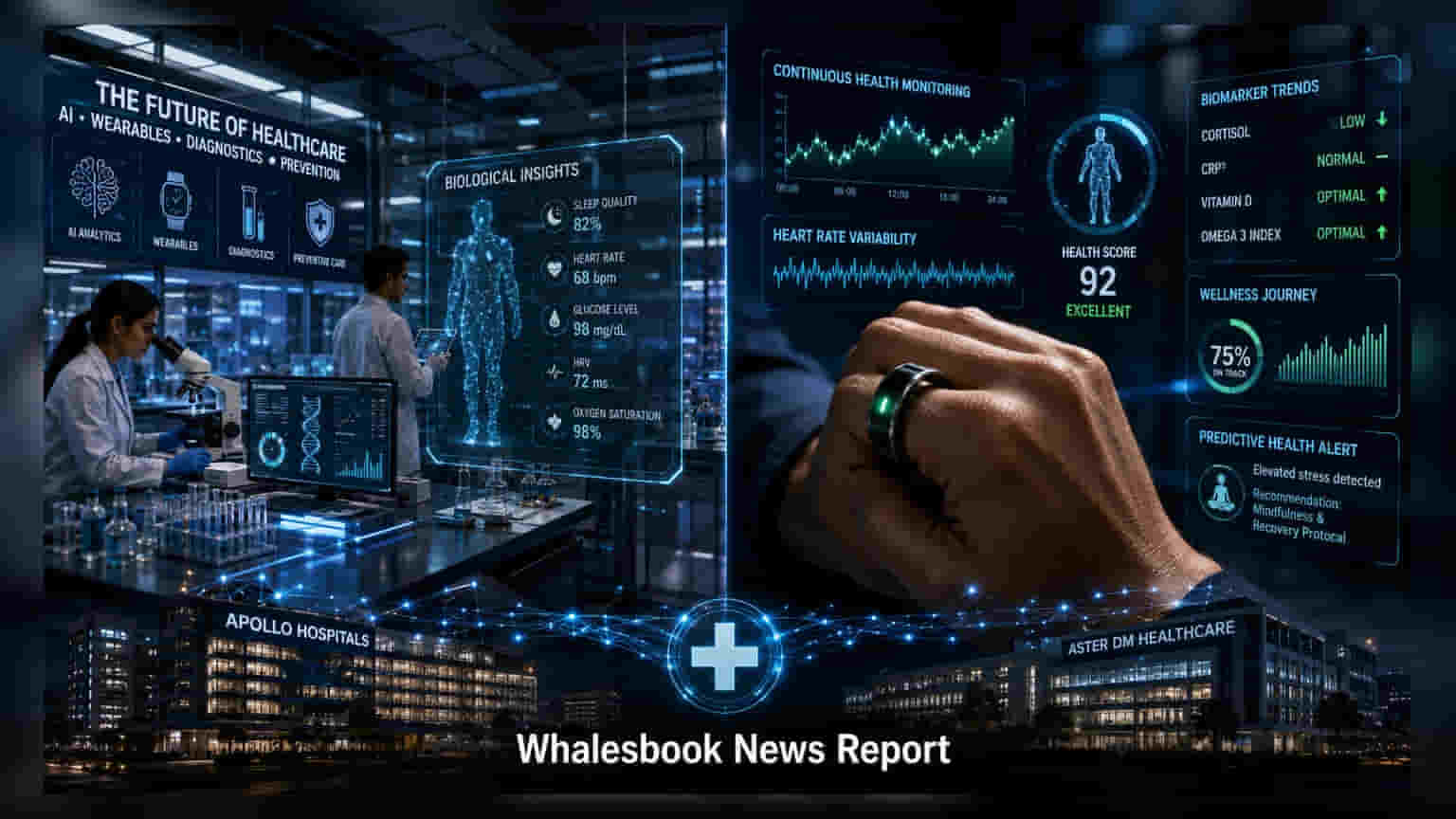
Wellness startups and hospital chains are moving from one-time treatments to long-term health tracking using AI and wearables. This shift from episodic to continuous care aims to capture more patient data but brings challenges regarding data privacy and clinical utility.
The Indian healthcare landscape is undergoing a transformation as both wellness-focused startups and legacy hospital chains pivot toward continuous, data-driven models. Traditional healthcare has long relied on episodic care, where patients visit doctors only when ill. Now, a growing cohort of companies is leveraging artificial intelligence, wearable technology, and clinical diagnostics to monitor health parameters in real-time, effectively moving toward a model of long-term, predictive health management.
Tech-Wellness and the Rise of Biological Data
Startups such as Ultrahuman and Kapiva are defining this new segment. By integrating wearable devices—which track metrics like sleep quality, glucose levels, and heart rate—with regular blood work and microbiome analysis, these firms aim to provide a comprehensive view of a person's biological health. The objective is to shift the consumer focus from treating illness to preventative lifestyle management. For instance, Kapiva utilizes AI to analyze pulse data to track wellness markers, attempting to modernize traditional health assessments.
For investors, this represents a fundamental change in business models. While traditional hospitals generate revenue through acute care services, these wellness platforms aim to create recurring engagement by becoming a constant companion in a user's health journey. This strategy allows companies to build proprietary data sets, which they argue are essential for offering personalized health interventions.
Legacy Hospitals Adapt to Digital Continuity
Established hospital chains, including Apollo Hospitals and Aster DM Healthcare, are increasingly investing in their own digital ecosystems. The challenge for these institutions is to retrofit legacy systems designed for paper records and event-based interactions into platforms capable of handling high-frequency, continuous data. The goal is to retain patients within their ecosystem for their entire lifespan, rather than only during acute medical episodes.
While this digital pivot aims to improve patient outcomes, it creates operational complexity. Integrating siloed data from various medical departments into a unified, predictive engine is a significant technological hurdle. Success in this area will likely depend on how effectively these chains can manage their vast existing infrastructure while incorporating the agile data strategies favored by younger wellness platforms.
Data Privacy and Clinical Risks
As companies collect larger volumes of biological and genetic information, privacy concerns are becoming a central issue. Questions regarding consent, data ownership, and the potential secondary use of sensitive health information are gaining attention. Regulatory bodies may eventually demand stricter controls on how this data is stored and monetized.
Furthermore, medical experts emphasize the need for clinical validation. There is a risk that excessive, continuous monitoring could lead to 'data anxiety,' where normal physiological fluctuations are misinterpreted as health problems. Without well-established clinical pathways, the obsession with tracking every marker may generate noise rather than actionable health insights. For investors, the key monitorables are the ability of these firms to prove clinical efficacy, protect user data, and sustain long-term engagement amidst a crowded field of health-tech offerings.