

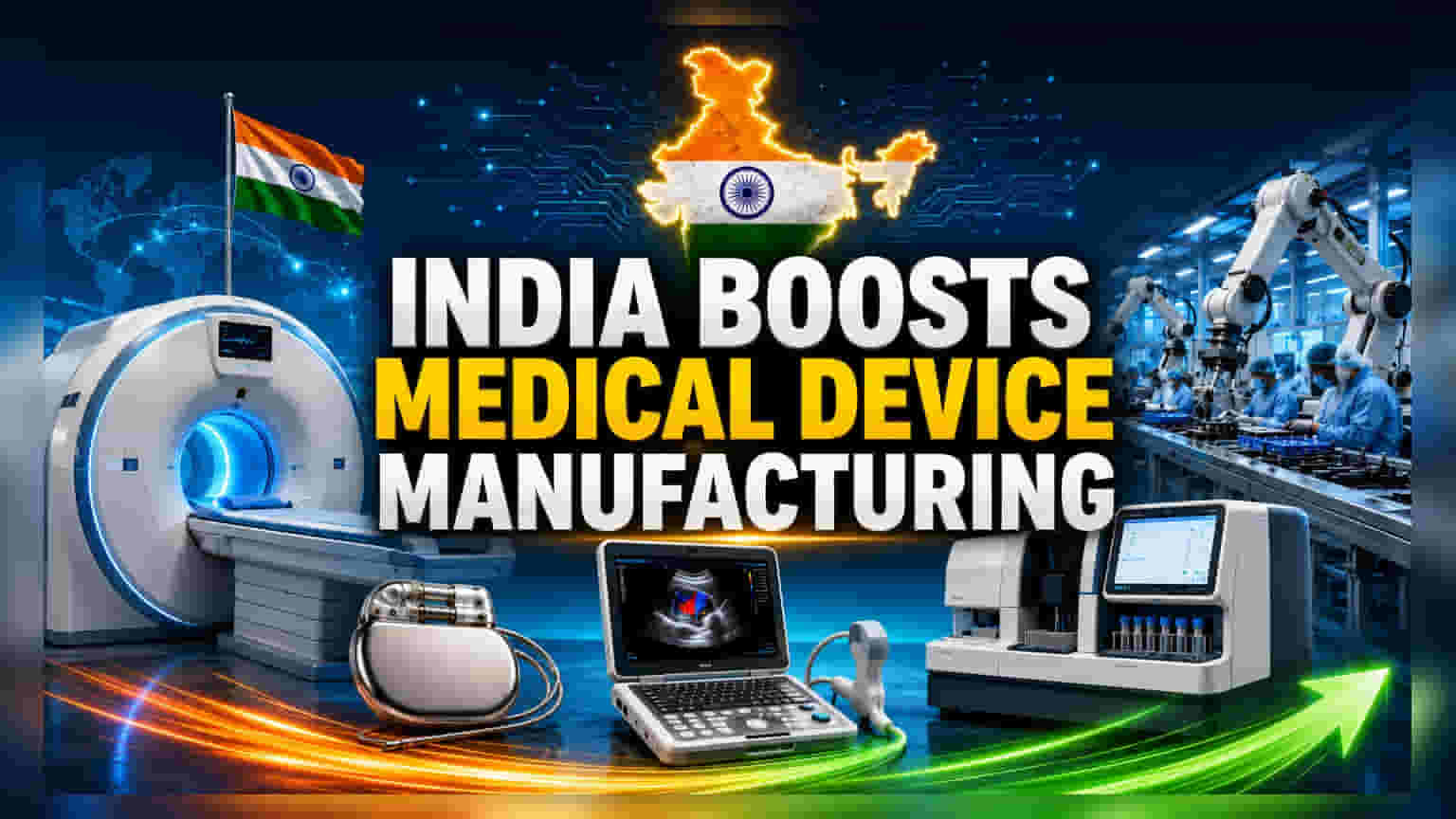
India is accelerating plans to locally manufacture 10 high-value medical devices, including MRI systems and pacemakers, to reduce its ₹89,000 crore annual import bill. The government is consulting with industry players to design targeted subsidies and R&D support. This initiative aims to shift the sector from simple consumables to high-tech medical equipment, though success depends on bridging deep research and technology gaps.
What Happened
The Department for Promotion of Industry and Internal Trade (DPIIT) is fast-tracking a plan to boost the local manufacturing of approximately 10 high-value medical devices. This initiative, discussed in recent meetings with industry stakeholders, focuses on equipment currently dominated by imports, such as MRI systems, pacemakers, advanced ultrasound machines, and high-end diagnostic analyzers. The government's goal is to reduce India's heavy reliance on foreign-made medical technology, which cost the country ₹89,000 crore in imports last year.
The Import Burden
For investors, the scale of the challenge is clear in the data. Imports of medical devices rose by 17% last year, reaching ₹89,000 crore. Nearly 85% of this import bill comes from just 40 product categories. Currently, while India has successfully scaled up the production of medical disposables (like syringes and gloves), it remains highly dependent on multinational corporations for complex electronic equipment like CT scanners and MRI machines.
Why This Is Complex
Manufacturing high-tech medical gear is fundamentally different from producing disposables. It requires significant investment in research and development (R&D), proprietary technology, and complex clinical validation. Unlike simple plastic or metal medical tools, high-end equipment like an MRI machine involves sophisticated software, sensors, and global intellectual property standards.
Historically, the domestic industry has struggled to compete with global leaders on technology and quality assurance. The government’s existing Production Linked Incentive (PLI) scheme, with an outlay of ₹3,420 crore, has supported production, but the shift toward high-value equipment requires more than just factory space; it needs deep innovation. Companies that successfully bridge this gap through technology partnerships or heavy R&D investment are the ones likely to benefit from future policy support.
Conflicting Policy Signals
The government is navigating a difficult balance. While DPIIT pushes for local manufacturing, there are simultaneous moves to improve healthcare access. Recent proposals, as of June 2026, suggest allowing hospitals to directly import about 80 categories of high-end equipment to speed up patient access. This creates a dual reality for the sector: hospitals may gain faster access to foreign tech, which could put short-term pressure on the domestic manufacturing push.
What Investors Should Track
Investors should monitor how the government reconciles these two goals—encouraging local production while ensuring patients get immediate access to advanced equipment.
Key monitorables include:
- Specific Incentive Rollouts: Details on a potential 'PLI 2.0' or specific subsidies targeting high-value tech rather than just general capacity.
- R&D Spending: Whether listed Indian medical device companies increase their spending on research and clinical trials for high-end electronics.
- Component Sourcing: Progress on the 'indigenization' of critical components (like X-ray tubes or sensors) rather than just assembly, as assembly alone often relies heavily on imported parts.
- Public Procurement: Any updates to the Global Tender Enquiry (GTE) rules that favor local manufacturers in hospital contracts.