

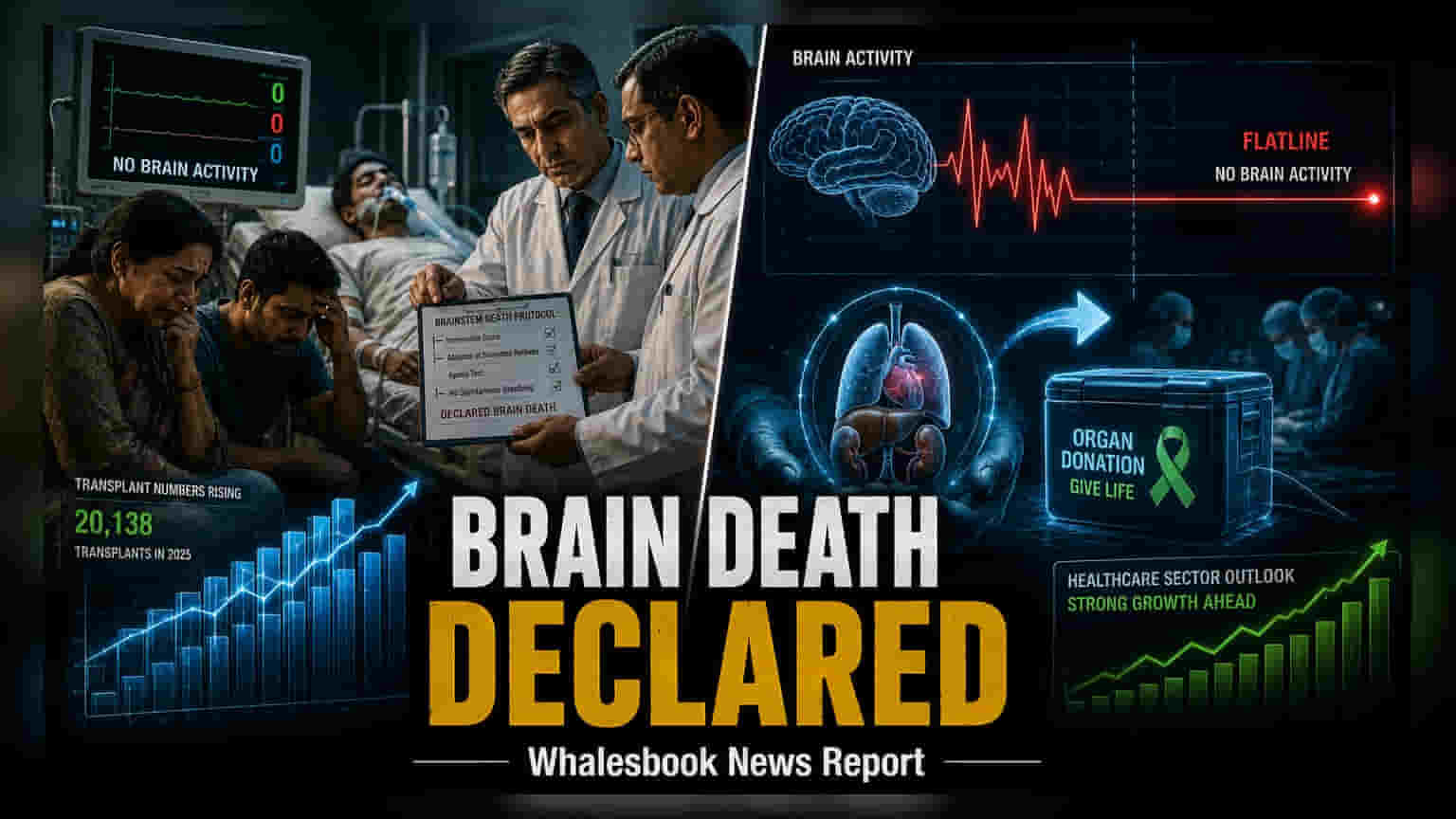
The Ministry of Health and Family Welfare has issued new guidelines to standardize brainstem death certification, legally decoupling it from organ donation. This uniform framework aims to remove legal ambiguity for hospitals and improve trust. For the healthcare sector, this shift creates a more structured environment for transplant services, which recorded over 20,000 procedures in 2025, though implementation risks remain.
The Ministry of Health and Family Welfare introduced new national guidelines in August 2026 regarding brainstem death certification. These rules create a uniform legal process for declaring death across Indian hospitals, separating the medical declaration from the decision to donate organs. By establishing brainstem death as a definitive legal conclusion, the guidelines aim to simplify a complex process that has historically faced confusion and legal scrutiny.
Standardizing the Legal Definition of Death
Previously, brainstem death protocols were often heavily associated with organ donation, which sometimes created operational challenges for medical staff. The new framework clarifies that brainstem death—defined as the permanent cessation of all brainstem functions—is a final, biological reality. Once this is certified following the required tests (such as confirming irreversible coma and the absence of spontaneous breathing), the death can be formally registered under the Registration of Births and Deaths Act. This clarity is expected to help hospitals inform grieving families more effectively, providing a standard, objective medical process that is independent of any later decision regarding organ donation.
Sector Implications for Hospitals
For the Indian healthcare sector, which is witnessing a steady rise in organ transplantation—reaching over 20,138 transplants in 2025—the standardization of these protocols is a significant operational development. Hospitals that provide transplant services face complex compliance requirements. A uniform, national guideline reduces the risk of legal inconsistencies and procedural variations between different states or institutions. By establishing a clear, documented, and transparent process, healthcare providers may find it easier to manage the legal and ethical aspects of end-of-life care. This reduction in administrative and legal gray areas can potentially streamline the resource-intensive process of donor identification and maintenance, which is critical for hospitals investing in transplant programs.
Risks and Operational Challenges
While the guidelines offer a structured path forward, the healthcare sector faces real-world challenges in implementation. The Supreme Court of India has previously flagged concerns regarding the reliability and transparency of brain death certification, including the potential for subjectivity during apnea testing. To succeed, hospitals must adhere strictly to these new, rigorous standards. Failure to do so could lead to renewed public skepticism or allegations of malpractice. Furthermore, certifying brain death requires a team of specialized doctors and specific diagnostic equipment. For smaller hospitals or those in non-metro areas, the operational cost and the need for specialized training remain material hurdles. Investors in the healthcare space may continue to monitor how effectively major hospital chains and diagnostic networks train their staff and update their internal compliance policies to align with these national standards, as operational excellence will be essential to mitigating legal and reputational risks.