

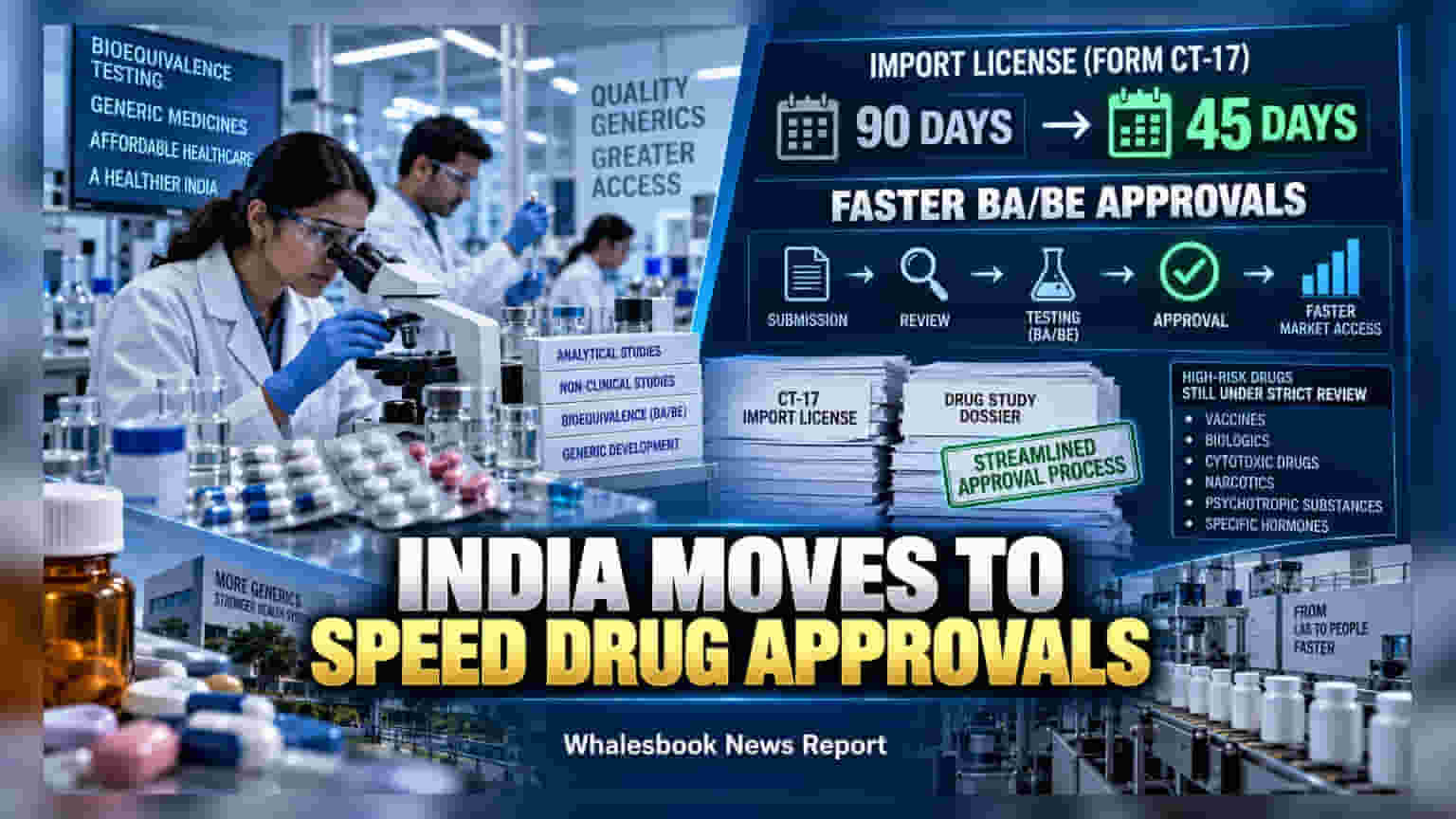
The Indian government is proposing to halve the processing time for certain drug import licenses from 90 to 45 days. The plan also introduces a simpler notification system for generic drug studies, aiming to speed up research and development. While this could help pharmaceutical companies reach the market faster, high-risk drug categories will remain under strict regulatory control.
The Indian government is looking to speed up the development and approval of generic medicines by simplifying regulatory procedures. The proposed changes, which are expected to be reviewed by the Drugs Technical Advisory Board this month, focus on two main areas: reducing the time taken for import licenses and streamlining the process for required drug studies.
Currently, pharmaceutical companies often face long wait times for official approvals before they can start necessary tests for generic drugs. The new proposal suggests that for eligible studies, companies could begin work after simply informing the regulator, rather than waiting for formal prior permission. This shift to a prior-intimation mechanism is designed to reduce the time generic manufacturers spend waiting for administrative clearances.
In another move to improve efficiency, the government is considering cutting the processing time for Form CT-17 import licenses from 90 working days to 45 working days. These licenses are essential for importing new drugs and reference products required for analytical and non-clinical testing. By halving this timeline, the government aims to help companies move more quickly through the early stages of drug development.
These changes are part of an ongoing review of the New Drugs and Clinical Trials Rules, 2019, which aims to reduce red tape and improve administrative efficiency in the pharmaceutical sector. For investors, these reforms, if implemented, could potentially lead to faster commercial launches and reduced research timelines for generic drug makers. A faster time-to-market is often a competitive advantage in the pharmaceutical industry, helping companies manage costs and respond more quickly to market demand.
However, not all categories of medicines will benefit from these relaxed timelines. The proposal explicitly excludes high-risk drugs to ensure patient safety and maintain rigorous standards. Medicines such as vaccines, biologics, cytotoxic drugs used in cancer treatment, narcotics, psychotropic substances, and specific hormones will remain subject to the current, more stringent licensing process.
This carve-out means that companies developing complex or high-risk therapies will still face the same level of regulatory scrutiny as before. The ultimate impact of these reforms on the sector will depend on how the regulator operationalizes the new system and whether the reduced procedural friction actually leads to faster outcomes for generic drug companies. Investors will likely look for updates on the final decision from the Drugs Technical Advisory Board and the subsequent implementation guidelines issued by the government.