

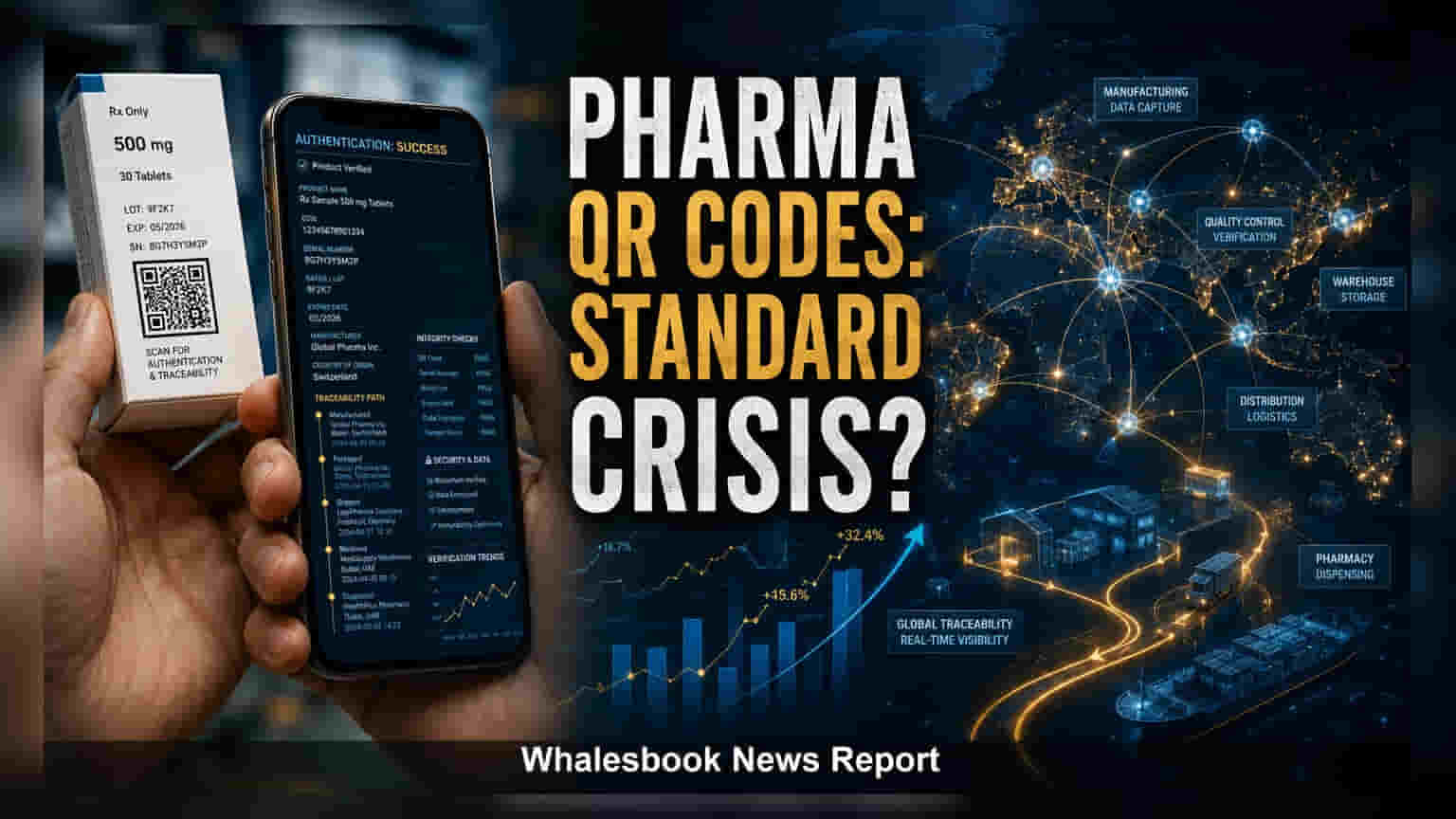
GS1 India CEO S. Swaminathan is calling for standardized data formats in pharmaceutical QR codes to improve supply chain tracking. While the government is expanding mandatory coding for critical drugs by 2027-28, the lack of uniform standards creates data gaps. This push highlights the growing compliance and technology requirements for Indian pharmaceutical companies as they work to strengthen supply chain transparency.
The initiative to implement QR codes on pharmaceutical products in India is entering a critical phase, but experts warn that more than just putting a code on a box is needed. S. Swaminathan, CEO of GS1 India, recently emphasized that the current approach requires a significant upgrade to ensure the data is uniform, readable, and useful across the entire healthcare supply chain.
The central government has mandated that specific pharmaceutical categories, including vaccines, anti-cancer drugs, and narcotics, must carry QR codes by 2027-28. This move is designed to make it easier to track medicine movement and verify authenticity. However, Swaminathan notes that without a single, standardized way to present this data, the system remains fragmented. He characterized the current state of India's track-and-trace system as needing considerable development, noting that while export-oriented companies often follow global norms, the domestic market still lacks a unified structure.
Impact on Pharmaceutical Companies
For investors monitoring the pharmaceutical sector, this push for standardization carries operational implications. Pharmaceutical companies—especially those with large manufacturing footprints—will need to ensure their packaging and digital systems can produce codes that are interoperable. This means that a barcode generated by one manufacturer must be readable by a distributor, a warehouse system, and a local chemist without error.
This requirement likely translates into continued spending on digital infrastructure and packaging line upgrades for many pharma firms. Companies that have already invested in advanced serialization systems may have an advantage, while smaller players might face a heavier cost burden to comply with these evolving data mandates. The goal is to move away from isolated "data silos," where systems cannot communicate with each other, toward a connected network that provides full visibility from the factory to the patient.
Implementation Risks and Realities
While QR codes are a key tool in the fight against counterfeit drugs, they are not a complete solution. A primary risk for the industry is that reliance on these codes alone does not stop sophisticated counterfeiters. The effectiveness of the system depends heavily on how securely the digital data behind the code is managed.
Furthermore, there is the risk of implementation gaps. If the standardization process is slow or inconsistent, the industry may end up with a system that creates a false sense of security. Small and medium-sized manufacturers, in particular, may struggle with the initial setup costs of transitioning to globally recognized data standards. Any delay or friction in adopting these standards could also complicate the process of product recalls, as traceability is only effective if the data can be accessed and understood quickly at any point in the supply chain.
Moving forward, the focus for investors and industry observers will be on how the government defines the final technical standards and whether the pharmaceutical industry receives enough time and support to transition. The ability of companies to seamlessly integrate these requirements into their existing supply chains without significant disruption to margins will be a key monitorable.