

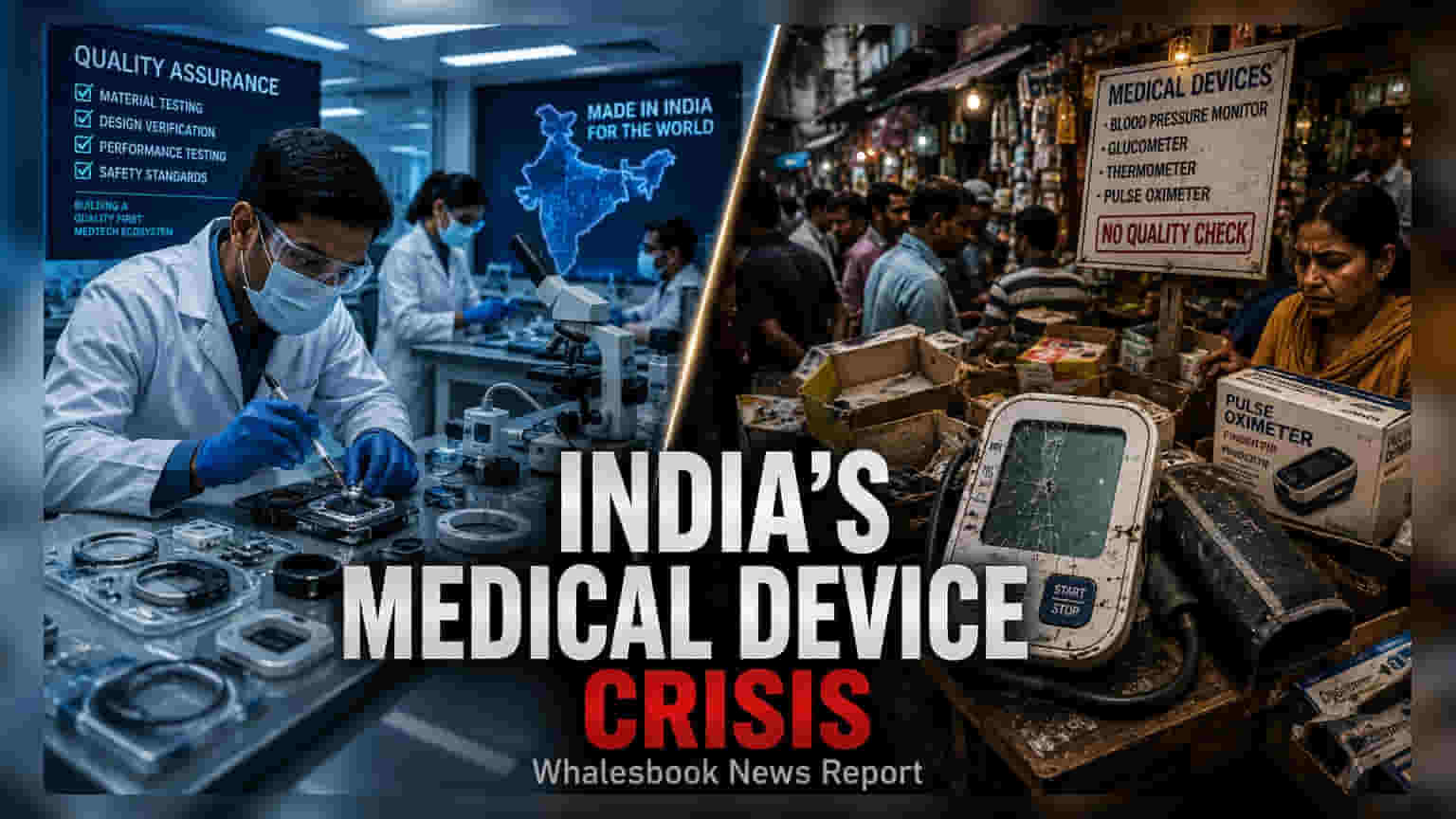
The government is concerned about a rise in substandard medical devices and is pushing for stricter testing. Authorities are now focusing on shifting from design-based approvals to rigorous finished-product testing. This move aims to improve quality standards and increase domestic value addition to 40-45%. Investors should watch for potential regulatory changes that may increase compliance requirements for domestic manufacturers.
The Indian government has raised serious concerns regarding the quality of medical devices entering the market, signaling a potential shift toward tighter regulatory oversight. Speaking at the recent CII Global MedTech Summit, Department of Pharmaceuticals Secretary Manoj Joshi highlighted a significant influx of substandard products, ranging from basic consumer disposables to advanced medical equipment. The government is now emphasizing the need for a regulatory framework that prioritizes the quality of the finished product rather than focusing solely on design standards.
The Shift in Regulatory Focus
The core issue, as highlighted by the government, is the fundamental difference between drugs and medical devices. While drugs are chemical in nature, medical devices are primarily engineering products. Officials noted that a device can be designed perfectly, but if the raw materials or engineering processes are subpar, the final product remains ineffective or unsafe. Currently, the regulatory system is struggling to control the quality of finished items sold across the country. To address this, the government is considering adopting models similar to those used in Europe, which rely heavily on third-party certification. This approach could bridge the gap while the country works to build its own comprehensive testing infrastructure, a process that officials suggest could take over a decade.
Push for Domestic Value Addition
Beyond regulation, the government is intensifying its efforts to deepen domestic manufacturing capabilities. The goal is to move the industry away from simple assembly of imported parts toward significant value addition, with a target of 40% to 45%. Officials indicated that existing Production Linked Incentive (PLI) schemes may be expanded to support companies that have already invested in local capacity but are not yet receiving benefits. This move is designed to encourage SMEs and component manufacturers to invest in quality, which the government believes will reduce buyer uncertainty and foster a more reliable healthcare ecosystem.
Implications for the Industry
For participants in the medical device sector, this shift implies a more stringent business environment. Companies that fail to meet higher quality standards or achieve necessary value-addition targets may face increased scrutiny or the risk of missing out on government incentives. While the policy push aims to build a global hub for quality medical devices, it also creates an immediate need for manufacturers to upgrade their testing capabilities. Investors and stakeholders should monitor upcoming regulatory guidelines on finished-product testing and any specific amendments to PLI eligibility criteria, as these will directly influence the operational costs and growth trajectory for domestic players.