

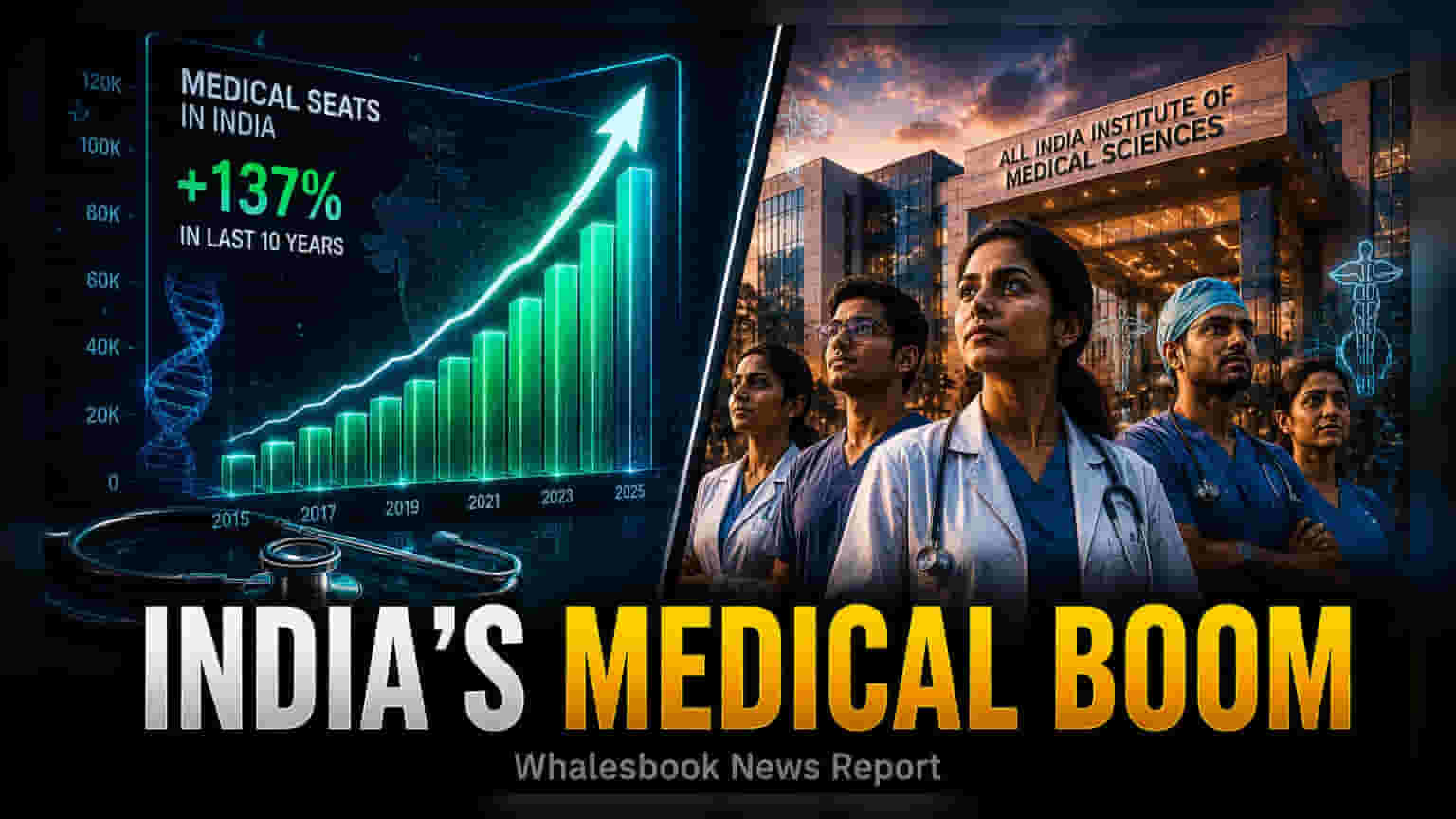
India has expanded its medical infrastructure significantly, with MBBS seats growing from 51,348 in 2014 to 1,39,489 today. The number of medical colleges has also increased from 387 to 844, aiming to improve doctor availability in underserved regions. This expansion reflects a major push by the government to enhance healthcare accessibility and training capacity across the nation.
Detailed Coverage
The landscape of medical education in India has expanded significantly over the last twelve years. Official data presented in the Lok Sabha indicates that the country now hosts 844 medical colleges, a sharp increase from the 387 institutions operating in 2014. This rise in infrastructure has been matched by a rapid growth in seat capacity for aspiring doctors.
Growth in Medical Training Seats
Undergraduate MBBS seats have seen a near threefold rise, reaching 1,39,489 from the 51,348 available in 2014. Postgraduate medical education has followed a similar trajectory, with seats increasing from 31,185 to 86,360 over the same timeframe. This expansion is designed to address the long-standing challenge of the doctor-to-population ratio, particularly in rural and remote districts where healthcare staffing has traditionally been sparse.
Enhancing Healthcare Delivery
The government is pairing this growth in colleges with practical training initiatives such as the District Residency Programme and the Family Adoption Programme. These efforts aim to ensure that new medical graduates receive hands-on experience in community settings, which is intended to improve long-term healthcare delivery in underserved regions.
Beyond education, primary healthcare access is also seeing changes through the network of Ayushman Arogya Mandirs. Recent assessments conducted by NITI Aayog suggest that these centers are experiencing higher community participation. The integration of digital platforms like e-Sanjeevani, which facilitates remote specialist consultations, is being used to support frontline healthcare workers.
Implications for Healthcare and Diagnostic Firms
For investors, the sustained investment in medical infrastructure is a key monitorable. The increase in the number of operational medical colleges and the higher volume of medical students may drive demand for medical equipment, laboratory diagnostic services, and pharmaceutical supplies in these regions. As these new colleges become fully operational, the broader healthcare ecosystem—ranging from hospital chains to diagnostic laboratories and medical device manufacturers—may see increased activity. The pace at which these new medical colleges achieve full patient capacity and the ongoing budget allocations for healthcare services will be important factors to watch for the sustainability of this sector growth.